Friday, April 3, 2026

Medieval Ranks of Nobility and Some Others Explained


Recently there have been a lot of videos about ranks of nobility and such. Most of them are very bad as they simply do not understand how any of that actually worked. So here I will write a better version that is actually correct.

To begin with medieval nobility is military, all ranks of nobility are like military ranks, the higher the rank, the more authority one had. From Barons supervising a handful of knights, to Dukes and Kings commanding armies. Even modern royals spend plenty of time in actual military and always have military education. Even if public mostly knows thew as hand waiving smiling people, surrounded by luxury and such, many of these guys are actual war veterans. Back during Middle Ages all nobles and royals spent most of their time on the battlefield, fighting one or another war.

Just like in Marine Corps, where every marine is a rifleman, in nobility every peer is a knight and also a baron. That includes even King. That is why nobles or peers sometimes shortened to baron. Most knights however are not peers of nobles.

Knight

Knight is not just a rank of honour, like it is nowadays, but an actual type of soldier. Knights dominated medieval battlefields and because of that obtained plenty of political power as well. Medieval societies were government by the commanders and officers of knightly armies; they commanded societies just like they commanded knights on the battlefield, with exact the same hierarchy: more senior officers in the military were also more senior civil officials.

Each knight was a heavily armored cavalryman, who fought with wooden lance and heater shield when mounted, replacing lance with arming sword when on foot. Their armor was at least a full body chain mail and a helmet, though in late Middle Ages a wealthier knights could afford an even more elaborate plate armour. Such armor effectively protected a knight from near any pre-medieval and medieval weapons. Making pre-medieval infantry like lightly armored housecarls obsolete. 

Knight's armor, that is rather impressive even for a modern person, was so revolutionary by medieval standards, it made it almost impossible to kill a knight. For the first time a soldier could have an armour so good, it offered complete protection for the entire body. This fact gave knights unparallel leverage over the society, that resulted in the whole governing structure consisting of knights and their officers. In fact, the entire Middle Ages period is defined by this reality. Middle Ages begun when knights defeated all other forms of military and established their domination over society. Middle Ages continued while knights maintained their martial supremacy. Finally Middle Ages ended when knights started consistently losing to other types of units, such as Swiss Pike Square. Gradually blacksmiths figured out how to design and make a weapon to specifically destroy knightly armour and make the knight itself vulnerable.

When it came to social status, knight stood in the middle between commoners and lords. Unlike their officers, baseline knights did not govern anything but still enjoyed level of respect and honour from the rest of the society. They had various special privileges and such. 

Squire

Just like titles of nobility knighthood was de-facto hereditary, technically King could dismiss and appoint any rank of nobility but by convention, ranks always went to heirs and any exceptions were rare. Being a knight however had a one extra step to it, before one could be made a knight, one has to serve as a squire first. Armor, horse and other knightly equipment was very expensive by medieval standards, so lords were unwilling to bestow these things on just anyone. So, one had to first prove oneself as a squire, an assistant to the knight who would help knight to put their armor and will take care of horses and such. 

While doing these things, they will also train to become a knight. Like most Medieval professions, being a knight required starting training from young age of 7, it was not possible to decide to become a knight in one's 20s or switch careers. Missed time of training made one unsuitable for the role. 

On the battlefield a squire could serve as light cavalryman, using spare horse, but will do reconnaissance rather than fighting most of the time.

Squires too had a special status in society, just below that of a knight. Commoners had to show them respect and deference.

Once there is an opening in knights ranks and a squire is deemed worthy, he will be knighted. King will always do knighting personally. That is how important it was to select proper knights. So important that King will not delegate this to other lords.

Once knighted, a knight will be made a vassal to the baron and will be sent to live in their estate.

Yeoman

Particularly in England, there was an additional social and military rank of a Yeoman. Yeomans were longbowman and too enjoyed special status, because their skill with bow made them valuable as a military unit. Other countries did not have access to longbows and missed out of this type. I will later write separate article about bows.

Baron

Now we finally reached the first title of nobility proper, Baron. Baron is kind of medieval equivalent of a sergeant in modern military. He is backbone of military, economy and society. He also is hated by a lot of people for many different reasons.

In addition to his military duties, Baron is in charge of a single Manor. Modern people might think that Manor is some fancy historic building, but back in the days Manor is first and foremost a Medieval farm. Term manor applied to both the core building where lord of the manor lived, surrounding allotment of fields and even people who work the farm or lived in surrounding buildings. 

Modern farm could be run by a single family because complex machinery like tractors, harvesters and combines allow few people to do all farm work. Back during Middle Ages, such machinery did not exist, even basic scythe was not invented yet and best harvesting tool was sickle, yes, the same sickle communists later adopted as their symbol. Because of that agricultural work required a coordinated effort of many people as well as supervision from someone reliable. 

Baron was in charge of the whole process, directing and coordinating work of peasants to make sure they produce the harvest and will not fuck up. Baron could appoint vogt and delegate most of supervision to him but was still ultimately responsible for results before king. If peasants will fuck up somehow and harvest will fail, then everyone will starve, thus someone reliable has to be in charge of the whole process. That someone was picked from the ranks of the knights and given title and rank of baron.

In addition to running the Manor, baron should also not neglect their military duties and be always ready to fight as a knight if king summons them to war. Not only they have to maintain their own readiness, but also those of knights that were given to him as vassals (subordinates), typically 4 or 5 depend on how productive his manor is. Baron had to make sure make sure knights and their horses are fed, equipment is in good repair and that they train enough to maintain their fighting abilities, hence why I compared this role to modern military sergeant. In medieval times sergeant was a much lower rank with no authority over anyone.

All these military expenses have to come from the profits, the manor makes. On top of that there are also taxes to be paid to the crown, or to the Earl to be precise who will later pay his taxes further up the chain of command.

Finally on top of that Baron has to know law and serve as judge for disputes between people of his manor.

Being in charge of so many things, barons were hated by all sorts of people. Peasants and knights alike saw them as slavedrivers. Higher ranks will blame them if something goes wrong. For commoners he was the big, hated boss, with power beyond their imagination, hence term robber baron. For higher nobles he was the small guy who has one job and yet somehow fails at it. That is why some barons prefer to be known as knights to be associated with knightly chivalry instead of robber baron moniker.

Earl/Count

There is a title of Viscount between Earl and Baron, but that title is delivered from that of a Count and hard to understand out of context so I will explain Count first.

Count is a guy in charge of a county. Medieval countries were divided into territorial units called counties. England and US states are still divided into them. You can see here, how much land is that approximately. Earl is English equivalent of continental Count, just a different name for the same rank and duties. Wife of either Earl or Count is a Countess, and his heir is a Viscount, not to be confused with separate title of Viscount.

Average Medieval County consisted of several Manors as well as few towns and maybe a city. Count will run one of these Manors directly as if baron, would.  Because of that every count has a subordinate title of baron. That is also why counts would look down on barons for only having one job, when they had two. That mean that count had his count job on top of his other job as a baron.

Other manors were run by different barons. These barons were subordinates to the count of their county. Count did have authority to command barons as his subordinates, especially in military situations. In peace time he would supervise that barons fulfill their various duties to the crown sufficiently enough. Barons also had to pay their taxes to the count.

Count in turn had to pay tax to his superior officer, Duke.

Counts will also supervise cities and towns, Medieval cities had special enumerated rights, that entitled them to democratically elected city council and other rights. That however did not mean that they were sovereign and could do whatever, their internal governance was democratic, but they still had duties to the crown and counts were in charge of making sure these are met. 

Overall count was kind of a middle manager or military captain. Senior enough to have some authority and clot, yet not too big of a shot where a failure could result in some serious and often fatal consequences. He collected money from junior officers and pass them on to senior ones, was a middleman between King and the county, passing crown needs unto country but also advocating for his county in royal court. Count had some noble swag, but not too much of it.

Viscount

Sometimes a county would be split in two. When that happens, a bigger part will retain title and status of a county, and a smaller part will be dubbed viscounty instead. A viscount will then be created to run the newly created viscounty.

Viscount ranks between the proper count and baron. Viscount is the last of noble titles created, original system did not provide for this rank, but it was added later down the line. This rank shares its name with the title of heir to the county rank; the only difference is use of "of" between the name of the rank and the name of the place to which the rank applies. For example, Viscount of Shire will be a substantial title of a person who runs Viscounty of Shire and Viscount Shire is a courtesy title for the heir apparent to the title of Count of Shire.

Just because I mentioned it, medieval titles are named after some locality to which the power. Each count or baron will be given a certain particular county or manor to run, and their title will be delivered from the name of that county or manor. For example, Count of Cheshire runs county of Cheshire, and Count of West Yorkshire runs that county instead. By the way Cheshire is not made up for Alice in Wonderland, it's a real county and as Earl of Chester it is a subordinate title of Prince of Wales.

Some post medieval noble titles of modern peerage do omit 'of' because they were created after nobles' authority over land subdivisions and people who inhabit them was transferred to Parliament or local councils and by then noble titles no longer conferred any authority over any particular land. In that case tile was often delivered from surname. That said Ducal titles created for royal princes still use traditional 'of' style and delivered from various key localities across the UK even if they no longer confer authority over territory. 

Back to viscounts. Viscounts had all the responsibilities of a count but none of his perks and status. One saving grace is that viscounty is typically smaller than a county, so less work and travel. In reality however viscounty often will be created from most remote and poor areas of the county, so same amount of work but less gain, less prestige and less money.

Just like count, viscount had barons as subordinates, but these were much fewer in numbers compare to what average count had. Some viscounts even went completely without vassals. That meant less taxes for viscount and less importance in hierarchy. Viscount was in that grey zone of irrelevance, similar to 2nd lieutenant.

The real reason viscounts were even created is not because they did anything useful, but because someone among more senior nobility had extra children in addition to an heir to their main title and needed to arrange his spares a title and land so that they will not go without. King obliged and created more titles just like modern politicians create jobs to keep employment numbers low. Viscounts existed in grey area between counts and barons and did something between what these two did.

Marquess

Marquess is a rank that at first glance look like the worst of them all, but in actuality one of the best ones. Marquess is in charge of a march or mark. March means borderlands, typically it borders some wild tribes who are hostile, warlike and think stealing crops from your manors is good idea. Your job as marquess is to defend the march and your marcher barons/lords from the hostile tribespeople. If that sounds like a lot of trouble that is because it is.

However, there are many redeeming qualities to being a marquess. To begin with marquess is exempt from taxation. A little something that makes one richer. Money is needed for defence of the march, so you do not have to pay to maintain the kingdom.

Second is the fact that marquess is allowed to build fortifications. A count or a duke, building giant citadel in the middle of the kingdom will raise instant suspicion of plotting to secede or challenge the king for the throne. A marquess doing the same in his march can always justify it by saying tribesmen are hostile. Later however marquess can use these fortifications in an internal power play.

Third is the fact that you can expand your land by taking the fight to the tribes. Counts of barons could only marry into other noble families and hope the other line will seize and they will inherit both titles. Marquess that located on the kingdom outer edge can simply conquer the unclaimed land, convert its inhabitants into peasants, or exterminate them and bring your own peasants, create new manors on claimed land and give them to vassal barons. 

It a long process that could span generations but gradually it could allow your march to outgrow all the duchies and become de facto the most powerful lord in the realm. Many famous kingdoms and empires begun this way, Austria, before it was empire, or archduchy was actually a march and so were their rival Brandenburg-Prussians who later became German Emperors or even their neighboring Saxons. A junior branch of Hohenzollerns who got march of Brandenburg gradually and decisively eclipsed their senior inland branches. Even in England a Tudor dynasty has their origins in marcher lords in Wales. 

All in all, marquess is a long term but a near surefire path to the throne. Now all this trouble defending it from hostile outsiders does not look as bad, does it.

To top it up, marquess is a direct vassal to the king, like dukes rather than counts, who are vassals of dukes. That gives marquess a direct line to king in case they need something. Unlike dukes however, marquess are rarely seen as potential rivals to the throne. They are often seen as having enough on their plate as it is and will not be burdened with more work for the crown, unlike more inland lords. Quite as sweet spot to be.

Duke

Duke is a true noble of the big league. They have special forms of address to make them stand out but this is but a tip of the iceberg of their true importance and power.

Dukes are few and are closest to the king. On one hand that gives them a lot of power and influence, even opportunity to become a king should things play out well or turn out this way. On the other hand, there is serious responsibility and serious risks. You control a lot so if you screw up, it will be serious blow for the kingdom for which you will not be able to get away easily. Even worse is the fact that king might feel threatened by your power and influence, not ever duke plots to take over the kingdom one day, but everyone has enough power and clot to do so and king may be wary, if he is not a fool. As much as you may plot to take over the kingdom, a king may plot to keep himself safe from either real or alleged plot of your, even if you mean king no harm, you may still get a dagger to the back.

Structure wise, dukes rule over dukedom, which is a cluster of continues. Just like counts supervise, tax and command barons, dukes supervise, tax and command counts. 

There are typically but a few dukedoms in the entire kingdoms and every duke knows each other. Dukes are inner circle of the king, and they run the country together, make military plans together like joint chiefs of staff. On the battlefield dukes actually expected to command units independently, as king's lieutenants, and not just be supervisory authority like barons or counts. It is often expedient to split army into several units and dukes are ones who are called to command the splitter units.

Dukes are expected to work with king not just on battlefield but also on administration of the kingdom. During incapacity of Henry VI, different royal dukes took turns running the kingdom, disagreements over who is more worthy of being the regent gradually devolve into Wars of the Roses.

Most dukes are royals, i.e. related to king as brothers, uncles, cousins and such. Heir to the throne is also created a duke once of age. That allows heir to learn how to run a country while allow king to have at least one duke who is unlikely to plot against him. Nowadays heir to the throne is called prince, but that was more due to the exceptional circumstances surrounding Principality of Wales, unlike dukedoms, principalities could not be as easily created at will. Normally an heir will be made duke. Current and previous Princes of Wales still have Ducal titles as secondary ones.

There are however some dukes who are not royal. There is no established promotion path to a duke, and every such case is an exception in its own way. For example, Scandinavian in origin, Rolo the Viking was created Duke of Normandy by unrelated Capetian King of France to protect the area from other Vikings. A few generations later, now empowered as Kings of England and Dukes of Aquitaine, Dukes of Normandy came after French throne itself.

Being related to the king does not guarantee loyalty either, for example Capetian in origin, Duke of Burgundy, sided with Plantagenets of England against their relatives from de Valois dynasty. Wars of the Roses were also fought by English dukes, all of whom could trace their origin to Edward III.

Even if dukes do not plan to take over, they could still be called to fulfil royal duties, either permanently or temporarily. During war of the roses, de Valois kings would frequently be captured by either English or Burgundians, making dukes still loyal to the de Valois cause run France in their absence. De Valois themselves took the crown after mainlining Capetian branch died out, after being ducal for several generations suddenly they became royals again.

Because of that dukes are expected to be able to do everything a king does. In a way they are like spare kings, whose time may never come, but who still should be ready for the job.

King

Finally, we reached the king, pinnacle of medieval pyramid of power, asterisk attached. There were also pope, God, emperors and parliament who all claim supremacy on various grounds. Barons may try to overthrow you or make you sign Magna Carta. Pope may try to excommunicate you for not being good enough Christian. Emperors think they have universal authority that supersedes kings, just like that of kings supersedes dukes or barons. It was a hard game to play, but you were given good cards to play, better than those of dukes or popes. 

As a medieval king, most of your time you will spend commanding your knights and nobles in various battles. You will have castles, but unlike modern palaces, the medieval castles were built for defensive purposes and were not too comfortable, much less luxurious. However, they could store enough food and water to let you and your troops to survive for years, cooped inside and every so often you will do just that.

Yet that was still better than what many others had.

Kings that only wave hands and do not command armies, only became a thing over the course of 18th century. Even famous Sun King Louis XIV, that does not look like that tough of a guy, actually commanded his armies on the battlefield. He built Versalles but spent a lot of time in a tent in a military camp, sieging places. Even these culottes, he wore, that revolution later decried as symbol of upper-class decadence, was this short because it would be inconvenient to tack long trousers into above knee tall military boots, that soldiers needed to traverse swamps. Not something sans-culottes Parisian working class would have to concern themselves with. 

Medieval kings fought, died and made history. People like to read about decadence of Henry VIII and his obsession with producing a male heir, but in truth he was the first king who mostly lived in palace and not on the battlefield and could concern himself with such administrative and courtly concerns.

Medieval kings wore many hats. If you check the full title of King Charles III for example, in addition to royal title, you can find a few lesser ones, a ducal, and earl and a baronial one, in two examples. Medieval kings had to fight like a knight, ran own manor like a baron, supervise one county like a count and one duchy like a duke and then also be a king on top of that. If that sounds like a lot of work that is because it is. Juggling all these vassals, parliament, pope, rival kings of foreign kingdoms took a lot of time and effort, but also skill. Not everyone got it right, some failed. 

Yet it's because medieval kings did so much that we admire them nowadays, they were truly in the most demanding role of their lifetime. It's because they do little nowadays, despite living in such expensive luxury, that sometimes people bring up a question do we still need monarchy?

Grand Duke

Grand Duke is an, euphemism for a ruler of the unrecognised county. Even during Middle Ages there were places like Taiwan, that were their own countries in every possible sense but lacked official recognition as such. Such places were referred to as Grand Duchy. One most famous was Lithuania, that was actually the biggest state in Europe, bigger than any Kingdom. However, pope, who was in charge of creating new kingdoms, denied this dignity to Lithuanians. Pope's problem with Lithuanians was their high tolerance of different religions and unwillingness to force convert people to Catholicism. For that reason, pope withheld (or even revoked) recognition of Lithuania as Kingdom and did not sent them their crown, like he would do to other kings. 

That was Middle Ages so Pope possibly held monopoly on good goldsmith who could craft decent enough crown. Lithuanians had to do with rather simple ducal hat.

Later when Lithuanians Jagiellons united Lithuania with Poland in personal union, Poles would not press issue of Lithuanian recognition because Lithuania was bigger than Poland and only the fact that Poland was a kingdom and Lithuania was not would allow Poles to maintain a certain level of seniority within the union.

Perhaps in homage to Lithuania or out of personal humbleness, a dissolution of Holy Roman Empire, certain imperial princes, like Luxembourg and Baden assumed title of Grand Duke. Luxembourg still uses it.

Prince

Nowadays Prince is often seen as title of heir to the throne as well as that of various royals. 

During Middle Ages Prince was a ruler of an entity other and often much smaller than a kingdom. Principalities of Monaco and Liechtenstein are examples of such entities. Historically Principality of Orange was possibly the most famous example, despite being so tiny, it somehow managed to exist completely surrounded by France for a very long time.

It was also used as a generic word for a ruler of something, in this capacity it was used by Machiavelli for his Il Principe novel.

In certain sense Prince is polar opposite of the Grand Duke. Sovereignty of Prince is fully recognised but they rule something that can hardly be called a country or a kingdom.

Emperor

Emperor is a King with a pretence to universal sovereignty. In theory Emperor traces origin of their title to Roman Emperors, claiming legitimate succession from Ceasar himself, in reality is such claims sounded stretched at best and completely made up at worst. In theory there could be only one Emperor but in practice there were many, each claiming they are the only one legit and the others are fakes.

Out of these Byzantine Empire was indeed a remnant of what was once a Roman Empire, but time changed them a lot from times of Ceasar and Augustus, especially when after members of Venetian crusade overthrew the last native emperor and replaced them with of crusade leaders.

Another, Holy Roman Empire (of the German Nation), was created from scratch by pope, but still claimed to be of universal authority of Roman Caesars and even disputed authority of popes, claiming that emperors are superior to popes and their clergy.

Byzantine empire had a different non-feudal internal administration, instead of counties, duchies and manors they had themes, that possibly worked like Muslim Iqta.

Holy Roman Empire was mostly feudal like other medieval kingdoms, but with their own unique traits like free cities. Emperor was elected and imperial Diet was more complex and bureaucratised than Estates General or Parliaments used by other kingdoms.

To back their claim to universal authority Holy Roman Emperors had several consistent kingdoms, held by the emperor together with his other titles, as well as Kingdom of Bohemia that was vassal to the emperor and prince elector. This was to lay claim that HRE is not just another kingdom with a fancy name, but an entity of higher authority than kingdoms around it. Similar to how USSR used Comintern, globe on their emblem and direct memberships of their subdivisions in UN to lay claim on a global authority rather than merely that or just another country. In both cases they functioned effectively as another country and their claims for universal authority were but claims with no substance.

Pope

Nowadays Pope is merely head of Catholic Church and has little influence outside this denomination. Back in Middle Ages however Pope was very influential and powerful. He could excommunicate kings, authorise invasions, call for Crusades and even transfer entire kingdoms from one dynasty to another. While not everything always went pope's way, he and the Church were often the only ones with long term vision for the future and often will get their way eventually if not immediately.

Pope claimed and still claims to be god's representative on earth and thus claimed authority over kings. Kings would often resist direct orders from a non-military man such as pope, but pope would play it by enticing their neighbors to take sword against those who provoked their ire. For example, he authorised Austrian Habsburgs to invade Bohemia and graded then full rights to Bohemian Crown and lands after native rulers converted to Hussite faith. Habsburgs ruled Bohemia for several centuries since, and Hussites went extinct. Pope also authorised Willam the Conqueror's invasion of England and granted him right to the kingdom. Only protestant reformation really put a dent into Pope's power.

Aside from such direct actions, Pope and Church would regulate things such as morals, ethics believes and such. They will also both sponsor and control science, first universities were founded by monks and Church. Things that may not have immediate effects but will determine long term development of society.

After Middle Ages Ended

Feudal system had its time under the sun, but eventually all things come to an end and so did Middle Ages. What have happened to nobles and knights since then.

To begin with knights, they had but one role, to fight and win wars. When they became ineffective, they were rather swiftly phased out. Nobles themselves sometimes continued to serve in heavy cavalry capacity, that rarely actually saw action, but plain knights with no higher titles became thing of the past.

Many centuries later knighthood was revived as an honour system for both military and civilian awardees. Modern knighthood shares with Medieval one the confirmation ceremony and nothing else.

Squires continued to exist as a rank of honor for various groups that were not nobles but were not commoners either. Sometimes it was conferred to gentlemen (sons of nobility) without any titles of nobility. Gradually it becomes associated with privilege and high status.

Yeomen became Yeomen of the Guard, ceremonial guards for various royal events.

Lower nobility (Barons, Viscounts and Earls (Counts)) mostly became peers and landowners. They no longer needed to support any knights or any other military and could use their profits for personal needs. Earl's power over counties were effectively abolished and they became little more than Barons with fancier titles. All three retained their manors and the land. Gradually many of them stopped using it for agriculture (though some continue to do so) and turned their manors into aristocratic country houses where they now lead varying degrees of frugally privileged life paid for from various other endeavors or by collecting rent from peasants turned farmers. That life however is but a far cry from that of higher nobility. Even if they continued agricultural use, they kept up with times and gradually replaced peasants with machinery.

At first, biggest work for lower nobility became attending parliament. Back in the days Commons did not have near complete control and Lords played significant role in parliamentary work. Gradually however Commons asserted more and more power and by now Lords are reduced to nearly ceremonial chamber with no real power or influence.

While their official roles now became nearly indistinguishable, their real financial situation varied. Some managed to evolve with times and prosper. Others lost their money, sold land and titles and became extinct.

Higher nobility (Dukes and sometimes Marquesses) continued to be granted to royals and sometimes to royal favorites like infamous and disliked by many, Duke of Buckingham. They continued their role as close advisors to kings and overall maintained a much higher standards of living and political importance compared to their lower nobility peers.

They too had place in House of Lords but few in number, they did not amount to much in one person, one vote system.

Higher nobility and kings were the one who really benefited from this development as they could really spread their wings and build themselves luxurious palaces instead of huge fortifications, they did during Middle Ages.

Kings gradually lost their powers to Parliament and cabinet, but they standards of living have only improved, and they now live like kings a very rich people who have special reason to be rich. Some think about abolishing monarchy but even if that happens, royals will likely retain their luxurious palaces and land ownership which will allow them to use these money to finance their lavish lifestyles. 

Saturday, March 28, 2026

How Silver Made and Its Absence Broke Latin America


Nowadays Latin America is known for many things but being rich is not one of them. This part of the world is not as poor as Africa or parts of South-East Asia but is not prospering either. People there either emigrating to the West or blame the US for all its problems.

That was not always this way, back in 17th and 18th centuries, the Latin America was a place to be. It was full of all sorts of valuable goods, tropical wood, cacao, coffee, sugar, tobacco, even tomatoes. All these things came from this part of the world and then gradually spread across the globe. People who found them and cultivated them made big money of it.

However, the biggest commodity that made Latin America the place it was, was Silver. Back in days silver was used to mint coins, so access to silver mines meant near literal ability to just print money as you need them. That is what Latin Americans literary did, they mined silver, mint coins out of them and then went on a crazy shopping spree, buying near everything money can buy. Spanish treasure galleons, filled with famous Spanish Silver Dollars, regularly left Spanish Main (modern Colombia and Venezuela) for Europe and brought back all sort of cool tech Italians made back then. Not even Caribbean piracy could put a significant dent in that never-ending money stream. Latins still had more money that they knew how to spend. 

If you want a proof, it really was as good as I described, then look at how fancifully decorated buildings of their colonial architecture are. Surely nowadays they often look dilapidated or even derelict, but that is because Latin America was poor for the last 200 years. If you however can look past wear and tear, you can notice sophisticated decorations that often rival that of European palaces of kings and nobility. These were not homes build for cheap; these were homes build with no expenses spared. Because why spare when you can just dig out more silver to afford whatever you want.

Back during good times Latin Americans did not mind extravagant expenses, rip off prices, ridiculous rules and taxes imposed by Spanish crown or even pirates robbing treasure fleets. Because why bother with hard stuff when you can just mine more silver and mint more money. Problem solved. One of Latin American countries is even named after this metal that brought them this wealth and lavish lifestyle: Argentina means something of a Silveria or Silverland.


All that ended when silver ran out. Unwilling to be poor, Latin Americans started to look at those responsible. 

First to get the hit was Spanish crown, Bolivar united Latin Americans under the banner of freedom, promising that after colonial yoke of Spanish crown and its taxes and tariffs are gone, Latin Americans could finally breather free and be great again.

Bolivar easily won. He is still celebrated as hero of Latin world. Bolivia is named after him, and Venezuela has Bolivarian in its official name and even its currency is named after him. Colombia is named after the name he proposed for the new freed former Spanish colonies.

Newly independent colonies adopted grand and elaborate symbols often depicting cornucopia and other symbols of wealth and opulence, clearly stating their hopes and aspirations. However, wealth did not come back. By now these fancy symbols look more like cheap decorations than statements of opulence and prosperity.

After war for independence came internal squabbles. Different groups within newly independent Latin nations started to think it's their peers who are hoggin up all the wealth. Bolivarian Grand Colombia split into 4 nations, Central American Republic into 6. Fighting did not stop there, as parts of new smaller states started fighting for either independence or more autonomy. It took 100 years before borders finally stabilised.

Even then however blame game did not end, it just shifted to ideological sphere, different groups now saw solution in different economic models. Communism, Socialism, Peronism, Capitalism and what not were tried at various times. Revolutions, coups, countercoups, civil wars and US interventions became new norm.

Now in 200 years later, Latin America is still divided between blaming the US for their poverty and thinking Socialism is the answer or trying to emigrate into the US or the broader west.


Fundamentally however nothing will work. None of these methods will bring back the silver into mines that fuelled Latin Golden Age (or Silver Age). All they can do is to divide and redivide what is left between those who still remain. Will the commies manage to eat the rich to feed the poor, or will Javier Milei manage to sacrifice the poor to Quetzalcoatl or Inca Sun God for prosperity to the rest. It's a sad thing to watch.

Any country that was rich and now poor is a very sad place to be. Most of the time there is no solution, only escape or slow death. Vain hope you are not the one thrown to Quetzalcoatl for continued comfort of the rest. Rats flee sinking ship not because they are stupid, but because they are survivals.

That is also a somber tale that money indeed buys happiness and everything else. You can have things while you have money. Without money it will all disappear sooner or later, and you will be left with nothing.

People who like my parents think that family or emotions are more important are but fools. When they had money, we had family and what not, once they lost money, it all disappeared and fell apart. 

I do not look back towards my family, but only towards the wealth we had back then and lifestyle it could afford. Alas I cannot bring back the wealth, that I want back. I can only call my parents, but I do not want to. I do not want to listen to their annoying moralising pratting. A sad tale of a similar situation but on a personal level.

Wednesday, March 25, 2026

World Civilizations by Samuel P. Huntington Fails to Predict Future and What 21st Century will Really Look Like


People often cite the above map from Samuel P. Huntington books as an explanation of differences between different parts of the world. It's simple, easy to understand and fundamentally wrong. 

It's not that these divisions are completely wrong, but they are superficial at best and lump together places that are vastly different from each other. Indonesia is very different from Iran or Morocco even if they are both Muslims.

I criticised a few issues with this map in the past. For example, there is a religious division between Orthodox and Western civilizations, yet there is no such division between say Catholic or Protestants. Sure, east west, schism happened earlier, but ground for the split was much more serious in Catholic vs Protestant split. Sure, there are many visual differences between Orthodox and Western churches,, but Western churches also differ from each other. That is far to arbitrary to just select out Orthodox but lump the rest together.

That also overlooks the elephant in the room, the fact that Islam branched out from Christianity. Christians deny is as fervently as Muslims deny that Bahaullah is the new prophet or how Judaists deny that Jesus was the Messiah their religion have promised them. Inglehard-Welzel cultural values, place Muslims close to Indians, Latin Americans and Catholic Europeans.

On the other hand, there is a division between Latin and Anglophone Americas. This cultural values chart for example places the US a lot closer to their Latin American neighbors, than to certain Europeans. Catholic Europeans are very close in values to Latin America; they are former Spanish and Portuguese colonies after all.

If you take into account time or history, you will get a different picture. Turns out that these civilizations are not distinct entities with completely different origins but branches that ultimately came from a single past. It might be possible to connect Asians and Africans to this too, if we dig further into history, but that far documented records are scarce.

If they came from a common past, then why are they different now? Simple evolution, basic principle of live. The same reason why cells divide or we evolved from chimpanzees. Just as tree branches into different directions as it grows so are human societies occasionally split into different groups. When old ways stop working, a certain group decides it's time for a change and splits up.

It's not just these groups, but countries within these groups split from a common whole precisely because common leadership stopped working for them and they needed autonomy. East West Christian split was ostensively about theology, but in reality, it was about power. Pope of Rome grew powerful enough and no longer wished to share equal status with eastern patriarchs who lost their people to Islam and became but a token authority backed by nothing more than past status. As much as one might be inclined to see such act as cynical power grab, there was nothing wrong with that. Why remain shackled to the dying corpse of pentarchy, when you are the only one of the pentarchs with any real authority? To quote Pearl Jam: "Its evolution, baby."

This is but one example where new better and more fitting structures replace those that are outdated and outlived their usefulness. Rome collapsed because it was too unwieldy and corrupt. Ottoman Empire replaced even more corrupt and useless Paleologi of Byzantine Empire and in turn was replaced by the new ascending European powers as well as Turkic ethnostate. 

These changes are not something to lament. Structures and systems of society are evolving to better serve the people they represent, replacing old and dysfunctional with new and better that allows society to grow and evolve instead of stagnating and repeating the same old patters, their ancestors used to do.

Thus, Huntington map represents not the future or even current times, but the past, times where these entities were still connected as well as features that they still share in common. By now religions is a dying phenomenon as it does not serve any meaningful purpose, there is no point in dividing humanity based on this outdated concept.

Reality proves that right. Many orthodox countries in easter Europe choosing EU over their fellow Orthodox brothers. The reason is simple, the EU has answers to the problems and challenges they are facing, the Orthodox faith does not. As much as Eurasian Duginite fanatics in Russia dream of some sort of Russia centered Orthodox Eurasian world, its but a dead and useless concept that cannot solve the challenges the region faces and not even majority of Russians can believe in it, much less their neighbors, like Ukrainians or Romanians who already joined the EU.


Because of that future will not revolve around these civilizations outlined by Huntington. Instead, it will revolve around entities like European Union who can invent solutions for the problems of the future and create opportunities for prosperity and growth. 

Regional unions like the EU, that allows for free trade and well-functioning economy like that in a large nation, but without compromising individual identities and cultures of member nations, is the solution to many challenges the world is facing. 

World will gradually federalise along the EU model, that fundamentally is based and expanded on the US and Swiss examples of federal-confederal type of union with powers divided between local and federal levels to accommodate conflicting interests in the union, and pave way forward.

There will be a certain interregional rivalry between such regional unions. Current back and forth between the US and the EU is an example of such rivalry. However, such rivalries will be unlikely to lead to war or any serious military conflicts. Geo-politics and military will likely stay out of it. Politicians, economists and cultural figures however will squabble over whose side of the pond is better. "Look at our better healthcare, that is miles ahead of what is available at that dump across the pond." That kind of thing. 


The biggest battlelines of the 21st century will be between Democracies vs Autocracies. Autocracies feel threatened by spread of democracy because autocrats and elites in charge there do not want to share power and be accountable to their people. Being autocracies that suppress rather than listen to their people is the only thing that unites countries as different as Russia, China and Iran, Bermuda triangular of Autocracy.

Autocrats however face an ultimately losing battle as in connected world, people in their countries could see how people in democracies live and ask a simple question of "why can we have democracy and prosper like them?" No amount of building Great Firewalls of China or blocking internet altogether like in North Korea can ultimately stop democratisation of these countries.

However, the fact that they are facing a losing battle, makes them dangerous, as in their desperation they could destroy the world with nuclear weapons they still have. The Free World will have to manage this transition carefully to avoid nuclear apocalypse. Russian and Chinese nuclear arsenals will have to be somehow disabled from within. 

To avoid cornering the proverbial rat, one has to offer them a form of exit, perhaps in a form of an autocratic rump state, where they could continue to rule as before. European microstates, like Liechtenstein or Monaco are examples of such solution. It would be best if they agree to exile in cozy safe haven like Monaco or Bora Bora. 

As much as it will be well deserved and just to do so, one cannot leave them at the mercy of their people who will make them pay for their past grievances by lynching them in cruel way. End of Muammar Gaddafi is one such example of just that kind of outcome. Other autocrats are fully aware that this or even worse is what awaits them if their people take control of their states, so they might as well just blow the world in a nuclear apocalypse, just so that if they are going down anyway, they will take the rest of the world with them.


Overall future looks rather optimistic for democracies, but one cannot get too complacent. There are still a few challenges that might destroy humanity if things go wrong. Nonetheless a hand of time cannot be stopped, and future is coming whether one likes it or not. One cannot stop the spread of democracy and freedom; one can only find a better place to be in this transforming world, be on the right side of history. 

Friday, March 20, 2026

EU Should Allow Alternative Ways of Manning the European Consul and Consul of Ministers


Recently EU faced a lot of accusations of being undemocratic and controlled but unelected bureaucrats. As much as it's not true only people who actually understand how EU works know them. For many other people EU system is far too confusing. They cannot understand in a commonsense way how EU officials are elected and accountable to public.

European Consul as well as Consul of Ministers consists of national level ministers who head related domestic departments. They are as elected as national governments are.

However, effectiveness of such arrangement varies from state to state. For someone like Germany, who has a similar domestic institution called Bundesrat, or Finland it works well. People who represent their nations there take their jobs with a sense of civic duty and desire to do their best for their country and EU as a whole.

On the other hand, for countries like UK, it consistently fails to deliver. British politicians are too lazy to meaningfully participate in these institutions. Being on EU consuls goes on top of their other responsibilities, but unlike their other roles, they will not be voted out if they fuck up their EU work. Thus, they just sit there upright, looking forward, cast donkey votes and then blame various domestic problems on some "unelected EU bureaucrats" even though they were likely there when vote on the issue was held and voted for it without paying much attention. As much as it was their fault and not that of the EU, voters who do not understand how EU works blame the EU reelect the politicians who sleep on the job.


A solution to this problem is to allow certain countries to hold direct election to European Consul and Consul of Ministers. 

This should be on opt in basis so that countries that think it's more sensible can opt into it and those who prefer current arrangement can keep it. These consuls work on one country, one vote principle so they can work even if different countries have different methods of choosing their delegate. European Consul already allows for some countries to be represented by presidents and others by Prime Ministers instead.

If country ops for election it should be direct presidential style election that is held alongside either European elections or national ones. The winner will be called something like Emissary of <country name here> to the European Union and will represent their country on European Consul and cast their country vote. 

They would also select their cabinet; to represent their country in Consul of European Union (consul of ministers) other countries are represented by a minister of relevant departments so an Emissary should select representatives with relevant experience for each EU department, similar to how the US president selects their cabinet secretaries. National parliament should confirm their selections just like Congress confirms US Secretaries.


This solution will bring more transparency to European Union and address concerns of certain countries over EU's shortage of democracy. At the same time, it will allow for a certain continuity and familiarity in how operates as countries can still retain the current system if they see fit and it will prevent too much unpredictability, that could make EU ungovernable, in such an important institution as European Consul or Consul of European Union. I hope EU can implement this solution as fast as possible.

Friday, March 13, 2026

How to Solve Iran


Recently Americans finally started their intervention in Iran to end Ayatollahs dictatorship there. After initial success in eliminated key figures of the regime, things started and devolved into long range strikes exchange. After initial shock, regime got its act together, elected a new hardline leader and begun fighting back. By now it's pretty clear that Venezuelan scenario will not work here. 

Unlike Venezuela Iran can receive weapons shipments from Russia and China through Central Asian states like Kazakhstan and Turkmenistan and continue fighting for a long time. This fact will make regime unwilling to surrender.

That does not mean that there is nothing the US can do. Far from it there are a few good solutions that can still achieve a lot.

To begin with the US has to threaten the regime that if they do not comply with US demands, it will set up a rival government for Iran. It will be their last chance to retain current governmental structures. Once the new government is in place, current officials will have to defect to this new government if they wish to have role in new Iran. The new country can be called Kingdom of Iran with Shah Pahlavi as constitutional monarch, or it can be State of Iran with someone else as provisional President.

At first such rival government can be in exile, but it will be much better if the US swiftly secure a foothold on Iranian territory itself, a coastal town like Bandar Abbas can serve as a temporary capital. The US can secure it quickly and protect from the current regime while new Iranian government builds its institutions and military. 

From there new government can grow by accepting defectors from current Iranian military and government. The very fact that new government does exist and has presence on Iranian soil will give potential defectors more confidence that change is real and it's not a trap by the current regime to weed out closet dissidents.

After finishing fleshing out new government, new Iran can go on the offensive and gradually take over the rest of the country, culminating in taking Tehran.

If taking Tehran will prove to be too difficult it will not be a problem either. After taking important areas like the coast and oil fields, majority of which are in the south and close to shore, the US and new Iran can just call it a day and agree to a permanent split of the county into north and south Iran. If new Iran will not manage to take Tehran, it can have its capital in Shiraz, somewhere closer to Gulf will make it more defensible from the old regime or its Russian and Chinese allies. For reference here is geographic map of Iran, mountain gorges there can serve as a natural boundary, that will make south Iran more defensible from the north reconquest attempts.

Even if old regime survives and retains Tehran, without oil or access to sea they will be effectively neutered. They will be too poor to support their proxies and without access to sea will have no means of delivering any equipment to them.

Initial survival of the regime will not mean, old regime will live on forever and ever. After some colling off discontent can swell again in the north and this time could topple the regime or dismantle it piece by piece. New Iran should declare that it will accept every province and town that wishes to defect from the northern government, providing it has land access to the new Iran, so that new Iran can send its troops there. Even if Ayatollahs regime will manage to hold to protesting provinces, Iranians can just defect in individual capacity, draining the north of most of its people.

This strategy for the new Iran will allow the US and Iranian opposition to create new Iran and gradually take the country. It provides solutions for every potential outcome and solves most of the problems with Iran.


Friday, March 6, 2026

Middle Continent, Why We Need to Divide Asia into Two Continents of West Asia and East Asia


A while ago I watched a CGPGrey video on how many continents there are. It pointed out that some borders between continents are rather arbitrary, for example border between Europe and Asia runs in rather arbitrary place and separates what is essentially one same landmass into two arbitrary halves.

In the end CGPGrey suggested that we agree that Eurasia is one and same continent. However, that only makes sense if you look on geographically undifferentiated outline of the landmass. If you look at culture, life and links between people who inhabit it, it will not make any sense. Asia already big as it is and uniting it with Europe will make it even bigger, too big to make any geographic sense out of the whole thing. 

Culturally it makes no sense either. China is not like India, and neither of them has much in common with Scandinavia. If anything, India has more in common with Spain than with China, but we call Spain Europe and India and China Asia. China is very different from India and has very little interaction with it despite sharing a very large border. That to the extend warrant calling them different continents.


After thinking about it I came up with a rather meaningful criterion, that can help divide the world into more meaningful continents: use mountains and occasionally rivers as a divider. Just like seas and oceans, mountains make for a natural divider between both land and people that inhabit it. Mountains are too hard to pass, making meaningful interaction between people on different side of the mountain chains all but impossible. It works for the previous example between India and China, while sharing a long border nearly all of it goes along the very high Himalayas mountain chain, which explains such a great differences between Indians and Chinese. Mountains divide people a lot more than seas and even oceans.

If you look at geological map above, you can rather easily trace this mountain chain geological boundary all the way to the Arctic Ocean. If so, would it make for nice natural border between East and West Asia? It pretty much would. So, this is the new continental boundary I propose. We can call new continents West and East Asia, in the same manner of North and South America, or we can call West Asia middle continent instead.

You can see exact borders on the map above. I used red line to divide West Asia from East Asia. I mostly followed Himalayas along the tallest peaks. In the south I used Sittang River in Myanmar as a final line of separation. In the north I originally used Yenisei River as final divider but later reconsidered and instead carved a line between Yenisei and Lena basins as a boundary. The latter is more accurate topologically, but the former is easier to draw. 

Not only new borders will make sense culturally as West Asias are rather different from East Asians. They will make sense geographically and will allow us to make better sense out of wasteness of Asia. After all, if something is too big to understand, one should subdivide it into smaller more manageable parts. With this new division Asia is no longer large unmanageable landmass, but a much more structured entity. Central Asia west of mountains is more connected to Iran than to China, just looking at architecture in Uzbekistan clearly shows you that. Finally, West Siberian lowlands are very different from a plateau further east. In Russia these areas are internally divided into West and East Siberia.


Furthermore, we should also set boundary between East Asia and Australia/Oceania as Wallace Line. Flora, fauna and people east of the line is vastly different from those, west of it, having more in common with Pacific Islanders than with Asians. That will make Indonesia two continental country, just as previous change will make Russia tri continental country.

Caucasus gorge should be border between Europe and Asia. 

White there is a certain division between Indian subcontinent and the rest of West Asia, fundamentally Kyber Pass does connect it with the rest of West Asia and that pass was often used historically to move even large armies.


Instead of merging Europe and Asia into Orwellian Eurasia, that is too large to make meaningful sense, we should divide Asia into West Asia and East Asia along the redline I drew on the map above. That way we will get much more meaningful continents that will represent actual reality on the ground a lot better than current situation. Hopefully this new division will take hold in minds of the world.

Saturday, February 28, 2026

How to Actually Unite the Right


As someone who hates "woke liberal cultural Marxism", that is even less liberal or Marxist than Holy Roman Empire is Roman, I unfortunately often find myself opposing other rightists over one or another issue. While we all agree that woke is bad and must be opposed, we cannot quite agree on how exactly we should oppose it. 

I am not the only one who wanted to unite the right, but so far previous attempts ended up in failure. Reason for that is that all these alternative identities come with more unwanted baggage, that Hillary Clinton's presidential run. This baggage repeals those who would otherwise join the right to oppose the woke but did not do so. The baggage gets in the way.


What Does not Work

I will example each individual attempt and explain what is wrong with each of them and then propose the alternative.

To begin with nationalism. At first glance that sounds good and right, why should we neglect our national interests in favour of some globalist agenda. Great? Not so much. Problem with nationalism is that different nations have different interests. Before long nationalism will devolve into this vs that country, arguments over borders, history and more. Instead of uniting right, it will divide us into small one identity groups squabbling with each other rather than fighting woke. Its already happening with Greenland where American nationalists ended up fighting fellow nationalists from Denmark and Europe over the frozen wasteland island. All the while woke quietly laugh in the corner.

To solve the nationalism problem, some might turn towards Christianity. Once again at first glance it looks like a solution. It solves the problems nationalism created. All nations under one god, deus vult, slay the infidels, crusades, heroism what not to like? Once again once you look closer, it's not good at all. To begin with Christianity varies from denomination to denomination, some of these are almost complete opposite from one another. Christianity has so much baggage, it's not even funny, inquisition, brutality, witch trials, Church corruption, paedophilia scandals, schisms, you name it. No one will want to associate with this mess. Christianity is actually woke: a lot of things Jesus actually did in bible can be considered woke. That makes it a poor rally point to oppose wokism. Sure, some American denominations recast Jesus as gun touting and dinosaur riding, but that would not work outside the US as people can only see such Jesus as a joke. Finally, Christianity devolves into the same problem as nationalism, but one time bigger. Instead of opposing woke, Christians ended up opposing Islam and other foreign religions. Muslims, Hindus, Buddhists and Shintoists are natural allies of anti-woke coalition, yet by focusing on Christianity one turns these natural allies into enemies. Worst offenders and woke beneficiaries are not Muslims or Hindus, but Christian West Africans or African Americans who are also Christian. Thus, Christianity does not allow us to go after real enemy. Once again, as we squabble over insults pork and prophet Muhammad, woke quietly laughs in the corner.

Well then Capitalism sure has no baggage, right. Capitalism won Cold War and build all this prosperity, sure it will win over backward communism-no foodyism, right? Not so simple, both capitalism and socialism used to be narrow economic theories that later got stretched to fit other things. That produces lots of inconsistencies in definitions and more. What capitalism means in purely economic terms is different from what it means in Cold War context. As prices go up, salaries go down and jobs are harder to find than ever, defending current economic system is a dead-end approach, and capitalism that won Cold War is so happens to be this current economic system. Also, whole capitalism vs socialism dichotomy devolves into economic arguments over theories that are long outdated and irrelevant to modern automated economy. Arguing over economic systems designed for pre-automation economy is like arguing over chairs on a Titanic, completely pointless. Yet while right is bogged down in making way in these ancient economic theories, left is quietly laughing in the corner. 

Woke calls itself socialist or Marxist, but it actually does not have even slightest idea what "means of production" even mean, much less what seizing them will do. The only seizing they know of is of Marijuana plants. Woke does not have any real economic ideas, it is based on Bookchin nonsense that just takes drab "socialist" aesthetics, feminism and inclusivity and calls it "cool". It is as related to actual Marxism as Memphis in Tennessee is related to Memphis in Ancient Egypt, it's called the same name, it has a river of different kind and a pyramid also of different kind, that is about it. 

It's pointless to argue with woke over economy, woke is all about identity and to oppose it we need to create a competing identity that is more interesting and compelling than woke is.

Other alternatives are Confederate Rebel flag; it only has limited traction in the US and controversial even there as its associated with backwardness, poverty and stupidity of trailer dwelling rednecks. Do you want to march for being a like trailer dwelling redneck? Probably no, so it cannot be a Confederate flag. 

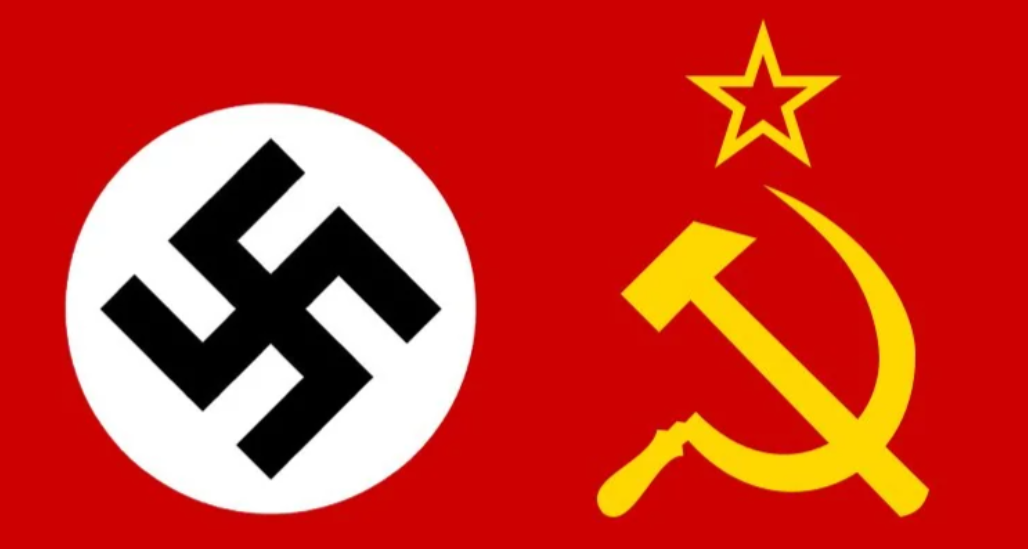
Nazi insignia and symbolism, including flag of Kekestan, while stylish fundamentally comes with the baggage of autocracy, totalitarianism and genocide. No one wants to associate themselves with people who run Auschwitz of Buchenwald, or those who suppressed democracy. Also, Jews hate Nazis and would oppose anything that endorses them, no matter what you think about Jews our fight is not with them, there is no point in alienating them.

Finally, pro-Russian and pro-Putin sentiment essentially comes with the same baggage as Nazi symbolism. Also, Russia is not as conservative right-wing utopia as stereotypes claim it is. If anything, Russia is more woke than woke itself. It's unwise to ally oneself to this wolf in a sheep's cloth that is more feminist than most feminist Bostoner. Finally Eastern Europeans, like Poles, hate Russia with burning passion. Poles are natural anti-woke allies and you do not want to alienate them over your pro-Russian sentiment.

Finally, traditional pagan religion, is too fragmented and varies between different places. It can devolve in the same factionalism as nationalism.


Of all that was tried, Ancient Rome is by far least problematic. However, it also fundamentally comes with a baggage. How to address Rome's ultimate collapse? What period claim as the definitive? Early Empire will repeal supported of democracy. Meanwhile Republic had certain flaws of its own and not as picturesque as Early Empire.


What is Best Alternative

However, there is something that is much better than Rome and that is Japan. That is what we do to unite the right and beat the woke.

Unlike rather forgotten Rome, Japan has lost of fans and hardly any haters. Even those who hate Anime or something else about Japan struggle to articulate their concerns and are often dismissed as pointless. 

Most of the right likes something about Japan. Alt-right watches anime, Muslims watch anime, Hindus watch anime, even Chinese who hate Japan watch anime. Everyone on the right likes anime, it's one thing that truly unites us.

That love extends to different aspects of Japanese culture. Japanese tech makes it seem like country from the future. At the same time, they have fondness for preserving beautiful things from times past. They even imitate beautiful things from other cultures to enrich theirs. Generally, Japan is land of beauty and appreciation of beauty. At the same time Japan is also a country of warriors who have high standards of nobility and honour. Japanese manners are impeccable and Japanese ideals about what women should be like is what most right can agree on. 

All in all, Japan is all we love and all we want our societies and the world be like. Yes, there are few things like karoshi and paternalism that we do not care or like, but for the most part the idealised and refined image of Japan is what we all aspire. So why not just adopt it as an identity?

Nothing wrong with such cultural appropriation and embellishment. If anything, woke cultural "Marxism" is far less Marxist than out cultural Japanism.  We can even use a more poetic word for it: Yamato Culture to distinguish it from actual Japan just in case and give us more ownership over the movement. I see no arguments against.


Yamato Culture of United Right

Yamato culture aspires future and technological progress. We want to see robots in our daily life, space exploration. We want to see men transcend their base outdated past and ascent to the higher level of existence, free from misery and privation and with resources to advance science, technology and culture. 

At the same time, we preserve what was beautiful and important about the past. If a culture has substance and merit, it deserves to be preserved. At the same time, we do not allow base and savage practices to continue into the future. 

Yamato culture is meritocratic and rewards ability and skill. We appreciate all things beautiful, intellectual and refined and reject all things ugly, base and savage.

We give equal opportunity, but do not take from those who are better to prop up those who fail. Equality not equity. Universal Basic Income over systems that give welfare to some but not to others.

Yamato men are men of high honour, high culture and high standards. They are noble beings who do not reduce themselves to things that are beneath them.

Yamato women are well mannered, humble, respectful and subservient to their husbands or boyfriends.


For individual terms to refer to ourselves and things we value or care about we can use long phrases such as Men of Yamato Spirit or men of culture, or men of Yamato or just Yamato. We can also use simpler the knights, samurai, nobles or the Lords. Noble spirit, Yamato spirit.

As for symbols, then while it's good to use Japanese symbols, but it will be good to distinguish ourselves from actual Japanese people and their things. For example, a Rising Sun Flag but with black instead of white background might work. Sun itself can be made yellow/gold instead of red, for better colour contrast (something like this), or a thin while outline can be inserted between sun and a background.


The movement should be primary cultural with no baggage that can slow us down or repel those who might want to join us.

We should avoid bogging down in any economic arguments as these are pointless in current socio-economic reality. Elon Musk said that work will be optional in 10 years' time, there is no point in splitting feathers over how dying economy will run in the meantime. We should be neither pro nor anti-tax or pro or anti-welfare or such. The only exception is support for UBI.

We also should avoid any compromises with women. Women do not appreciate when you meet them halfway, so we will not. We have out standards and values and if they do not meet those, we will not accept them. It's better to have less women but good ones, then have more but of questionable quality. No woke feminists, no Karens and no women liberation. Women who respect and admire Men of Yamato, can come with us, those who do not walk away.


We oppose woke because woke is ugly and uncultured. Woke drab, grey "socialist" so called "aesthetics" are ugly and unworthy of a man of culture.

We reject uncouth savagery of woke and those who participate in that culture. We reject woke's "black culture" as an insult to culture. We do not consider "gangsta rap" a form of culturally significant music and do not listen to it. Black artists who work in different genres like Boney M who sing disco are excepted. Yamato is anti-rap only. 

We do not support woke's so called "social justice" because it's not justice as we see it. We find woke so called "social justice" as unjust. Black people and women already have it much cozier than they deserve and we should take some of that away.


That is a basic breakdown of Yamato Spirit and Yamato culture that can actually unite the right. We should abandon old, outdated identities that no longer serve any meaningful purpose and unite behind one Rising Sun banner. 

"The side will rise."

Medieval Ranks of Nobility and Some Others Explained

  Recently there have been a lot of videos about ranks of nobility and such. Most of them are very bad as they simply do not understand how ...