Wednesday, November 26, 2025

Ukraine Should Improve its Propaganda and Claim 'Ukraine's Victory is Inevitable'


Recently I read a lot of twitter posts about war in Ukraine. Most of them are by Russian trolls, but there were some Ukrainian too. Russia certainly has advantage in number of trolls that push its narrative under various guises, here like on the battlefield Ukraine cannot match Russian numbers. However, while on battlefield Ukraine could win due to better training and equipment, when it comes to propaganda, Ukrainian one is lagging behind Russian.

To reverse the situation Ukraine needs to improve its quality and character of its message. Ukraine heavily relies on high moral ground. That was good for the beginning of the war. Back them it was important to establish that Ukraine fights for a good cause and supporting it is a right thing to do. That worked well and the world has rallied behind Ukraine.

However, time has passed, war is almost in its 4th year and thinking started to evolve from right vs wrong, to more real politic of who is going to win and does Ukraine have a real chance of winning or not. After initial fervor, some more cynical and practical Europeans and especially Americans now think that if Ukraine is going to lose anyway, then why drag out time and delay the inevitable.

Russian propaganda cleverly adopted towards this mentality and now regularly portrays Russian victory as inevitable. Meanwhile Ukrainian propaganda fails to do the same, still sticking to the narrative they adopted in the beginning of the conflict.

Sure, Ukrainian propaganda portrays Russian military as reprehensible and dysfunctional, but it always falls short of claiming the same bold statement as Russian one. Never once Ukrainian propaganda claimed that Ukrainian victory is inevitable and there is nothing Russian military can do to change this foregone outcome.

Sure, that might sound like a stretch, but there are good arguments to actually back this bold statement. Ukrainian soldiers are much better trained and equipped. Because of that one Ukrainian soldier can easily take down 5 to 10 Russian ones. Casualty rate proves this assessment. Thus, if war continues it is Russia that will run out of soldiers far before Ukraine, making Ukraine's victory indeed inevitable.

Ukraine can further back this claim with news reports that Russia issues its troops rusty and non-functioning guns without ammunition. Guns that do not shoot, do not win wars no matter the numeric advantage. Furthermore, Ukraine should point out that Russian troops do not know how to hold guns or fire them. Russian military lost 1 500 000 soldiers but claims they are 'wining' against the military that lost only 200 000. All that makes Russian victory an impossible frivolous fantasy of Kremlin that should not be taken seriously. To sum all that it's pretty clear that continued war will certainly result in guaranteed Russian defeat and Putin should stop wasting lives of Russian soldiers and withdraw.

Current Ukrainian propaganda does not suit the prolonged war Ukraine currently fighting and should be changed to better affect the global moods. Ukraine should start portraying Ukrainian victory and Russian defeat as inevitable and forgone conclusion.

Monday, November 24, 2025

Why Unions of Culturally Close Nations is Horrible Idea


Recently received popularity received the idea that culturally close countries should either stick close to one another or even unite into single country or a union. In Russia idea that Ukrainian and Belarussians are "brotherly" was always popular. That idea justified special treatment of these two countries. Most recently it was used to justify Russian War in Ukraine. Defenders of this idea would explain war not as one between distinct nations, but more of a "family argument." No matter how preposterous that sounds, for defenders of this idea in Russia it somehow makes sense. China too started to use this argument towards Japan and South Korea, arguing that these three East Asian nations should be closer to each other politically and ideologically.

To justify such ideas, various family like terminology is used. Nations are called "brotherly" so that collectively they can be called "family". That way supporters can argue that family must stay together and that outsiders should not mess with internal family relationships. At first glance they sound as innocent and even benign ideas. If countries are close culturally would not, they have easier time to understand each other and get along? Reality's answer to this question is resounding no.

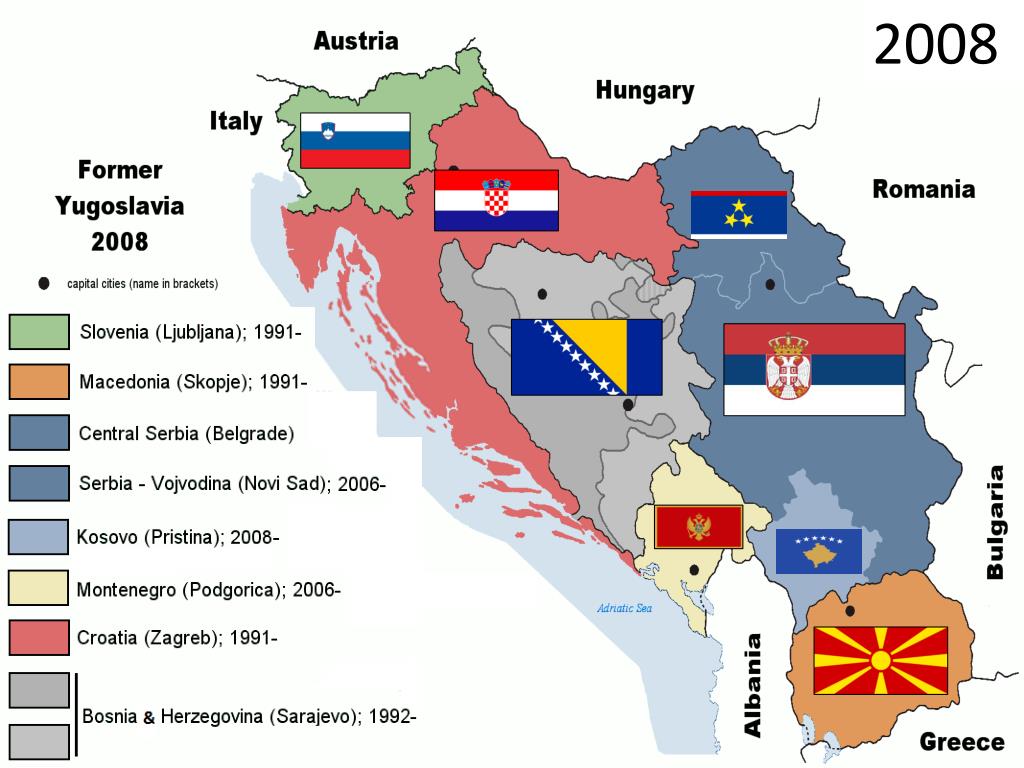
Take for example Yugoslavia. It had all the ingredients of such cultural union: culturally close "Brotherly" nations, single ideology, even single language for 4 out of 6 members of the union. What could have gone wrong? A lot. In fact, so much that wars of dissolution of Yugoslavia were plagued by literal genocide. The two most distinct members with their own languages: North Macedonia and Slovenia seceded easily but it was complete bloodbath between the remaining four. The closest members of the union hated each other more than more distinct ones.

Reasons for this hatred are many, but most of them stem from the very common root that connects them. Because of old grunges that four had against each other, they could not agree who should own what or why. Each side had a score to settle and blame the other one for myriads of different reasons. Long time existing next to each other accumulated lots of issues that one held against the other. Eventually these issues became so many that when Milosevich pushed for reforming Yugoslavia in Serbia's favor it became the last straw and Croatia, Slovenia and Bosnia declared independence, Serbia responded with war.

One may counter-argument that these conflicts were due to different religion. For example, Serbs are Orthodox Christians and Croats are Catholics. That may be true, but Slovens are also Catholics like Croats, yet Serbs hardly had any issues with them and let them out of the union without an issue. With Croats Serbs instead fought a long bloody war over who owns what. On the other hand, common religion did not prevent Slovens and Croats from arguing over territorial waters to the point that Slovens even blocked Croatian accession to EU until that issue was resolved.

Finally North Macedonia who could divorce their Yugoslav brothers without an issue or resistance due to having different language and culture, later get involved in conflict with Greece over Macedon heritage as well as Bulgaria over language and identity. Language of Macedonia is closer to Bulgarian that to Serbian and so Bulgarians see it as dialect of Bulgarian rather than independent language. North Macedonians disagree.

From all this real-life experience we can learn that there are two main reasons for conflicts between nations, common borders and common origin. Having something in common does not create harmony and eliminates conflict. Far from it, common things create conflict over who really should own it, how it should be used and so on.

It was the same in the past. For example, 100 years' war between Valois France and Plantagenet England only happened because both kings were related to the late Capetian French king and both claimed to be rightful successor to the throne.

It works the same on individual people's level. People fight lengthy and expensive court battles over inheritance. Relatives end up being much worse enemies than outsiders.

Neighbors too are often worse than someone more distant. During WWII the worst atrocities against Soviet people were committed not by Germans but by their allies, Ustase Croats, Fins and Romanians. Romanians had a grunge on USSR for forcing them to give up Bessarabia (modern Moldova and surrounding areas). After Operation Barbarossa, Germans not only returned Bessarabia to Romania but also gave them gave them territory between Dnisro and Southern Bug, including Odesa. That area saw a much crueller and more oppressive regime compared to Reichscommisariat Ukraine administered by Germans. Anti-western and pro-Russian sentiment still lingers there much stronger than around Kherson further east. Finns lost territory to USSR in brutal Northern War of 1940, in Continuation war as German allies Finns have special reason to take revenge on Soviets for their past invasion. Brutal fights between Partisans and Ustase was a precursor to future Yugoslav dissolution wars.

As you can see common origins and borders create conflicts not unity or ability to cooperate.

Current war in Ukraine is no exception. Russia calls Ukrainians "brothers" but that does not mean Russia will treat Ukraine and its people well. Russians like to joke about Ukrainians and clearly do not see them as equals, but rather as sort of inferior country people that speak funny dialect. That offends Ukrainians greatly and they in turn make fun of Muscovites in a jarring manner, that in turn offends Russians. Add to that Ukrainian grunge over how Russian Empire treated Cossack Hetmanate and you have anger that is waiting to find itself an outlet. Ukraine takes it out on vestiges of Moscow control such as Lenin statues and Russian language while honoring people who stood up to Moscow and whom Moscow considers traitors or Nazis. That in turn offends Russia.

Russia thinks that Americans are behind the war in Ukraine, but in reality, its Ukrainians' own feelings and Moscow own condescending attitude and past insults they carelessly hurled around that led to that. If anything, Americans are by far the most puzzled over the whole issue. For them it's incomprehensible how one can lose million and counting soldiers in a dispute over few statues in cities average Russian will not even find on map. America has its own emotional matters like abortion or gun control that are hard to understand for outsiders but there they are being levelheaded.

Europeans are behind the war too, but not again the ones Moscow thinks are at fault. Germany and most Western Europe tries to dodge the whole issue altogether, France and UK are strongly on Ukraine side, but they keep their cool too. Who really invested completely is Poland, Baltic States, Sweden, Finland and the rest of Eastern Europe. And just cause Orban says pro-Putin things does not mean he does not send Hungarians to fight against Russia, he is just playing cunning here. Unlike Western Europe these guys too have old scores to settle with Russia over past insults and grievances. Partitions of Poland, Prague Spring, Hungarian invasion of 1956, Winter War, Great Northern War. All whom Russia ever offended now piling up against it in some Karmic justice fashion. 

If anything of all countries in the world, Poland is by far most Russia like. Poles themselves will chaff at mere thought of this and claim that they are nothing like these Russian vatnik alcoholics who do insane shit when they drink too much Vodka, then will proceed drinking Vodka to not being like Russians at all and then go on to do wild shit breaking stuff around them. Both are proud, full of themselves and condescending towards other. Both think they make great big brother to smaller people around them. Both once had a great empire they were very proud of, both now will get out of their way to get revenge on those who destroyed it. In case of Russia its Americans and "collective West", for Poles its Russia. All these similarities do not build any unity, only add to the hatred.


It more or less works the same way in Asia as well. Take China, Japan and Korea. Cultural similarities only create conflicts between the big three. China thinks they can count on seniority and size that will make them leader of the three, Japan thinks they have long surpassed China and has to be acknowledged as new leader, Korea just hates them both for always leaving them behind as number 2, they think they work hardest but it's never enough to best either of their peers. Once again past grunges dominate interactions between these countries.


Finally with all that cultural similarities, cultural differences look not as diversity but as a deviation or improper behavior. People are more willing to forgive cultural mistakes to people they consider foreign than to those they consider of the same or similar cultures. That is why in the eyes of Russian chauvinist English is a foreign language, but Ukrainian is only Russian language spoken incorrectly. Needless to say, this attitude does not endear Russian chauvinists to Ukrainians in the slightest.

These differences are not limited to just language. Other traits differ too. Few and in between for an average outsider, they nonetheless could be make or break for the people themselves. In fact, these differences are what caused the polities to break up in the past. Nowadays no one remembers the details, or just simply refuse to talk about it, but still remembers the hatred. 

In the US North and South fight over gun laws, abortions, culture and more. The rest of the world look puzzled, but these things matter a lot to people in the US. Back in the days, Connecticut, Rhode Island, New Hampshire and Maine all broke away from Massachusetts bay colony over disagreement on religions rules or how important they should be in society. Issue of European rule of law vs Eastern Autocratic rule splits Russia and Ukraine as well as these and other post-Soviet societies from withing. 

Different Asian countries have different attitudes towards seniority and women. Mainland China and Vietnam practices uncharacteristic to Asia feminism but maintains traditional Chinese seniority. Taiwan and Chinese in Singapore and Malasia maintain traditional role of women. Japan is very lax and flexible on seniority compared to Korea and China, but very strict on male supremacy and women subordination to man at all times. Japan has concept of usurpation of authority from below, but China does not.

West likes Japan more than China since there is no seniority in East Asian sense in the West and a Westerner will think it's ridiculous, unless they are old themselves. On the other hand, submissiveness of Japanese women appeals to a western person as Western women are not submissive but Western man clearly desires a submissive wife.


Successful unions are not built on cultural similarities or common origin. They are built on common economic benefits or common threats. Small or heavily asymmetric unions always collapse due to conflict over power and influence. Large, mix culture unions with relatively equal sized members work much better. Common culture more often than not produce dispute over who plays what role as similar culture countries tend to compete for the same role, sometimes causing conflicts.

Real Root Causes of War


Putin likes to talk about nefarious "root causes" of war. Most people wonder what that even means, yet Muscovites never bother to clarify that. This remains something like "he, whose name must not be spoken". Most likely it is something that Europe and the world will condemn as utter nonsense, so Russia avoids talking about it.

Yet there are real root causes, and it's all Russian fault. Back after the USSR collapsed there was clarity in the world. Soviet Marxism-Leninist communism failed, Western Liberal Democracy won, and the future of the world will be structured along the Western Liberal Democratic model. 

I would like to clarify here that it was not Western plot or some CIA action, that took USSR down. Its own Soviet people went to the streets and said enough is enough, we do not want this communism anymore. Even if Reagan managed to push oil prices down to weaken Soviet economy, it was not the root cause of Soviet collapse, the root cause was the fact that people were fed up with ascetic existence, censorship, constant ques and shortages of consumer goods. Soviet system failed to fix these problems that were non-existent in the west and people choose to abandon communism.

Back when I lived in Russia in 90s, Yeltsin was president and Russia followed the Western path towards future and prosperity. There were some who wished to take country back, but majority was in favor of pro-Western path. Putin even won over Primakov in 2000 elections because he was more pro-Western than the latter. If Yavlinsky or Nemtsov succeeded Yeltsin and Russia continued its path towards the West, it would have joined EU and NATO by now. Quality of life would be similar to Polish or even Czech.

Alas the country went astray. It began jailing dissidents, suppress freedom of speech, assassinate political opponents and more. I left Russia and after a while stopped even following news of what is going on there. Australia and the world have their own local challenges, so I had no time for Russia, not patience to look at Putin's autocratic exercises. I still kept my eye on Ukraine, Moldova and Georgia as they were moving towards the democracy and EU. Seeing their progress filled me with joy. In contrast Russia's ever-increasing autocracy was painful to watch so I ignored it.

I assumed that Russian autocracy was merely a cynical power grab by Putin and his cronies. That it will be temporary, like Franco's rule in Spain and once crafty and cunning Vlad will die, democracy will return. However, that might have been an error.

I heard of Dugin before but never took him too seriously. Crazy radicals are nothing new in Russia, there were people as crazy as Limonov, Barkashov (founder of RNE) and more, they have but a few dedicated equally insane followers but not much more. I assumed Dugin is the same, just another madman who maybe believes in his nonsense, but hardly anyone believes in him. If I had to estimate his followers, I would have said 2% max.

However continued war in Ukraine and ever senile statements from members of Kremlin's regime made me rethink this assessment. If they are indeed truly and without reservations embraced the insane ideas of this madman, then there is nothing in common between me and them anymore. 

It's not like Russia does not have liberals who advocate reason, liberty and prosperity: Yabloko, Russia of the Future, Another Russia, PRP-Parnas, Solidarnost all advocated for a better path but were ignored, silenced and murdered. I thought that Putin and his regime silenced them because they are afraid of freedom and democracy that will remove them from power. However, if majority indeed chooses to ignore voices of reason in favor or drivel by a madman Dugin, a madman who will leave them as prey to PRC's imperialist ambitions, then I am not part of their country. 

If Dugin is Russia, then I am not a Russian.


In view of all that, war in Ukraine is not a war to resolve differences between "brotherly nations", but a war to decisively break these relationships. European Ukrainians have nothing in common with Duginist Eurasian Russians or Duginist Eurasian-Ukrainians for that matter. Same how European liberal Veishnorian-Russians have nothing in common with Duginist Eurasian-Russians. Ironic how Dugin, who talked about uniting Russian people, ended up splitting them instead.

In view of the above there nothing more to say or argue. New Cold War has descent on the world. War between OECD and Western System on one side and Quadruple Alliance on the other (PRC, Russia, Iran, North Korea). Ukraine will not surrender and will not lose, considering that rate of causalities favors Ukraine, Russia will run out of men far before Ukraine is. Russian victory is impossible. Russia can either keep sending its Eurasian orks into Ukrainian meatgrinder until every single one of them is dead or agree to a ceasefire and a DMZ in Korean style.

The choice is between Second Iron Curtain and a continued slaughter.

Saturday, November 22, 2025

Small rather the Big Business is the Real Villain


It was always popular to bash big business. Everyone from unemployed to government bureaucrats and even smaller businesses seem to agree that big business is the problem. Billionaire bashing is favorite pastime of many people around the net and real life alike.

Big biz fights back by calling out envy, particularly targeting min wage workers as the biggest problem.

However, both overlook the real villain, the small business.


At first glance small business does not look like villain. Very ordinary local guy or sometimes family work hard to keep their enterprise afloat. They work longer than many others, wear many hats as they have to be managers, accountants and fulfill various other roles necessary to keep business running. They provide custom tailored service to the local community that reflects local spirit rather than just pump out mass produced stuff, made across the world. What not to like? Thanks to all that all the small businessmen, wear that badge with pride.


That however is but half of the tale. Negatives of small business clearly outweigh the positives. However, before I list the negatives, I will explain one fundamental reason, why small business is unviable in principle, economics of scale.

Reality is that economies of scale work against small business. One can eternally rant on how multinational corporations push their soulless produce, or how Le Corbusier homes lack character, but they have one clear unsurmountable advantage, the price. Mass production is infinitely cheaper than small custom or handmade stuff. For the price of one t-shirt in boutique store, one can buy around 10 t-shirts in a mass production store. Groceries are always cheaper in large nation-wide chain stores compare to privately run corner stores. The same for any other goods from bread and potato chips to even homes. Say all you like about Le Corbusier design, but for the price of one single home in traditional style you can have the entire suburb build with Le Corbusier methods.

Sure, in times of affluence and prosperity one can indulge themselves and splurge extra for some niche product from a boutique store that only they and their three friends find appealing and everyone else thinks it's stupid. During such affluent times it can be profitable and reasonable to run a small business, specialising on something nieche or extra luxurious. 

However, when times are rough, austerity runs rampart and no one has enough money, paying extra is not only unwise, but also downright stupid. We live in austerity world since Financial Crisis of 2008, everyone is short on money. No one can afford to splurge anymore. So, did we phase out small businesses and their unnecessary wasteful operations? No, far from it, small businesses are still everywhere. Their owners wear their status with pride and call themselves backbone of the society, despite being essentially dependent on government propping them up at expense of everyone else.

Defenders of private enterprise here would likely say: "people should have freedom to do what they want, including starting and running a small business if they wish to. Government should not just ban them from doing so; it would be totalitarian" Such an argument would be reasonable if small businesses were indeed run personal ability without being propped by the rest of the society: If such small businesses were indeed run profitable entirely through their own effort and were able to make profit and pay its employees, the salaries they are entitled to, taxes and so on. If the conditions set in the previous sentence were met, I would not have opposed small businesses. However, the reality is that vast majority of such small businesses do not meet this condition.


Without government propping small businesses with variety of measures, most will not be able to survive at all. 

Most will not even be able to open, as no true private profit minded bank will ever give money to such an unviable enterprise where upfront costs are large, profits are slim and far from guaranteed. The only reason they even get loans is thanks to government central Bank policy to lend money to such businesses. Yes, the Fed (Federal Reserve), that defenders of private enterprise like to hate so much, is only reason they even exist. Other government policies like creation of employment initiatives (more on them later) or tax insensitive further prop small businesses. 

Logistics is another area where small business depends on others, in this case big business. Large corporations like Linfox or Maersk, that own tanker ships, cargo trains and lorries. They ship products that small business sells in their stores. Without them small businesses will have nothing to sell at all. Only big business has sufficient recourses to ship something from where it is produced to where it sold. The local coffee shop will have no "local" coffee to sell without Maersk shipping it from Peru but Maersk can easily distribute their goods through many other stores. Yet here again people praise small business and not the real heroes who make it happen.

Finally, labor. Small business could offer their employees neither competitive salary, nor good working conditions. People who work for small businesses clearly have it worse that those who work for government or large public companies. Just like their boss they have to wear many hats but unlike him they are not properly compensated for that. At best they get minimum wage, but often not even that as many small businesses underpay their employees either by not properly counting the hours they have work or even downright paying less than legal wage. Small businesses also often employ illegal migrants because no matter how you underpay a local, a migrant from a country that lives for $1 a day is always cheaper. Some businesses like food delivery, reclassify their employees as contractors to avoid paying them legal wage or provide them with their due legal entitlements. 

Also, no matter how hard a small business employee works, their boss will always think they are not working hard enough. Hence a toxic working conditions where boss constantly pushes to do more and more and more. Reality of economics of scale prevents small business from succeeding but those who run these businesses instead blame their employees. 

Despite obviously subpar working conditions and inability to survive in actual free market, small businesses successfully lobbied government to help them hire cheap labor. Government policies such as "work for the dole" and mutual obligations are misused to fill the employee ranks of unprofitable small businesses who will abuse such workers and likely underpay them as well. Here again small businesses only survive thanks to sacrifices of their employees, but instead of being grateful, they bash minimum wage workers non-stop, blaming them for everything.

To sum it all up, without government policy that favours small business, support provided by large businesses as well as sacrifices of their min wage employees, absolute majority of small businesses will not be able to survive and will go belly up (bankrupt) in no time. Despite this obvious fact, instead of being grateful for what they have, most of small business owners never stop reviling government, big business billionaires and min wage workers, blaming them for the problem, they themselves are.


In view of all of the above I see no reason why we continue to prop these arrogant and entitled small business owners. Big businesses like logistics or major grocery stores are essential, without them the society will stop and starve. No one is going to die without a small coffee shop, even more so in current cost of living crisis where their expensive overpriced coffee is simply too expensive for majority of people and only boomers with millions in super would bother splurging for it. It is pretty much certain they are not making profits from what they do. Why continue to waste money to keep the afloat? They hardly create any jobs at all and those they create do not pay adequate salary, leaving people better off on the dole rather than working there. It's unfair for the rest of the society to keep sacrificing for vanity of these small business owners. Sponge Bob cartoon satirised them well enough. Money and resources they use are better spent elsewhere.

Here I would like to clarify that I am not for complete abolition or ban of all forms of small business. Those who are able to make decent profits, pay their employees decent salaries and provide them with decent working conditions do deserve to continue their business. However, those who are unable to achieve these things have to go. People who used to work for them should be transitioned to a perpetual dole. There are also certain situations where small business can really be very useful and valuable for the community it serves. Such small businesses have to continue. 

However far not every small business is like that. A lot of them are more of a hobby pursuit of a cheapskate entitled owner, next to no customers and underpaid and abused employees.

In general, our society has to make peace with and transition to a system where not everyone works and some perpetually live off welfare or UBI. This is simply an economic reality of the level of technological development are currently at. Most work is unprofitable, unduly wastes resources and in summary not worth doing. Instead of continuing wasting resources and time, we should put effort in transitioning to a society where robots work and humans' rule and do things they actually enjoy rather than fill in cashiers in a store where hardly anyone buys anything.

Thursday, November 20, 2025

On 28 Point Peace Plan

Recently there was a leak about secret peace plan to end War in Ukraine. Different News agencies report different points and terms, so it is hard to judge how reasonable it is. Some claims are clearly absurd, but others are closer to meaningful.

I will analyse the one from ABC article

1. Nothing wrong

2. What kind of non-aggression agreement and what it will contain. Russian promises to not attack in future are not enough. There should be something that physically prevents Russia from attacking.

3. Ukraine, Georgia, Armenia, Moldova and Azerbaijan all will want to join NATO. I do not see how it is feasible to not expand NATO. With no protection Russia can simply invade them and install puppet governments there. If not NATO, a separate security arrangement has to be agreed in advance. Again, a promise from Russia is not enough.

4. Nothing wrong here. It seems like a pr-opportunity for Russia that we can allow.

5. Security guarantees have to be agreed in advance, not at some time later. They have to include a guaranteed international retaliation against potential future aggression against Ukraine by Russia or any other power.

6. Considering that AFU were smaller than 600 000 before war begun, they can come to this number. Some of those currently fighting will be demobilised and become reserve. Of course, this number should exclude paramilitary National Guard battalions and reservists.

7. If it is about optics and Russia wants Ukraine not in NATO on paper even if Ukraine still gets Article 5 like security, then it is OK, but it's not OK if Russia wants to keep Ukraine without any security at all and open to subsequent Russian invasion. 

Wording should be like: "In case of Russian, Belarussian or any other foreign invasion into territory of Ukraine, the guarantor states are obliged to declare war on the aggressor, assist Ukraine in defending itself and repeal the invader from its territory (borders of the defendable territory will be decided by this agreement)."

8. Without NATO troops, who will provide security and monitor demilitarised zone?

9. Are European jets in Poland supposed to protect Ukraine or for any other reason?

10. What safeguards there are against false flag operations? It is rather inconceivable that Ukraine will attack Russia, but it can be used by Russia to create a casus bello to invade Ukraine again. Russia already claimed Ukraine attacked it in this war so it's not too much of a stretch Kremlin will claim so again in a future invasion.

11. All good

12. All good

13. OK I guess

14. OK

15. The whole peace agreement or just point 14. If whole agreement, then it can be exploited by Russia to interpret the agreement to detriment of Ukraine. The US, EU, Ukraine and Russia should interpret terms of agreement in quadruple format.

16. Nothing wrong with that, but it will not be enough as security guarantee.

17. OK

18. Ukraine already has no nuclear weapons, why it's on the list? UK and France, an offer Ukraine a nuclear umbrella. 

19. Good

20.1 European law on minorities is not the same as Belarussian system where Russian predominates, and Belarussian effectively banned. It will not make Russian second official language. Nonetheless Ukraine can provide Russophones the same rights as France offer Bretons and their language, but certainly not the same rights Belarus offers to Russophones. Same for Hungarians to keep Orban happy. In actuality Ukraine already ratified the charter.

20.2 Orthodox Church of Ukraine is the predominant and official church of Ukraine. There are no restrictions on orthodox worship, but Russian orthodox Church have compromised itself as Russian spy agency and cannot function in Ukraine unimpeded and without surveillance from SBU.

20.3 Common ground on history should not mean Ukraine has to adopt Russian version of history. Ukraine's version is by far more accurate of two.

20.4 It has to be clarified that UPA or Stepan Bandera were not Nazi. Azov Regiment is also not Nazi organisation. Ban should not apply to them or organisations like them.

21. There has to be a demilitarised zone between two armies, guarded by either NATO or UN troops. UN troops should also control parts of Donetsk Oblast that currently controlled by Ukraine. Ukraine should be given enough time (1 year) to establish another defensive position behind these lines before relinquishing control of fortress belt.

22. Same as point 10

23. Dnipro, not Dniepr

24. Good

25. There are laws on that, but I think they will fall withing 100 days since the end of war. 100 days will count from definitive end of all hostilities.

26. Putin wants to avoid Hague; I guess we have to concede it.

27. Who else will be on consul? We need to make sure consul will not be misused by Russians to misinterpret the agreement in Russia's favor.

28. OK. However, Ukraine needs to make sure that ceasefire is observed and not violated by Russia for at least a month before removing martial law and calling the election.

Tuesday, November 18, 2025

World Should Prepare for Post-Russia World


Back in the days I wrote articles on how better reorganise Russia into several different nations. These were party theoretical, partly rough plans for long-term future. I assumed that while collapse of Russia is inevitable, it will happen in more distant future of next 75-100 years, much like it did for Ottomans.

However Russian continued war in Ukraine made me re-think that assumption. If after all this time Russian leadership still thinks they can win, they are downright delusional. Russia starting war in 2022 could have been explained by variety of factors: imperialistic opportunism, distraction from internal problems, elimination of demographics hostile to Putin's rule and so on. However, any of these reasons would eventually lead to Kremlin either settling on some ceasefire or let war die down like they did with original war in Donbas where no agreement was implemented but fighting gradually fizzled out.

The fact that despite all that Russia continues fighting shows something else. That Russian leadership is delusional. They lost touch with reality and either grew to either believe their own lies or someone who believed these lies all along took real power in Moscow and now steers it towards full on confrontation. Such actions clearly contradict reality. Russia is weak and it will only grow weaker as time goes. It cannot win against EU or NATO. Thus, those who insist on continued fighting are either foreign agents (of Poland or China most likely) that want to destroy Russia from within or delusional local idiots who think that Russia is still a superpower capable of winning or projecting power. It is also possible to assume that Poland deliberately helped Russia's own delusional idiots to take power and start this war.


Regardless, if its work of Poles or local idiots, Russia is currently controlled by delusional people who are completely out of touch with reality. The very fact that something like this is possible in current Russia is a danger to the entire world. These delusional idiots are currently on course to completely destroy Russia from within, leaving an empty shell of a nation. 

If war continued, drained down Russia will be ripe for China to overtake by stealth. Chinese been crossing their norther border into Russia for some time now, thanks to Putin's war, that will only intensify as now Russia has shortage of people and will need Chinese to take jobs vacated by conscripted locals. 

Needless to say, that Chinese takeover is not something that will benefit the world. If China gets whole or most of Russia it will become too powerful to deal with. Thus, West has to pre-empt Chinese takeover by interfering in Russia, directly taking parts of the country and splitting the rest into viable smaller nation states that will have no capacity to wage war. 

Doing nothing poses other risks too. For example, Russia has nukes, corruption possibly destroyed them, but there is a chance they are still operational or can be tinkered with to work somehow. Since current Russian leadership is delusional, they may use these nukes when backed into a corner. One of Putin's famous quotes was about cornered rat.


As things stand now, Russian leadership is on course to completely exhaust its male population in the grinder of its war in Ukraine. After that collapse of Russian state will not just be inevitable, it will also become an imminent rather than long term prospect. 

Thus, world has to prepare itself for this outcome and think of the ways to reorganise former-Russia into something viable and fitting modern times. Articles I wrote over the course of several years can be very helpful in deciding how to re-shape Russia. Maps like these are curious but they do not take local realities into due consideration. 

Modern European Russia has to be split into smaller units, around 10 to 15 million people each as in this size they will have easier time joining the EU and NATO. Logistics and rivers also have to be taken into consideration. Geographic features have to be taken into consideration too to make sure defence is easy and invasions or aggression is hard. Don basin should be in a different country from Volga basin and generally rivers should be divided in a way to avoid any single nation from hogging up all the key logistical routes and exploiting others for access to these things.

In contrast Siberia should be divided into larger units as these areas are sparsely populated and too small of a nation will not be able to defend itself or even effectively control its territory. Americans should annex East Siberia and Far east directly into the US and develop it Alaska style. West Siberia can survive as its own state and will be very rich thanks to oil and gas exports. It should be a successor to modern Russia but should not called Russia. Lena River can be a border between American Siberia and Independent Siberia.

Russian current subdivisions should not be used uncritically in determining new borders. For example, Ural Mountains make for a good natural border and thus should be border between new states rather than have a state stretching all along this long mountain range.

Pragmatic side of Russian elites can be enticed into supporting this plan with promises to give them control of the Independent Siberian state. Hydrocarbons from this state will only enhance their opulent lifestyle as they will no longer have to support the rest of Russia with the money they make. Patriotic elites will have to be eliminated.


Suicidal actions of current Russian government leaves world no choice but to prepare for near term Russian collapse. To prevent parts of collapsing Russian state from falling into Chiense hands, West should plan for the collapse and be ready to act when time comes. Bribe elites with lucrative Siberian state, split European Russia into manageable for Euro integration medium size states, finally annex far eastern parts directly into the United States. That way we can ensure the orderly transition and stability for years to come all while PRC and CCP get nothing, or just token concessions. 

Saturday, November 15, 2025

Why Italian and German Unification Succeeded but Slavic One Did Not


Nice video about why Italian and German unifications have succeeded but Slavic ones did not. He started well but then went into mysterious Slavic soul that is different from Western One.

I can explain it simpler. Germany and Italy were united by an arguably best and most developed of states of their cultural sphere. 

Savoy-Sardinia-Peidmont had the most advanced and develop economy and technology of all Italian states. Other Italian states, even large like Two Sicilies clearly lagged behind in these things. They were also the only one who were ruled by native dynasty and not cadets of either Habsburgs or Bourbons. Thus, joining Savoyards meant sharing these advances. On the other hand, Savoyards were willing to share their wealth and development with the rest of Italy in exchange for unification. It was an exchange where each side gets something out of it, thus both sides were at least satisfied with it. 

Nowadays it's the north that complains about this deal rather than south. People who united Italy feel they do not want to share their wealth with the rest anymore.

In Germany Prussia was clearly the pre-eminent military power. It was also the most industrialised of all German states. Other states could see it as both protector and benefactor who could actually offer them something in exchange of their sovereignty. Prussia first won traders with Zollverein that abolish customs controls between German states. Then ordinary locals. Finally, leaders of the German states had to be placated with complex federal arrangements that will keep their privileges and crowns on their heads, just take some of their powers away. Crowns were later removed, and territories reorganised but that only came later.

Fundamentally in both Germany and Italy the most developed, advanced and powerful state was willing to share these things with poorer and weaker states in exchange for unification. Small guys actually benefited from these unions.


In the Slavic states it was the other way around. Both Russia and Serbia maybe the most numerous population wise, but also the poorest and most backward of all the states they tried to unite under their lead.

That meant that only the leaders benefited from the union. More developed western states such as Poland, Ukraine, Croatia and Slovenia not only did not get anything, but wealth they managed to create was taken away by their unifiers to be distributed elsewhere. Neither Russia nor Serbia could actually give their fellow Slavs anything, standards of living in both of these states were far below their neighbors. 

Despite not being able to offer anything, both Russia and Serbia took plenty from its wealthier neighbors. It made more develop Slavs feel they are just being plundered by their dirt-poor neighbors. Needless to say, other states did not want to be net donors to the union who not only gets nothing in return but does not even get a say over anything. The more develop western Slav state was, the more it loathed control by their greedy useless deadbeat eastern neighbor.

To make matters worse both Russia and Serbia were autocracies due to their past in Golden Horde and Ottoman Empire. These countries governed in top-down manner by means of intimidation of population, copied from their former oppressors. A mode of government average Westerner will consider tyranny and oppression as it is closer to a military occupation administration than a native government. In contrast Western Slavs had European style responsible governance with elected consuls, debates, discussions and so on. Being deprived of this responsible government by their autocratic neighbors did not bode well with these people.

Needless to say, this one-sided union where only unifier benefits and everyone else only loses was not in the interest of the smaller states. Everyone, but dominant ethnicity saw it as downright oppression, tyranny and shameless plunder. Needless to say, that they shook off their oppressors at the first opportunity and never looked back.


That does not mean that Slavs cannot be unified. Recently European Union attracted many Slavic nations. Just like with Prussia and Savoyards, EU can actually offer Slavs something in exchange for the unification. That something is European responsible government and higher standards of living. That is not something either Russia or Serbia has. That is why pan-Slavism is dead and European Federalism is the future.

Thursday, November 13, 2025

Pro-Culture vs Counterculture

People often talk about cultures. These are often basis for personal identities, that keep people distinct from one another, create basis for different nations around the world and so on. There is also plenty of talk of subcultures, small colourful things that allow people withing any given country to distinguish themselves from their peers without necessary going against main culture.

What gets rarely mentioned and almost always negatively is a counterculture. It often viewed as dangerous, violent and undesirable. However far not every counterculture is violent or about violence. I wrote one other article about this topic but now think it was not enough to cover this phenomenon sufficiently.


To begin with I need to set a definition. In this and my other articles, counterculture is an inversion of the country's official culture. Inversion like the inverted colours of the flags in the picture above. Why it is so I will explain further below.

To begin with I have to outline how official culture is formed. Sure, one might say it develops organically overtime as a reflection of people of any given land and such. However, reality is that government plays much greater role in shaping this culture than most willing to give it credit for. Of course, more often than not it does it in a subtle way to avoid making people suspicious. Government can promote and encourage certain trends and developments while discouraging others. Why do so? Simple, to better shape society to a form desired by elites. Traits elites find desirable are claimed to be part of national character and culture meanwhile traits they do not like are called un-Australian or un-<insert country name here>

Different governments find different traits desirable or not. Sometimes it's just minor matters of aesthetics but other times these differences are much more substantial, producing cultural antagonism between different governments and their societies. 

Most recently war in Ukraine can be explained with such cultural differences between Europe and Russia. More and more people in Ukraine and other post-Soviet states embracing European liberal democratic culture and that makes Russian elites fearful of losing their power to the common people. Europeans, who deliver their power from people, do not fear that and mock antagonism of Russian elites. Russian elites fear the same end suffered by Charles I and Louis XVI frantically try to figure out how stop democracy from beheading them as well. They and I have no doubt that they are guilty of the same crimes, these two monarchs were beheaded for. Just like them, they try to avoid being judged for these crimes. I personally want to see their heads roll.


However back to culture. There is a physical concept that any force produces an equal amount of counterforce. If we apply it to culture, we can say that any official and promoted culture will create equal amount of counterculture. Why does that happen? Because not everyone can relate to traits and values, official culture acclaims and promotes. Some bound to find these to be downright wrong and wish for a different alternative values and principles. Gradually these alternative countervalues will produce a counterculture to match.

The stronger and in a more ham-fisted way government tries to shovel its official culture down people's throat, the stronger the resistance to it will grow, eventually resulting in stronger and more cohesive counterculture. Generally western liberal democracies handle this much more subtle and skillfully than dictatorships. Thus, western countercultures typically remain weak, scattered and undeveloped. Only truly lunatic people embrace them. 

In contrast many dictatorships that overuse censorship and coerce people into official culture using police and threat of prison often end up with strong and cohesive countercultures with their own symbols, ethics, values and more. Sometimes these countercultures could even pull off a revolution and overthrow the regime. Clearly dictatorships are shooting themselves in a foot there, but they do not see it this way.


Just like cultures differ from one another, countercultures also differ from one another. Russian counterculture will hardly have anything in common with a British counterculture. In fact, most countercultures tend to think of themselves as having more in common with official cultures of one or another foreign country. Western leftists idealise "Socialist" countries, rather erroneously thinking they are the same as their countercultural views. Russian and other eastern countercultures idealise Western democracies instead for much of the same reasons. Once again there are differences between Russian counterculture and official cultures of most Western countries, but these are less apparent than between Western socialism and actually communism.


As I mentioned before counterculture is an inversion of any given country's original culture. Its traits are opposite of the tenants of the official culture, traits official culture labels as flaws and wrongs, becoming virtues of counterculture. It's much like psychological trauma that pushes a person towards the polar opposite of things that hurt them. 

For example, when it comes to picking one's girlfriends and wives, men tend to choose someone who resembles their mother. However, if they had conflicts with their mother and associated psychological trauma, they will instead look for a girlfriend who is unlike their mother in every way imaginable, the more different the better. They will think they will not repeat the same mistake so they will not choose a person that shares any similarities with their mother.

In the same way, counterculture treats anything that resembles their official culture with wary and disdain. Western leftists equate social democracy with fascism because some commie once said so, eastern anti-communists think anything with word socialism in it will mean Gulags and Pol Pot style purges.

On the other hand, counterculture can justify a lot of traits typically considered bad. Most official cultures wanted to cultivate one or another form of virtue. Some of these virtues could end up being seen negatively by counterculture that will instead value a corresponding vice. Western countercultures tend to indulge in social disturbance, property destruction as well as blaming West and capitalism for every problem out there, no matter how unrelated. Russian countercultures tend to approve tax avoidance and downright stealing from the state as well as calling state and government in itself evil.

Reasons for these behaviors lie in certain aspects of the official cultures of any said countries. For example, in the West there is strong emphasis on rationality, skills and abilities. Common good is praised but not at expense of self-interest. Facts matter more than emotions and emotions are sometimes mocked altogether. Thus, counterculture embraces these things instead, going all "my feelings do not care about your facts", as well as embracing the benefit of majority ethos of socialism. Finally western respect for property and value of material things lead towards counterculture just wantonly destroying these things for no particular reason other than just to show how they do not care for material things.


As for some real-life examples, then for example in Russia official culture emphasize so called statism: devotion and service to the state. State is object of near religious worship and people should deny themselves anything if it is for the common good, benefit of the state and the county. Calling the country "motherland" is all to further instill this sense of devotion and reverence to it. 

A certain Soviet era propaganda character, called Pavlik Morozov, emphasize Russian government's official ethos. Pavlik's grandpa hid a portion of harvest from the government officials, Pavlik learned of it and reported that to government officials who arrested and shot the grandpa, confiscated hidden grain and gave Pavlik a medal for service to the motherland. Government message is clear: be like Pavlik Morozov, report any crime even if it's your relatives or against your own best interests, be loyal to the state and society first and foremost, treasure government medals and decorations. People like Pavlik grandpa are selfish, endanger common good and the motherland with their selfish actions and thus deserve contempt and punishment. People like Pavlik Morozov adorned many propaganda posters all across USSR, all emphasising how important and honorable it is to sacrifice for motherland. 

Russian counterculture instead emphasizes not being as Pavlik Morozov in every possible way. Hide wealth from government to prevent them from confiscating it. Never report anyone to officials, no matter what they do. Steal from government because all they have was stolen from people like Pavlik's grandpa. Ignore state and common good and get rich and then retire in Rio de Janeiro (or similar tropical paradise place) like Ostap Bender wanted to. Pavlik Morozov and Ostap Bender became two antagonising characters of Soviet culture and counterculture. Bender is downright swindler and crook with hardly any redeeming qualities, but people love him regardless because he is polar opposite of hated Pavlik Morozov.

Western people will hardly call Bender a hero, self-interest may be Western value, but fraud and stealing are not. To top it up Bender has rather unpleasant personality and does not hesitate to swindle even his associates and run for it. They will not endorse Pavlik Morozov but will hardly praise Bender just because he is not Morozov.

Ostap Bender is just one example of such counterculture idol, not everyone is inspired by him, but I am pretty sure that almost every Russian Oligarch was inspired by him and likely employed his methods to get what they own.

Another countercultural icon of Russia is Victor Tsoi and Kino band. Their melancholic songs about personal concerns and reflections about world and life around them, still attract huge crowds long after the person himself died in car accident, allegedly orchestrated by KGB. Government wishes people would move on already, but public stubbornly graffities "Tsoi lives" on walls of apartment blocks and other areas, imitating Soviet slogan: "Lenin lived, Lenin lives, Lenin will live". 


I doubt it is possible for me to find characters that held similar impact on western culture or counterculture. Some might call John Galt from Atlas Shrugged or Ayn Rand herself as Western analogue of Pavlik Morozov because Western leftists are so hell bent on hating them. However official culture does not promote them in any way, so they are hardly poster children of the system. Real life self-made businessman like Elon Musk or Warren Buffett probably fit this role better. There are also war heroes and presidents and more. Prometheus from Greek myth or Jesus is possibly Western analogue of counterculture hero. Western lefties tend to believe that western prosperity needs to be stolen and shared with the rest of the world, just like Prometheus stole Fire of Gods and gave it to people. Lefties relieve Prometheus life by voting to increase migration or advocating black people's rights and then endure right wing backlash. All that will mostly apply to the United States as Australia and Europe are rather different in that regard.

One might want to mention Ned Kelly or Eureka Stockade as a counterculture hero, but Ned Kelly does not polarise society as other examples here do. There is a dichotomy between wowsers and larrikins as well as between Tories and Laborites, but I do not think there are characters that archetype each of these groups. We in Australia go easy on propaganda and ideals; instead, we surf, drink and barbeque food instead.


Also, I would like to mention that it's not necessary only a single counterculture for every given official culture. In any given country there could be several different countercultures with different opinions about each other, they can see themselves as complimentary but different or even oppose each other even more than official culture. 

If we compare cultures to atomic structure, then official culture or cultures are like protons forming the core or monolith of the state and giving it positive charge, subcultures are like neutrons, also hanging around the core but with no charge, just atomic mass, finally countercultures are elections, negatively charged and revolving around the core at a distance and hoping to escape to another atom.

Negativity towards official culture does make one think that things are better elsewhere where culture is different. However, cultures of the idealised foreign countries are almost never the exact match to the counterculture of another countries. That said they are still closer to the countercultures of the said counties than their own official cultures are. 

Thus, countercultural people on average are more inclined towards individuality, solitude and negativity. In general, countercultural people exhibit electron like behavior. Unlike official culture people or subcultures who like to band together like protons and neutrons in atomic core, countercultural people keep their distance from people around them as they float at the distance and thinking of switching from one core for another.

Just like in atomic physics some atoms are more inclined to lose their electrons while certain other atoms instead gain them. Smaller atoms with just one of two electrons on outer layer often lose these electrons to atoms with many electrons on outer layer. It works the same way with cultures. Monocultural and autocratic societies with few countercultures tend to lose its countercultural members to the multicultural societies with many subcultures and countercultures. I forgot how it's called in atomic physics but in human societies it's called brain drain.


Finally, about flags. Since counterculture is inversion of any given county's official culture, it would be natural to use national flag of inverted colours as a counterculture flag of any given nation. For example, this is inverted flag of Russia and this one is of Australia. There are more in the picture above. As I mentioned in another one of my articles that Bahamas are likely the most un-Russian country in the world. True to this idea inverted flag of Russia or Australia has broadly the same colours as flag of Bahamas. So are most other nations inverted flags as white inverts to black, red into turquoise and finally blue into yellow. 

Black stands for defiance, turquoise for tropical paradise sea and yellow for sand on the beach of such tropical paradise. That is possibly something most countercultures could agree on. All these values, principles and sacrifices are pointless (unless they exist to protect this tropical paradise lifestyle, like EU liberal democratic values do), what matters is 5-star resort living in a tropical paradise. I call it 5-star-resortism, the only ideology that touches my soul. 

To that end we can adopt flag of Bahamas as international counterculture flag. Flag of people who do not give a fuck about your feelings and values, will not sacrifice for your stupid shit and in it only for themselves and their tropical paradise living.
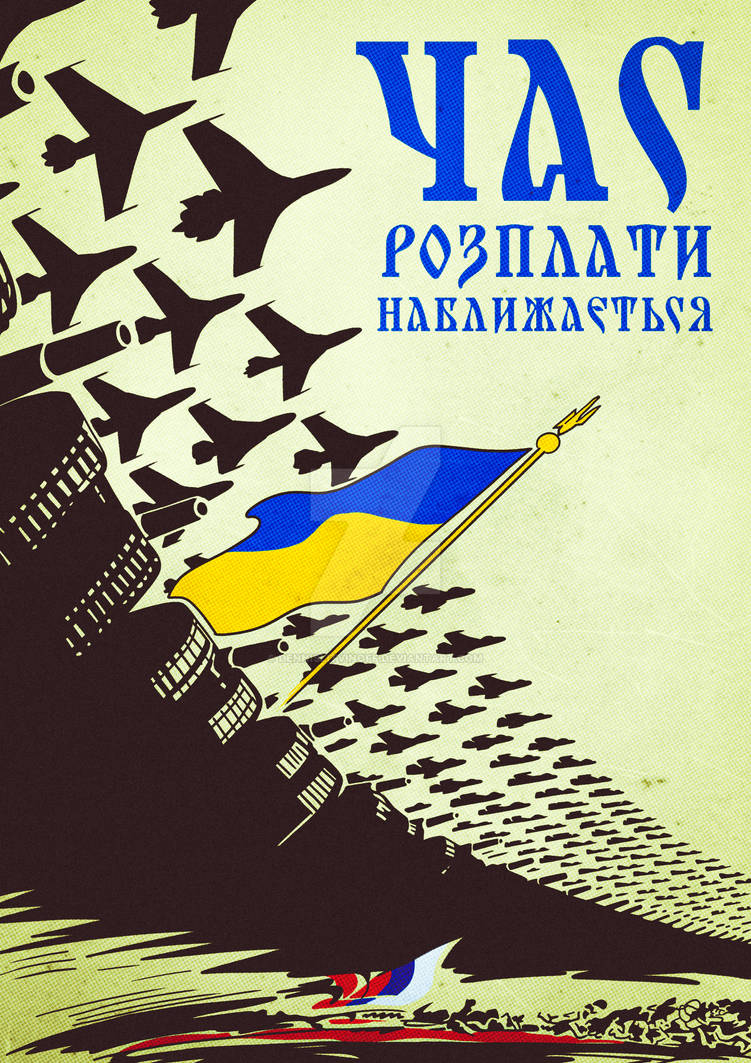
Why Peace in Ukraine has to be Framed as an American victory over Russia

  Russian leaders like Western plots to against Russia as that allow them to rally people around themselves. Kremlin, say they oppose wester...