Tuesday, August 11, 2026

On Cuban Question

I have never been a supporter of Cuban socialism or Castros. I think the island should democratise and actually become free in reality, not just in communist slogans. However, reading online comments on the matter, made me think that things are not as simple. Regardless of if communism will fall in Havana this time or Castros yet again manage to dodge the bullet, both of these outcomes will lead towards misery and privation, the only difference is who will suffer.

To understand why, we have to look at Cuban past. Under Fulgencio Batista rich flourished and indulged themselves to the maximum. Next to all that poor lived in slums and Cuban police kept them away from all the good stuff, repeating the same capitalist mantra about 'respecting property'. As much as an ideological purist would like to insist they had no right to just take that away, when Castros offered these poor all that shiny property, Batista zealously guarded them from, they of course accepted. Thus, revolution won in Cuba and rich who were too stingy and principled to share, lost it all.

However enough of the past, communism won in many places during 60s and 70s, but most of these have long since switched back, why not Cuba. It's not almost 40 years ago, yet Cuba alone somehow stays communist. Why do Castros continue to endure in Cuba, when elsewhere their ideological brethren long gone.

The reason for that is that anti-communist Cubans have not learned from their mistakes. As much as life under Castros is tough and far from ideal, majority does not want a return to how it was under Fulgencio Batista. Despite that Cuban emigrees in the US insist on the most hardline approach to the problem. They are not trying to win Cuban people to their side, promising anything. Far from it, they are not only blaming Castros, but also ordinary Cuban people for stealing their property. They want a revenge on both, Castros and those who supported them, this common Cubans.

From this stance people could assume the worst. Not only return to Batista levels of inequality, but also repercussions against ordinary people. Descendants will come to reclaim their property and businesses, refuse to employ locals, believing they are lazy and spoiled by years of socialism. Thus, Cuba will flourish but only select few will benefit from this prosperity. Most ordinary Cubans will starve and die on the streets as emigree will neither employ them, nor share their wealth with them. 

What do opponents of Castro do to alleviate these fears? Absolutely nothing. Far from it, due to their self-righteous stance, they only reinforce these fears. It's no wonder, people in Cuba still cling to Castros and the revolution, no matter how shitty things have become. Because Cuban emigrees could still make things much, much worse than that. Now there is just no food and electricity, but under new regime they will lose homes too, because these homes used to belong to someone before revolution and new old regime will kick out current inhabitants to return property to their 'rightful owners', descendants of Cuban immigrants, who were born in Miami and never set foot on the island. After that new old police can beat them up and then jail them, so they will lose their freedom too. And there still be no food or electricity, there will be for Cuban emigrees returning from Miami, but not for locals as that is socialism, light pole is all the electricity that will be left for them.


So, does it mean there is no way forward and Castros yet again managed to survive against all odds? It depends. If the US is willing to be flexible and offer Cubans a better life they would actually want, a solution may be found. I do not mean negotiating with Castros, as they may have Moscow connections and will advance Moscow interests instead of that of Cuban people. The us has to reach out to Cuban people. Sure, you cannot sit with them at the same table, but you can still make public announcements that will reach them in time.

However, a concrete solution is needed to safeguard against the return to Batista times. A mere promise will not suffice; it has to be a solution that cannot be just taken away by new government with or without a coup. What kind of framework could possibly achieve that is something diplomats will have to think of.

At the minimum, Cubans will need something to support them under new system. To that end social security, possibly a UBI is needed to make sure people will not go without under new system. It has to be properly indexed to make sure inflation will not make it worthless.

Furthermore, a question of property has to be addressed too, descendants of those from whom Castros confiscated properties will want them back. However, these properties are currently occupied by local Cubans who would not want to be deprived of their homes based on some old deeds.

A police and justice too have to be addressed somehow. Old hatred and bad blood between Cuban emigrees and locals might lead towards justice system being used to settle old scores and generally to hurt these bastards. Some institutional solutions are needed here as well, a cross-community jury or panel judges possibly.

On the other hand, if the US continues to hold 'lazy socialists' in contempt and promise to rid Cuba of these, not just of Castros, Cuban public will only cling to Castros. From there the US could only take the island by massacring most of its population. Afterwards there will be insurgencies on the island itself as well as refugees to the mainland US from that, this time socialist Cubans instead of capitalist ones.

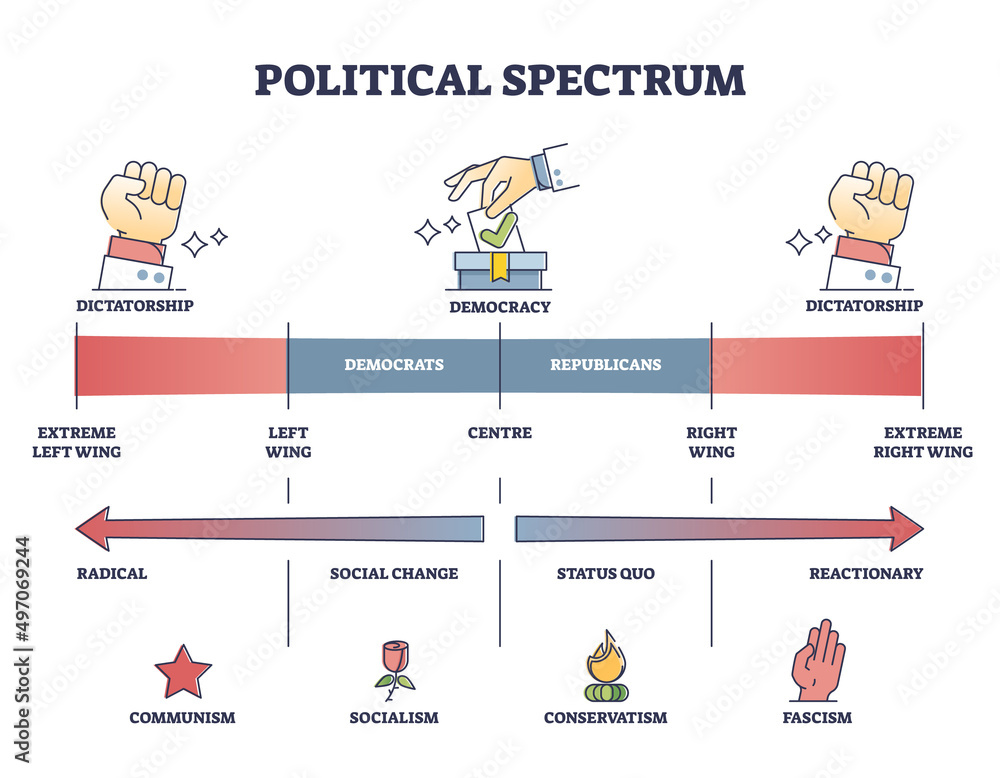
How Non-ideological People Decide Political System in Every Society


In between two extremes, who each make their decisions based on set of concrete and unchanging values there is a third group that actually swings elections between them.

To explain what I mean I need to talk about differences between ideological and non-ideological people. Ideologically driven people like to imagine their ideologies and political/social/economic system in vacuum and support them based on their principles and theoretically fairness rather than actual outcomes and practical implications. No matter how much their favorite system fails in real world, they will still defend it, blame problems on anything but on the system itself or downright refuse to acknowledge any issues at all. For them outcomes are distant second at best, if not completely irrelevant. All they care for is whether its right or wrong. 

In most extreme cases they would even defend literal unabated extermination, if it is done in accordance with their value system. Both communists and capitalists are equally guilty of this behavior, even though communists had a lot more such incidents to somehow justify due to their many mistakes. However, when capitalism clearly does not work, its supporters just as much will not admit any fault or accept the notion that something must be done about it if that something goes against their principles. Republican party behavior during Great Depression in the US shows us just this. The only reason capitalism ended up not starving millions to death was the fact the US was and is a democracy. Democrat FDR, who came to power and did what needed to be done to fix the problem, no matter how much Republicans and capitalist purists criticized it as immoral and wrong. Under communism however in a similar situation an oppositional party cannot come to power, and millions end up actually starving to death or get exterminated by ideologically faithful ones.

Compared to that, more practical, non-ideological people make their decisions based on outcomes rather than values, if it gives them more money, better quality of life and more freedom, then its better. Its these people who ultimately tip the scales towards one or another party in a democracy. The party that offers these guys more always wins elections. No matter how much supporters of Romney or Killary would blame the other side of politics for voting against their 'star candidate', in reality they lost not because the other side mobilised better, it's because non-ideological people did not felt their 'star candidate' offered them anything of substance and voted for the other guy. Even if they are 'star candidate' in your ideologically covered eyes, they might as well be a dud in someone else's more sober eyes. 

In a non-democratic influence of non-ideological people are weaker as one ideological group hogs all the power and prevents any outsiders from getting anywhere near the high offices. Non-ideological people often leave such societies in favor of democratic ones, because democracy offers non-ideological people better quality of life and more power. However, even in un-democratic society a non-ideological people could still play the same power changing rule, just through the revolution instead of ballot box. When systems fall and revolution succeeds, it's because these non-ideological people backed the revolutionaries.

Thus, no matter what your system is, the non-ideological people are still the kingmakers who decide if your system lives or falls.


How they decide who falls and who does not. Simple, based on outcomes. All places where communist revolution succeeded had capitalism at its worst, full of rent seeking property owners who did nothing but collect money for nothing more than having a piece of paper that said this or that belongs to them. In places where capitalism, despite playing by exactly the same rules, produced dynamic corporations that actually innovate and improve lives around them, communists never made any inroads. 

An ideological purist may say that property rights have to be respected and protected. No matter whether an owner is a dynamic leader like Elon Musk or Sergei Brin, who constantly innovate and build new things people want, or a jet set spoiled socialite who never worked a day. It's hard to make many examples of the latter, as people like that rarely make news) but Athina Onassis is one example. However, there are a good number of rents seeking rich, who spend all their time socialising with other rich people while joking about poor people, who actually had to work to pay them their ever-increasing rent. It's their property and you have no right to any of it, that what ideologically pure capitalist supporter will say.

However, if you remove ideological glasses, you can clearly see that they are not the same. Elon Musk and Sergei Brin are useful and beneficial, while rent seekers are nothing but parasites. Countries that where people like Elon Musk and Sergei Brin achieve success and build things, do not have socialist revolutions no matter how loudly local leftists call for it. Countries where these two were born do not count as these clearly did not gave them opportunities they deserved and thus deserve to languish in misery. Its countries that only have rent seekers, asking for more and more pay for use of resources that belong to them that get these revolutions.

Tuesday, August 4, 2026

On Western Sahara


After finishing my previous article on bi-ethnic states I decided that to illustrate my point better I need an example of a real-life situation. So, I will write about Western Sahara, most of which are currently occupied and gradually settled by Morocco, with Polisario Front controls but a small sliver on the edge but claims the whole area. The world is divided between recognising Moroccan claim or demanding that Morocco decolonise Western Sahara and cede it to Polisario Front. Morocco recently gained ground with international recognition of their claims and now offers Polisario an autonomy deal in exchange for abandonment of sovereignty.

The best course of action for Polisario is to neither accept Moroccan deal, nor demand return of the territories Morocco already settled. Polisario should instead focus on securing sovereignty in its current borders and possibly procuring more land from the other side of West Sahara's border, in Mauritania.

To being with a simple part. Do not accept deal with Morocco. This is what many will agree with. Most will bring arguments like decolonisation and the like. I will instead quote my ideas from my article about bi-national states. Under Moroccan rule Sahrawi will always be treated like second class citizens. Sure, they can write nice words about equality and promise fair treatment, especially in front of foreign observers, but in reality, Moroccan government will always care for their own first. So, when observers will leave, thinking problem solved, Moroccans will show their true colours. Any dispute between Moroccan settlers and Sahrawis will always be decided in favour of settlers. Sahrawis will be sidelined from any role of importance, and their existence will depend on their usefulness to Moroccan majority and government. Moroccans would even be able to completely exterminate Sahrawis, citing anti-terrorist measures and the like/. That would be infinitely worse compared to current situation where Sahrawis have at least full control in part of West Sahara where they can put their own people first.

Now the second part, settle on current de-facto border and renounce claims on parts of Western Sahara already settled by Moroccans. That sound counter intuitive. Why give up land? Or claim on it. Here is why. Imagine a scenario where Polisario indeed gets control of whole Western Sahara, courtesy of global community. They may be got their land back, but it's now settled by Moroccans who will be entitled to stay. By now Moroccan settlers clearly outnumber the Sahrawis in whole of Western Sahara so in a democratic system a Moroccan settler interests party would easily be able to win elections. It may not have Moroccan in its name, but its real loyalties will clearly be with settlers. Such a party will then govern Western Sahara for the benefit of settlers and to the detriment of the Sahrawis. It will be like in Belarus where dictator, who represents interests of Russophone settlers, suppresses native Belarussians as well as their language and culture. International community may support Polisario sovereignty over whole Western Sahara, but they will certainly not support any undemocratic measures like disenfranchising Moroccan settlers from voting or dictatorial rule of minority like that of Bashar Assad in Syria. In addition to that if Moroccan settlers feel they are mistreated they may ask for Moroccan state to interfere on their behalf, prompting Morocco to invade and occupy Western Sahara. In an event of an invasion Sahrawis will have no one to rely on to come their aid. Whatever rule will emerge from that occupation with certainly be to benefit of Moroccan settlers and to detriment of Sahrawis.

That leaves us with the last option, sovereignty within current de-facto borders. Yes, these borders are hideous, but they are the only ones that can give Sahrawis a state of their own, that they will actually be able to keep. It was too generous to give not so numerous Sahrawis whole of Western Sahara, equal in size to Morocco that has almost hundred times the population. This careless mistake led towards Moroccan occupation and current conflict.

There is however one card Sahrawis can play and that is to trade recognition of current de-facto borders with Morocco as de-jure ones in exchange for not necessarily equivalent land from neighboring Mauretania. Some Sahrawis actually live in Mauretania so taking land from it will help Sahrawis to reunite their people into a single state. Mauretania has a lot of land but not so many people, it will not be able to resist Morocco easily. Mauretania capital and most population is in the south, so they will not be too inconvenienced with losing land in the north, along Moroccan border. They probably will not give it up for free but a combination of threats and insensitive might do it. Morocco can certainly defeat Mauretania, but it can also offer them money or some other assistance in exchange for the deal.

That of course raises a question: why would Morocco bother with Mauretania over Sahrawis would. The answer is diplomatic advantage. Morocco does not have its claims on Western Sahara recognised and that potentially puts their settlers there at risk if global community suddenly turns against them on Western Sahara question. There are actors like Iran and China that might want to use it to their advantage one day and that would put Moroccan control over Western Sahara in jeopardy. Thus, cutting a deal with Polisario that will secure recognition of current de-facto border will secure this land for Morocco and prevent any further claims to it. Morocco will stop being accused of holding the last uncolonized land in the world, blamed for poor treatment of Sahrawis and such, its diplomatic standing in the world will improve. Finally giving land to Sahrawis might turn current enemies into allies. To prevent Mauretania from reclaiming lost land, Sahrawis will have to align themselves to Morocco or at least maintain friendly relationship with Rabat. Bitter enemies who currently claim about half of Moroccan territory, will become friendly buffer state and improve Moroccan political and diplomatic standing globally.

Just like that an out of the box thinking can fix the world and make it a better place for everyone.

Saturday, August 1, 2026

Why Bi-Ethnic States Never Work


Humans sometimes have phenomenal ability to keep doing the same thing over and over, even if it does not work. For example common people keep trying and trying the same dating methods that proven to not work. You can see that even among policy makers, who in theory supposed to know better. Yet despite being proven as unworkable over and over again, they keep trying the same solutions over and over again.

I am talking of course of trying to somehow reconcile two or several distinct people and somehow make them co-exist in the same common state. It never works. It did not work in Northern Ireland, in Lebanon, in Ethiopia, in Yugoslavia, in Bosnia and Kosovo after collapse of Yugoslavia, in Netherlands, in Belgium after Netherlands, in USSR, in pretty much all post-Soviet states and many more. Yet despite this consistent track record of failure, this same solution is offered to other people and places like Cyprus and Northern Sahara. Various UN mediators and members of global community keep offering various federal solutions that would get two sides with mutual hatred and irreconcilable differences to somehow work together, instead of doing the obvious and letting them split into two distinct states with reasonable border.

The only place where something like that ever worked is Switzerland. But Switzerland is but exception that only proves the rule. There are other things that do no work elsewhere, that somehow work in Switzerland only. Moreover if you actually look at Switzerland in detail, you will understand that it does not work even there. Sure Switzerland in multilingual but only on federal level. Most individual cantons are either monolingual or have a clearly dominant language. Thus there are no multilingual Swiss who live side by side no matter what their language is, instead there are clear internal borders that divide different languages from each other as well as different communities of the same language but other differences from each other. No one talks about acceptance there, instead they all know where each individual community begins and ends. An attempt to somehow erase these internal boundaries and make Switzerland into a unitary state was tried in early 19th century and was backed by Napoleon himself, but that collapsed within few years and federal divisions remain in place ever since.

Multiculturalism only works when either all people are migrants and no one has home advantage or when all minorities are no bigger than 5% and dispersed territorially so that they could not form ethnic enclaves with their own rules there or form a cohesive political party along ethnic or religious lines. That is how it is in most western states. 

One post-Soviet state, Lithuania also falls into this category. Low rate or ethnic Russians in Lithuania prevents the dynamic that dominates society in neighboring Latvia and Estonia where native Estonians and Latvians are pitted against Latvian and Estonian Russians who have their own identity, culture, ethnic parties and even flag. That illustrates that these conflicts have nothing to do with any particular ethnicity, culture, location or religion but entirely due to relative sizes of the ethnicities. 5% could never elect to parliament their own equivalent of Tatyana Zhdanoka, who believes all ethnic Latvians are Nazis, but something like 10% or above can. The larger their relative rate, the worse animosity between them and the natives will be.


However lets also answer the question why all sort of bi-ethnic or bi-national states always devolve into their own version of Northern Ireland problem. To be completely precise, one may call them a 'finite number national' as say Yugoslavia who suffered from similar dynamic had 6 official ethnicities or nationalities and few more unofficial, one of which was larger than certain official ones. but its too long of a term so I will use bi-national instead. The point is to distinguish it from a kind of close to infinite number of cultures multicultural state, typical for western democracies, where foreign cultures are so many and dispersed, they are normally not counted separately or amount to an ethnicity or religion based autonomy/ghetto with their own de-jure or de-facto rules or power base.

So why multicultural states work and bi-cultural do not. Simple answer is the size. In a multicultural state each ethnicity is too small and/or dispersed to pose any meaningful threat to the majority. Thus locals mostly treat minorities with either curiosity or indifference. They may enrich their experience with their culture, cuisine or knowledge, but they could not form a power block of their own to challenge existing power structures. Even if they want power, they have no choice but to join existing institutions, political parties and such, boosting them instead of creating their own separate power bases that rival the existing ones. There they will have to appeal to locals and their sentiments to get somewhere. Through that gradually these people assimilate and even if they retain some of their original culture or identity, for the most part they become part of their new/host society. Their children would be even more integrated then they are, even if they married someone from their culture. Their grandchildren even more so. Gradually the multicultural society seamlessly absorbs such members, making them part of social fabric and enriching it even.

Those dynamics change however if any particular minority reaches either a certain size, I will say it's about 10% or achieves high concentration in a certain part of the country. It does not matter when they all are different as they will have more differences with each other compared to the majority. That changes dynamic. Instead of assimilating and integrating, the minority instead forms its own minority community based on ethnicity, language, culture or religion. From there on such community focuses on preserving their differences and identity. It becomes its own power based, focused on both self-preservation as distinct entity as well as advancement of their power and influence in a broader society. 

The higher the number the worse the problem becomes. A 10% (of total population of a country) community will be able to preserve their distinct identity but will not be able to challenge the majority for control of society and will instead focus on growing their numbers and safeguarding their distinctiveness and power base. Meanwhile a 40% strong one might instead plot for a political takeover and then gradual replacement of the majority by their own members. A community might have a powerful foreign backer, like the state they originally came from or a foreign power, who seeks to undermine the state they are based in.


So, if you look closely at all the problem cases, they all have this close to even split in society. 60% Protestants and 40% Catholics in Northern Ireland. Same rate of Flemish and Walloons in Belgium or Latvians and Russians in Latvia. 50% of Russians in USSR or Serbs in Yugoslavia and the rest split between various minorities, some of which are rather large. 50% of Bosniaks in Bosnia. Less than 50% of any ethnicity in Ethiopia or Lebanon.

Such spit brings about the worst qualities and traits humans capable of. Tribalism, us vs them, pettiness, malice, cruelty and willingness to do the worst things imaginable. Both sides grow to see each other as existential threat and begin to focus on exterminating other ethnic groups instead of finding ways to live better together.

In bi-ethnic state politics devolve from based on socio-economic issues and policy debate into one based on ethnicity. At 10% rate politics not yet devolve into ethnic one, but a minority interest party may be present among the usual socio-economic ones. However at higher rate of minorities (around 20% to 30%), politics and political parties devolve to tribalism and people begin to vote for parties that represent their ethnicity and religion rather than economic interests. If you look at Northern Ireland, its impossible to distinguished various unionist parties based on their economic stances as this clearly takes back seat and essentially ignored over the overreaching issue of opposition to Catholics and preserving union with UK. In Bosnia or even Belgium its no different, parties do not have their ethnicities in their names but locals all know who represent which ethnicity.

This voting based on ethnicity compromises the very reason why democracy is such a workable system, that makes state responsive to its people. Ethnic parties are not created to represent needs and desires of the people, they are created as power vehicles for their ethnicities, to either gain or keep power in the hands of the ethnicity it represeents: keep us in charge and them out in plain terms. Such parties will not hesitate to make descisions that are detrimental to society as whole in order to shore up their grip on power. Over time this will make life miserable.

A society in such bi-ethno states are no better. Unlike outsiders who may say, why could not they all get along. Locals all know who is who and will almost certainly only cater to members of their own ethnicity while denying the same for other ethnicities. Even when in constitution and various laws discrimination is officially forbidden, the person in charge can still figure out how to deny something to an outsider, while lying about the real reasons for such denial. Petty spite, akin to a preverbal joke or person wishing to lose one leg so that his neighbor loses both, becomes a norm of life. Sometimes it comes to completely absurd situations where ethnically Serb acting mayor of Mostar deliberately sabotaged rubbish collection in the city for no other reason but to drawn local Croats and Bosniaks in rubbish, as they are by far outnumber Serbs in the city. It sound like a sick joke, but it actually happens in Mostar maybe even now. That makes even Northern Irish look sane in comparison.


However what drives this seamlessly insane behavior? Are they all stupid, these people in bi-ethnic states. Far from it. If it was an insanity it would not repeat itself over and over again under similar conditions all across the cultures, religions and continents.

The answer is survival instinct, a fundamental subconscious trait, present in human's psychology, that dates back to prehistoric times. Once the two ethnicities start to perceive each other as an existential threat, all gloves are off. They will stop at nothing to either completely destroy or neuter the other group. No amount of various peace agreements, power sharing deals or international monitoring could possibly stop the two groups from trying to completely obliterate their enemies. Both sides will go to the wits end to exploit and abuse the rules to damage the rival group as much as possible. If they can fight conventional war, they will. If they cannot they will still fight by other means, routinely misusing political and economic power to harm their enemies. 

That is why Northern Irish unionists refuse to participate in government. Because it would allow their catholic republican enemies to be a First Minister, so they would rather have no government than let their enemies be in charge. That is why different ethnic groups in Bosnia routinely misuse Dayton Agreement provisions to harm each other, rather than share power and govern together as was the intention of Great Powers who sponsored it. List goes on.

This applies not just to politicians, but to common people too. The moment they see you are from a rival community, they will refuse to help, or hire and so on. Among other things, Catholics in Northern Ireland complained Protestants simply refuse to hire them for any good jobs the moment they know applicant is a Catholic. It no different in Bosnia or elsewhere where one ethnic identity decides who is allowed an who is not. Prohibitions against discrimination will do nothing as those in charge will make up some legal reason to deny job or help to their enemies. As much as a outsider might fight it difficult to tell two rivals apart, locals always know who is who and will treat people based on ethnicity.

To top it all up, if sides fought an active conflict. Then animosity grows many fold. No matter who started it and who is at fault, both sides will only see or care for their own casualties and grievances and will never forgive the other side who did this. Active conflict leads towards both sides dehumanising their opponents as some kind of inhuman beings unworthy of existence. For example both Russians and Ukrainians are now calling each others Nazis. Ukrainians cheer at each Russian death. And many Russians on X openly deny Ukrainians even a personhood or a say over their country fate, a rhetoric even worse that what actual Nazi use to say about Jews. Restoring relationship from that point is impossible.


Because of the above, the only solution to bi-national states as well as various ethnic conflicts is their split up into two or more independent states. All attempts to somehow reconcile the two sides and make them somehow co-exist together is but a fools errand that always lead towards misery or even quiet but complete extermination of one side by another.

Thus global peace efforts should focus not on reuniting places like Cyprus or Western Sahara but on an orderly and organised split up between the sides and mutual recognition of new borders. When people cannot coexist each other, its pointless to try and make them. One should instead help them split up and begin living separately from each other.

Yes, it will lead towards creation of new states and alter global maps, but its the only method that is both humane and ultimately workable. It will gradually lead towards more stability as new states will be much more safe and stable, because lack of any ethnic or religious split would eliminate most if not all grounds for civil and political strife, that might lead towards civil wars or events like Troubles in Northern Ireland.

All living cells multiply by dividing into two, this is a fundamental principle of life. By extension human societies grow and multiply by dividing into smaller groups and growing on their own. Trying to re-unite such societies would be going against natural order of things and nothing good will ever come from it.

On Cuban Question

I have never been a supporter of Cuban socialism or Castros. I think the island should democratise and actually become free in reality, not ...