Sunday, January 28, 2024

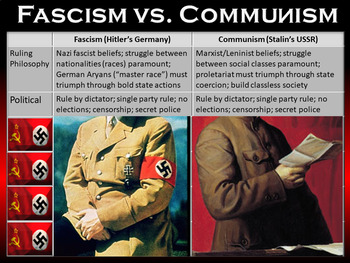
Differenses between Communism and Fascism

If you take that difference between fascism and communism to be on the franchise level. 

Communism is universalist and sees every worker (waged employee) as part of its franchise and claims to work for this socio-economic demographic no matter their ethnicity, its globalist. For every worker in the world.

Fascism instead sees its ethnicity as part of its franchise, it claims it works only for their people. Only for our people. You can make it civic fascism as well, only for citizens of the said country rather than ethnicity.

Fundamentally however they boil down to who they sacrifice for the benefit of their demographic. 

Communism first sacrificed all upper classes: rich, business owners, landlords, nobility. Later they went after overly well-off peasants (farmers), who were doing slightly better than their less fortunate neighbors. After they run out of well-off peasants, they went after real, but increasingly imaginative "enemies of the state". Any perceived disloyalty to the system could get you to concentration camp, Gulag, Pol Pot camps and the like. Sometimes there was not fault at all, just KGB needed to fill their quotas for the camps, so they just round up a random dude from the street and send him to Siberian Gulag. 

Fundamentally it became a system where absolutely nothing could guarantee your own security in face of Gulag and KGB. Not even friends in high places.

Fascism instead chooses to sacrifice people of different ethnicities. First there were Jews when they run out of Jews, they took Czechoslovakia, then invaded Poland, then other parts of Europe. All that was in search of sacrificial labor for their concentration camps. Nazis however refused to take from their own German ethnicity, with exception of political opponents of the regime and such. Thus gave them no option but invade other countries. Eventually they got defeated and it did not work for them. 

However Nazi system had a reasonable level of guarantee that so long as you are ethnic German, you will not be subjected to concentration camp. Unlike communism, where no one was safe from the reaper. 

Saturday, January 27, 2024

How Anicent Rome's Citizenship Used to Work

Romans only recruited citizens of Rome. They did not recruit from conquered people.

They used mercenaries as auxiliaries, but they were always their own military units with their own commanders, who negotiated terms with Roman generals. Romans never made a non-Roman person a legionaries of a core Roman units.

Close to Roman collapse, they expanded citizenship to all the conquered people, but that did not save the country.

They were not generous about citizenship. Romans had clear distinction between citizens and aliens. Sure, empire was all around the Mediterranean, but most of its inhabitants were considered foreign aliens under Roman Law.

Only people born in City of Rome itself and to parents with Roman Citizen status would be citizens themselves.

Right and Privileges of citizens only applied within city limits as well. Outside the city it was a different legal jurisdiction.


Areas south of Rubicon in Italy were organized similar to Rome itself, but they had their own governments, citizenship and so on. They were like foreign countries, with whom Rome had diplomatic relationship and a military alliance. Unlike NATO, Rome was sole power responsible for defense of them all and the rest simply paid Romans for protection.

These independent Italian tribes arise first, then they established relationship with Rome.

In Greece there were city-states that used to be completely independent, but then ended up allying with fellow city-states for mutual defense until two military alliances emerged: Achaean League and Aetolian League.

Rome achieved something similar with other Italian city states, but there was no rival league like in Greece. They were all part of Roman League, but not citizens of Rome.


Areas north of Rubicon and outside Italy were outside of any legal jurisdiction. Roman military could do whatever they wanted there. At first, they invaded, pillaged and captured inhabitants to turn into slaves or gladiators. Later they established a military administration there. That run as tyrannical dictatorship with general running provinces as they saw fit and using military force to enforce their rule.

Senate could appoint and remove such governors. However, when their tried to terminate Caesar's tenure in Gallia, he staged a Coup and then Rome itself became a dictatorship. Then Senate assassinated him to restore rule of law.


Monday, January 22, 2024

Another Idea for a New Australian Flag


This one inspired by Canadian Pale. 

Blue starts on white background look better than the other way around. Southern Cross is the most locally recognized symbol of Australia. 

Blue for True Blue phrase that means something very Aussie. I used darker shade of blue for aesthetic reasons. 

While because it makes good contrast, but also because this color is popular in the country. A lot of cars and buildings are of this color for example. 

Overall vibe of the flag is cool and refreshing. It gives the most contrast with summer scorcher that people here struggle with. It also gives summer vacation vibe with beaches, surfing, pool and so on.

Tuesday, January 16, 2024

Why Killing Hitler Would not have Changed History.

Goebbels is the brains of the party; Hitler was the face but someone else can be new face.

Party worked precisely because Hitler was a believable angry everyman who is fed up with BS around him and do not hesitate to rant about it in public.

Trump managed to pull this off as well, as rich as he is, he somehow believably parroted all he grievances of the poor. That made him President.

Goring is the opposite of that. He would have ruined the party. If someone like Goring could do it, then DNVP could simply win the election in their own right without NSDAP.

Rohm had SA, but hard to say if he can match Hitler's appeal. Visually he is closer to Goring.
Strasser the most promising of them all. With him as the head it will be 50/50.

On one hand his National Socialism is what attracted a lot of people to NSDAP. He and Hitler were two main reason people liked NSDAP. For many Strasser's National Socialism was more appealing than leftist's international Socialism. After all, why share our wealth with foreigners, who are not Germans. In that regard Strasser's National Socialism was like nationwide dividends system with clear exclusion of outsiders.

However, DNVP found him unacceptable. NSDAP did not have enough votes to govern in their own right, so DVNP made them an offer of coalition government in exchange for ditching Strasser and Rohm.

Eventually Hitler betrayed Strasser in exchange for DNVP making him Chancellor and eventually Reichspresident. Afterwards DNVP and couple of other right-wing parties were merged in NSDAP, they banned all other parties and run the country as right-wing dictatorship. I think on responsibilities division side, ex-DNVP people were handling the economy and original NSDAP people propaganda and image.

Friday, January 12, 2024

Post Cold War Congress of Vienna

Watching video about Congress of Vienna that ended Napoleonic Wars, get me thinking that there are plenty of parallels between this and the end of Cold War. 

Cold War itself was akin to Napoleonic wars in reverse. Napoleon wanted to spread French Revolution by conquest. First Austrian and Prussian and later Russian led coalition eventually. Similarly, USSR was a revolutionary state that attempted to take over the world and spread communism. First French and British and later US led coalition attempted to roll it back.

Napoleon was eventually defeated in Russia. Similarly, USSR was defeated by Americans. USSR even had their own 100 days of Napoleon, when Rutskoy and Hasbulatov attempted to take power in 1993.

Just like Congress of Vienna had 5 Great Powers that shaped the world after, post-Cold War order was also shaped by their own victors.


The USA is new Russia.

The US clearly took Russia's role in that Congress, similarly, claiming sole credit for the defeat of Communism and wanting to take its own kind of reward for that.


European Union is new Prussia.

The other roles are somewhat trickier.

I would say that European Union is Prussia of that Congress. Smallest, but newest, the most advanced and the most ambitions of the great powers. EU, just like Prussia wanted to expand. Just like Prussia they did just that and took many former Eastern European states and even parts of Former USSR. It was somewhat backed by the Americans in that regard.

Just like Prussian and Russian expansion was opposed by the UK, France and Austria. The EU's and NATO's expansion is opposed by Russia, China and other old powers. Events in Ukraine, other post-soviet states and Eastern Europe do show us the same pattern of struggle between the powers. European Union wants to take these lands, citing popular support on the ground, Russia opposes it because some outdated notions of spheres of influence and such.


Eastern Europe is new Germany.

Eastern Europe and especially post-Soviet states do play role of German minor states. 

Austrian ruler was Holy Roman Emperor and through that was a protector of the Holy Roman Empire Member states/territories. That came to lapse during the Napoleonic wars and afterwards Prussia became expanding at their expense, culminating in creation of German Empire.

Eastern Europe was part of Soviet Sphere. USSR claimed they protected these states, even if states themselves believe they were oppressed against their will. HRE states also choose Napolean over Austria back during the Napoleonic Wars. Now that USSR and Warsaw pact are gone, Eastern European states increasingly joining or attempt to join the EU. Russia opposes that just like Austria used to oppose Prussia in 19th century. 


Korea, Taiwan and broader Southeast Asia is new Poland.

At Congress of Vienna, Russia consistently defended their unilateral decision to keep all the Polish-Lithuania lands to themselves. They threatened war and eventually kept it all with exception of Poznan Province and Malopolska that went to Prussia and Austria respectively. Russia justified it as reward for defeating Napoleon.

Nowadays the US protects Japan, South Korea, Taiwan, Thailand and possibly other South-East Asian states from Chinese hegemony. China and Russia could only keep hold on North Korea and possibly Vietnam, Laos and Cambodia. China is particularly outraged with that.

There is a monument placed where used to be borders between Russia, Austria and Prussia. Korean DMZ is not only symbolic but also practical monument of border between China sphere and the US sphere.


Russia is new Austria.

It would be logical to assume that Russia is France in this comparison, but I would argue that its closer to Austria than to France. Russia is more of a diplomatic than military power. Its time under the sun allowed them to cultivate lots of allies in many places. Russia is just as heterogeneous as Austria. 

Just like Austria, used to protect various small states in what is now Germany and Italy, Russia now protects various dictators across the globe: Bashar Assad in Syria, Saddam Hussein in Iraq, Ali Khamenei in Iran. Modern Arab world and Africa are like Germany and Italy of the past. Just as divided. Ruled by dictators and most of the time subservient to foreign powers.

I do suspect that Russia will eventually meet the same fate as Austria did after WWI.


Middle East is new Italy.

We might say that Middle East is new Italy. Italy was divided and fragmented. Austria and Spain controlled significant number of small Italian states. Nowadays Russia controls Middle Eastern Syria and Iran for example. They partly control Yemen and used to control Iraq as well. Many other Middle Eastern States all have strong ties to USA, for example Saudi Arabia.

Italy was eventually united by Savoy (Sardinia-Piedmont). That was indirect as Garibaldi and his Redshirts were the ones who toppled all the small state government and delivered these states to Savoyard dynasty.

Savoy's closest modern equivalent would likely be Pakistan, Afghanistan or Iran. I do not think Middle East will be happy about it though. Just like Savoy, Iran and Pakistan doing it indirectly through the proxies. Iran controls Hizballah that is active in many places across Middle East. Some speculate that Pakistan is behind Taliban. Both Iran and Pakistan have big friends among great powers. Russia is behind the Iran and the US is possibly behind Pakistan.


Yugoslavia (Serbia) is new Saxony. 

Yugoslavia and Serbia fulfill role of Saxony. 

Congress wanted to give Saxony to Prussia, just like EU wants to absorb former Yugoslav republics. Back then Austria also used all their influence in attempt to Save Saxony and saved its core territory around Dresden and Leipzig. 

Nowadays Russia safeguards anti-EU regimes in parts of former Yugoslavia, especially its core lands: Serbia, self-proclaimed Republica Srpska in Bosnia.


China is new France.

I would argue that China is France. China is more homogenous, just like France. It does try to cultivate special relationship with the US, just like France did with Russia. Just like France, China has self-image of former grandeur and believes they deserve more prestige and glory on world stage. Just like France saw themselves co-equal with Russia, China sees itself as co-equal with the US. Just like France used to snub UK, China snubs Japan.

Just like France, China fancies itself a diplomatic genius, that will get all they want with their "long term strategy" and Belt and Road initiative. Just like with France these are baseless naivete. China, like France back then get themselves involved in Africa and Southeast Asia.


Japan is new UK.

And finally, the biggest winner of the Cold War: Japan, who is this world UK. UK was somewhat behind the scenes during the Napoleonic Wars. Just how Japan was behind the scenes in Cold War.

Just like UK was the most developed and technologically advanced state at the end of Napoleonic wars, Japan is the most developed and technologically advanced state onwards. Before Napoleonic wars UK was considered a primitive fringe country of no particular importance. East Asia (China and Korea) still think that Japan is fringe and more primitive compared to them. In both cases it's not true.

Post-Napoleonic UK's power came not from the strong Army, but rather from technology, navy, industrialization and more technologically advanced society compared to the rest of Europe. Back then world wanted the goods UK produced or traded. The rest eventually adopted the UK's ways. 

Nowadays people do want Japanese technologies, games and culture. Japan became trade and imitation paragon: the role, UK has back then.
Friday, January 5, 2024

Russian Stereotypes About Different Countries - Central Asia


This region has two somewhat contradictory images of it. On one hand it is land of primitive, stupid but good-natured people, who are willing to learn from Russia and grateful for what it's done for them. On the other it is a mysterious and strange land, where ancient eastern wisdom originated some time long ago.

Jokes about Central Asian people are probably the most derogatory of them all. However, stereotypes do not portray Central Asians as rich, thus spearing them from envy.

Unlike other regions, where people could at least tell Azeri from Georgian, here people confuse names of countries and people often using these terms interchangeably. For example, Ozbek speaks Turkic language and Tajik speaks Farsi dialect, but Russians may casually call the same person Tajik and Ozbek within the same conversation.

For Russians this whole region seamlessly blends together into a contradictory whole.

Many of the stereotypes I will outline below are not necessary connected to one or the other country in the region, but I will still mention, which country is closest to it.


Gastarbeiters - Uzbekistan and Tajikistan

Tajiks and Ozbeks in particular are associated with illegal migrant workers, called Gastarbeiter (calque from German language).

The low educated, poorly speaking, silly looking person from Central Asia, who builds apartment blocks in Moscow for measly pay is part of Russian understanding of this region. That is, he sends back home as remittances, while bribing police to avoid deportation back to Tajikistan and dodging racists who hate all "non-Russians". That is based on true issue.


In general Russia perceives this region as very poor and destitute, despite the fact that Kazakhstan and Turkmenistan actually relatively rich with oil and other mineral export.


USSR Built it - Kazakhstan

This is the region that fits best into colonial White Man's Burden narrative. Russia came and brought the destitute primitive people of Central Asia light of civilization. Kazakhstan in particular validates that narrative and vindicates those in Russia who think this way of USSR in general.

This narrative is mostly true for Kazakhstan only. Other places in Central Asia had different experience with USSR. I wrote a separate article about this topic.

Kazakhstan still hosts Russian Space Program launch area and surrounding infrastructure. Borat can into space.


Camels, Desert and Sheep Fur Hats - Turkmenistan

"Why do you study seafaring if you live in a desert? Because camels are ships of the desert." 

Bactrian Camels originate from there. So is a traditional Central Asian Sheep Fur Har and other exotic dresses. Desert nomad stereotype is actually well known in Russia. There are even movies about it, for example White Sun of the Desert.

Plav is a dish, that not only came to Russia from this region, but cohesively associated with it.

Here exotic things are truly exotic, not just oranges and watermelons, that do not grow in Moscow climate, but actually strange and weird things.


While a lot of the above applies not just to Turkmenistan, Turkmenistan has rather dubious reputation for eccentricity, due to various policies of previous president of Turkmenistan, known as Turkmenbashi.

Russian do like to mention Turkmenbashi in casual conversation. Some call Belarussian dictator, Lukashenka - Turkmen-bulbashi.as a portmanteau between the original title and Belarussian word for potato: "bulba"


Actual Reality

Before Russia got involved. This area was divided between, Kokand, Bukhara, and Khiva Khanates. Borders between them were roughly by the rivers of Amy and Syr Darya. Bukhara between the rivers. Khiva west of them, Kokand in Fergana valley. 

Areas around the three khanates were inhabitant by stateless nomads, who just lived in traditional nomadic way. There was no cohesive border between Russia and Bukhara for example as, steppe was considered no man's land in principle.

This steppe areas are now Kazakhstan and Turkmenistan. In contrast the khanates were amalgamated mostly into Uzbekistan, with some parts given to neighbors. Because of that Uzbekistan suffers from conflicts between different elites that used to be their own nations.

Russian Stereotypes about Different Countries - South Caucasus Trio and Moldova


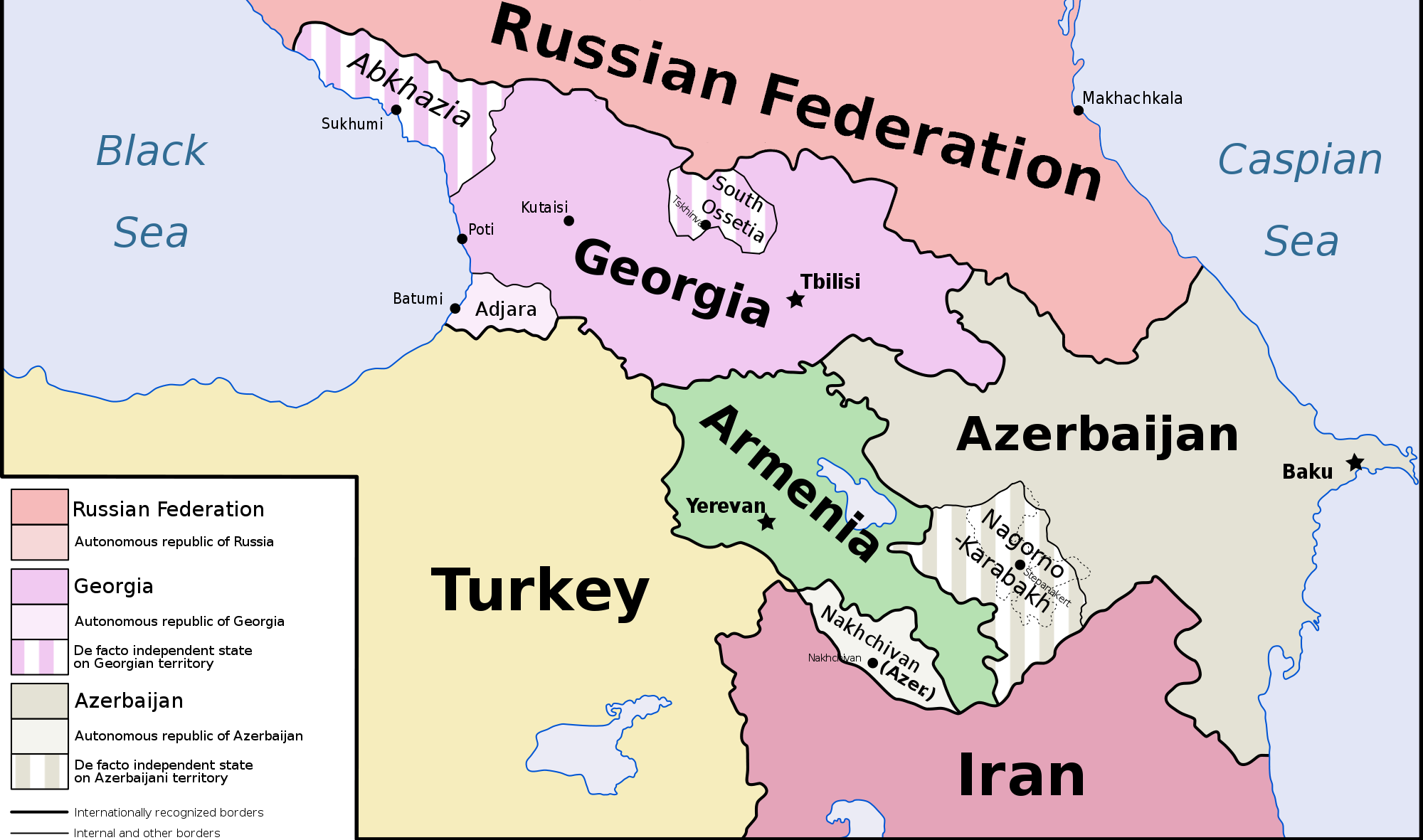
One can sum up Russian stereotypes about Caucasus trio of Georgia, Armenia and Azerbaijan, as somewhat of a flavor group. Moldova is not in the Caucasus and has more in common with Baltics than with South Caucasian nations, but Russian stereotypes about it are much closer to the Caucasus.

These former USSR republics are often associated with prosperity and various warm weather things, that are normally not available in core Russian Land. Exotic fruits, vine, art and music. Compared to Russia, their climate is milder and warmer. It allows them to produce fruits and other things that cannot grow in Russia itself.

However, that interest in exotic things, this region produces, does not extend into respect towards people who inhabit it. There are plenty jokes and stereotypes about Caucasian people and Moldovans. Probably more than of any other area of former USSR.

There is perhaps the theme that these lands are good, but people who inhabit them are weak, goofy and undeserving of such bountiful land.

Another thing, that unites Caucasus with Moldova is beaty of land. There are plenty of poems about picturesque landscapes of Caucasus. Moldova is also stereotyped as beautiful and fertile land where everything grows in abundance. In reality, nowadays Moldova and Caucasus hardly prosper, but stereotypes still portray them as lend from which there is plenty to take.


On other thing is that these three countries are vaguely associated with eastern mystique and ancient wisdom. If Baltics are example of western organization and way of life, then Caucasus is an example of the alternative eastern way. Most of this ancient wisdom likely originated from Iran (Persia), but it is through these countries that Russia got access to that. In this role it somewhat blurs with Central Asia as these stereotypes are never pinpointed on any one of either Caucasian or Central Asian contry.


Georgia

Georgia possibly gets the worst of stereotypes. Russian stereotypes portray Georgians as both very rich and very stupid as the same time. In addition to also portraying them as gay and cowardly. As I mentioned before there are probably more jokes about Georgians than about any other people.

Another stereotype about Georgians connects them to organized crime. Not all Georgians are criminals, but top gangsters are always Georgians. The term "thief-in-law" is often used to describe them. 

All that make people envious of the wealth, fortunate inhabitants of "sunny" Georgia enjoy. In reality in 90s Georgia was one of the most destitute post-Soviet states.


Azerbaijan

Stereotypical Azeri sells mandarin oranges on open markets. They sell other fruits as well. This association of Azeris with fruit trade is the most enduring in Russian mentality.

Azeris are often known as passionate salesman. Trait not very respected by Russians, but not especially hated either.

Most jokes about Azeris also revolve around trade and oranges.

In reality Azerbaijan has a lot of oil and the only one who prospers in the Caucasus.


Armenia

Armenia gets somewhat better reputation, compared to the rest of the group. Armenians are considered competent, witty and knowledgeable people, who can ask uncomfortable questions and get to the truth.

Armenians are also associated with humor. However, there are not so many jokes about them, so much as attributed to them. Evgeny Petrosyan is not actually Armenian, but people in Russia think he is. His surname is Armenian sound, but it's a stage name and not his real surname.

While French would take issue with Armenian "Cognac", in USSR they are widely known as Cognac manufacturers. Armenian Cognac had mixed reputation even in USSR, but that still got Armenians some good renown.


Moldova

Moldova is not in Caucasus, but still decided to include it here as stereotypes about Moldovans closer to those of Caucasian people than to Baltics. Alternatively, I could have given it a separate article on its own, but it would be a very short one.

Stereotypes about Moldova portray it as land of plenty where everything grows in abundance and people have nothing to want for. That could be more wrong for this poorest in Europe country. However other stereotypes, I list in this series, are also not representative of the truth.

In contrast Moldovan people are often considered Gypsies as much as their Romanian counterparts. 

However, Russia does not view Gypsies in purely negative light. Russians think that Gypsies have their strong points and even some wisdom. Some "traditional gypsy songs" are loved by people and even sung on parties. These are not originated from Moldova at all, even if Moldova has its own good music.

That in turn translates into some good will towards Moldovans.

On Cuban Question

I have never been a supporter of Cuban socialism or Castros. I think the island should democratise and actually become free in reality, not ...