Thursday, May 9, 2024

More on Russian Army

People often like to think that structures they are used to exist in other countries, they may be called different or use different flags and colors, but they fundamentally function the same way.

Some would make the same mistake about militaries. Wikipedia even lists comparable military ranks and other such information. 

Some militaries are indeed more of a different paint over the same fundamental structures. Many do train together and learn from each other. Others are originated from a common system such British Empire and inherited basic principles of military organization from the UK.

However, some militaries are much more different from those around them. Swiss Army for example is a very unique system that hardly has anything like it elsewhere in the world. Only a country as unique as Switzerland could produce a military such as theirs and its fundamentally impossible to replicate elsewhere.


Russia too has somewhat unique military. Russian military is not like Swiss, in fact it's more of its polar opposite. However Russian military is neither like a typical NATO one.

Russian military is highly specialized and optimized for just one type of warfare: trenches and artillery. The rest of the military is designed to complement and support this basic doctrine.

Trenches and artillery are fundamentally a WWI approach to war. Infantry digs trenches and set up various obstacles to prevent enemy from advancing. Artillery, located deep within their own lines the bombard enemy positions from afar.

In a typical WWI style shootout between artilleries Russia would likely win. Their gun and rocket propelled artillery are more powerful but more importantly much more numerous than what any of their opponents have. Thus, Russia would be able to turn enemy positions into a literal wasteland much faster than their opponents could. Russian multiple rocket launchers such as Grad or Uragan are designed to achieve just such outcome. They fire their many rockets in fast succession to a broadly defined target area, indiscriminately destroying everything.


Artillery has one clear weakness, it's useless in close combat. Artillery can attack targets 20 kilometers away from them, even across the mountains or other such obstacles. However, it cannot attack an enemy that is right in front of them. If enemy can get to the guns up close, the crew has no choice but to surrender themselves after they destroyed their guns to prevent enemy from capturing the guns and using them as their own.

To compensate for that weakness, there are trenches, mines, barbed wire, dragon teeth, Czech hedgehogs and so on. The idea is if enemy cannot dismantle and cross the line of these obstacles, then they will not be able to advance towards artillery positions and silence the guns. Then the one who has more guns would win.


On one hand optimizing military for one style warfare would allow them to be better at this than any of their opponents. In fact, no other army has as many artillery pieces as Russia.

However, optimizing military for just one style of warfare has its weakness too. If something goes wrong and they are unable to adapt to the changing reality on the battlefield and has no way of fighting back. 

For example, during operation Barbarossa Germans managed to get to Soviet artillery and supplies before infantry could set up trenches and other obstacles. That forced the entire armies to just surrender without any real fight whatsoever. Unlike for example German infantry, Soviet one only knows how to dig trenches, they do not know how to actually fight. Thus, if Germans themselves would have been able to break out of such encirclement, then Soviets could not.

Later during WWII Soviet command always made sure to "maintain front" to prevent Germans from getting towards their artillery and supplies. By front they meant the unbroken line with series of trenches and other obstacles to prevent any and all enemy armor, infantry or other units from crossing.

That is why unlike more autonomous and opportunistic Germans, Soviets always advanced in stages. The went from one natural obstacle to another and clearing and fortifying their new positions in between offensives.


Fundamentally this approach to warfare persists in modern Russian military as well. Technological changes such as aviation or electronic warfare makes it much less foolproof compared to WWI era, but Russia refuses to change. During Kharkiv offensive, Ukraine once again managed to prove that Russian military still has the same vulnerabilities it had in WWII.


It's not so much as Russia refuses to change but that it simply cannot. Soldiers who are drafted into military against their will can do only a finite number of tasks. They can reload artillery, dig trenches, plant mines or roll out barbed wire.

However, if you want them to fight enemy infantry in effective firefight, then you actually had to train them like real soldiers. However, while such skills would allow them to be better soldiers, they will also allow them to mutiny against the command and fight against their government. Considering many of them were drafted forcefully and do not want to serve their country, such a prospect is too dangerous to take any changes.

Officers are afraid of mutiny so they do not teach recruits any skills, that would allow them to mutiny or even survive in the forest on their own. Because if they could survive in the forest, they would just desert. 

For this very reason Russian Army relies exclusively on strategies and tactics that would not allow their soldiers to mutiny, defect to enemy or desert. 

The only exception to this rule is VDV. Every strong and loyal recruit they could find are assigned to this branch. There are 49.000 of them in total and they are used in every firefight with enemy infantry.

There are also various special forces but they are even less numerous.

Alternative Political Compass I found on Reddit

I found it on Reddit. Here are my annotations what each edge means.

Hierarchy is top-down system where everyone is assigned a clear rank of authority. One's position in society and organization entirely depends on will of your superiors. One man on top can promote or demote anyone at his will, those under him can lose their position if they displease superiors but can remove those who are below them if subordinates displeased them.

Horizontality is when there are no ranks and everyone is equal, that is not above or below anyone. No superiors and no subordinates. People work or do not work together by mutual agreement and cooperation. No one can force someone else to do anything. Any positions of authority depend on popular approval and people's willingness to follow someone. Majority can empower anyone or disempower at any time. 

See this CGPGray video for idea, Empire Ship is property/hierarchy and Pirate Ship horizontality/democracy. 

Property is when people who own something have absolute control over their possession. The man who owns land, business or rental property can charge whatever rent he wants and impose on tenants' whatever rules he sees fit.

Democracy is when majority controls how land, businesses and property are used. There is no rent and rules are instead decided but majority vote. Management in businesses are also decided by majority vote of workers.

Command is where authorities, whether democratic or hierarchical, have ability to enforce its will on individual. With Hierarchy its simple but combined with democracy it like two wolfs voting to have one sheep for dinner.

Autonomy is when individuals are free to do whatever they please and no one can enforce any directives or rules on them.

Positions in the corners combine two connected elements. For example, Feudalism is a system where hierarchy is based on property ownership.

Positions away from edges show more nuanced options that combine elements of both but with stronger bias towards one of the options. Classical Conservatism is mostly hierarchical but not completely.

Social Liberalism is in the middle as that is closest to being in the middle ground on all these issues.

Positions close to edges show each system in its theoretical purity while positions away from edges are more of practically possible options that can actually exist IRL.

Saturday, May 4, 2024

South African Corruption


I watched this video a while ago but kept forgetting to write about. It carefully lists problems South Africa faces today but fails to identify the reasons. It shies away from directly blaming the end of apartheid for the current economic decline, but hits to it.

While that is partly true, there is more to it than just that. There is one other issue that creator of this video has overlooked and that is Putinist style corruption. 

Some might say that that is too far-fetched as Russia is too far away from South Africa, how could Russian corrupt practices have permeated South African government? Both South Africa and Russia are members of BRICS but is that enough by itself? Most likely not.

However South African membership in BRICS is only a symptom. Relationship between South African ruling ANC and then USSR goes far back to the Apartheid Era. 

Russia and USSR were too late to get a slice of Africa during the 19th century Scramble for Africa. However, universalism and globalism of USSR's communist ideology uniquely allowed USSR to instead participate in neo colonialism. 

USSR could cunningly disguise its neo colonial interests under guise of worker's struggle for social justice and socialism. Back in 1960s and 70s, when major European powers begun to decolonize, USSR stepped in by sponsoring multiple African Socialist or Communist parties and insurgents. 

ZANU in Rhodesia, Frelimo in Mozambique, MPLA in Angola, Derg regime in Ethiopia were all sponsored and secretly controlled by USSR. USSR trained and equipped these and other insurgent militaries. Provided financial and political support as well. South African ANC was not officially communist, but it also benefitted from USSR's involvement.

However, USSR does not do anything simply out of kindness of heart. USSR planned to establish communist regimes in all these countries. To that end it made sure that people its support would be pliant and controllable by Kremlin when they take power. Similar to how Eastern Bloc nations are.

USSR clearly succeeded in Angola, Mozambique and Ethiopia. Robert Mugabe's Zimbabwe is nor officially seen as communist but in reality, was more communist that what most people realized. 

South African ANC also had communist tendencies. If they would have managed to seize power before USSR collapse, South Africa would have gradually turned communist.

However, they only took power after the USSR collapse and that prevented the grand reveal of puppeteers behind ANC. Instead at first ANC simply governed normally, however once Putin asserted himself in Russia, Russian secret police started to exploit various regimes they help bring into power before USSR collapse. Instead turning these countries communist, they propitiated Russian style systemic corruption into them.

This systemic corruption allows both top brass within ANC as well as Russian secret police to syphon money from South Africa for their own personal benefit. The money end up in secret bank accounts, like those mentioned in Panama Papers. 

ANC leaders are likely partial beneficiaries themselves, that way they would have vested interests in keeping the fraud going and cover up any leeks. Russian secret police and lawyers provide information on how to mislead audit and various transparency and reporting requirements to avoid getting caught. In exchange they take share of the wealth that ANC lead government takes out of the economy and national treasury.

This several decades fraud left country dilapidated and impoverished. Disillusioned citizens stopped trusting government and either emigrate or hire private companies to provide services that used to be provided by government in the past. South Africa is the only country in the world with decreasing GDP. Its slowly devolving into a failed state.

Unless corrupt officials are stopped and brought to justice, South Africa will become second Somalia.

My Redesign for Australian State Flags

Most of these use existing State Badges as their inspiration. The only exceptions are Tasmania that uses current Tasman Government Logo and Victoria, that uses three differently colored southern crosses instead.

All flags follow the same pattern with southern cross constellation at the hoist and state symbol on the fly.

Most of existing state symbols are distinctive enough, have been associated with the state for a long time and look good in this modernized design.

Tasmanian badge looked too plain on its own, so I opted to swap it with current government logo.

Since Victorian state badge is Southern Cross, placing two nearly identical design side by side would be redundant. Instead, I opted to place three differently colored southern crosses each in different color scheme. Inspired by Warhol style art, left most are the traditional colors of the southern cross, middle is in colors of Aussie National Sports Teams (yellow and green), and right most is black with orange starts inspired by the land.


Thursday, May 2, 2024

Elightenment and Europe Transition from Kraterocracy to Democracy


In one of my previous articles, I wrote on how Roman Republic devolved into a Kraterocracy, and first became known Roman Empire and then Byzantine Empire. Now I will write about the opposite process: how countries stop being Kraterocracies. One famous example would be French Revolution but there were a few more before that. Namely Dutch Revolt and more importantly is English Civil War. In fact, English Civil war is probably even more illustrative than French Revolution as there is less distractions on things like Reign of Terror or Napoleonic Wars.

Reasons for the Transition

If Ceasar found riches in Gaul, then Stuart monarchy of England and Scotland found themselves in poverty. King Charles I found it increasingly difficult to pay for maintaining his army, his government and his lifestyle. 

To help the issue he called the Parliament to authorize new taxes, but parliament refused. At least refused without getting any further control over how these money will be spent or government that spends them.

That was a compromise King was not willing to accept. He tried to bypass the Parlaiment and levy more money by stealth fees and such, without proper authorization. Public resisted paying these new fees. Revenues were lacking and public grew ever more discontent with King and his actions. 

Long series of half measures eventually escalated into Civil War. King decided to enforce his right to rule with force of arms. Parliament responded with force of their own. Parliament won and King was executed.


However fundamental issue that led to the Parliament's Triumph over King was that wealth of civilian merchant class managed to grow significantly wealthier over the previous century or so. Rural land that King and nobility used to deliver their income from stopped being as profitable as international trade from which merchants and sailors have delivered their income. 

King wanted share of that wealth, but merchants were not willing to simply let him have it.

This in turn could be traced back to discovery of the New World as well as Dutch revolt, that was partially financed by these discoveries. People who participated in these voyages found vast wealth and figured they would use it to acquire power as well.


There was one other issue. Overtime society grew more complex. Technology became more and more advance. Warfare grew increasingly more dependent on cannons and guns. These weapons had to be manufactured by industrial methods in factories. Because of that, those cities and factories became increasingly more important. So important that even traditional ruler, King had to listen to them.

King of course did not want to share his power with cities, traders and industry, collectively represented by Parliament so he opted for a violent solution. 

However, by that time cities were de facto power. English Civil War made their power de jure as well. Oliver Cromwell's New Model Army, build around industrially manufactured weapons triumphed over the good old King's Army of knights and peasant levy.

From Parliamentary Rule to Protectorate

Parlaiment took power, declared England Scotland and Ireland a Commonwealth (a republic) and assumed that they would be in control from there on. 

Turned out not so much. It was not a smooth sail from there. Ruling was not as simple as just taking power, Parliament learned it the hard way.

Much like Ceasar eventually found himself to be murdered by Senators who wished to restore republic, Parliament soon found itself at mercy of its own creation, Oliver Cromwell and his New Model Army.

Backed by troops unwavering loyalty of troops and laurels of Civil War victor and nation savior, Cromwell soon found that by now not even Parliament could oppose his rule. So, he reduced Parlaiment to a number of loyalists, then abolished Parliament altogether and ruled essentially as a dictator with even more power than a King used to have.

Cromwell loyalists called for him to simple declare himself King, much how leaders of other revolts did after they won, for example Milanese Sforza family. Cromwell however refused and instead styled himself Lord-Protector. However, difference was in name only. Backed by fame from defeating unpopular King and populace force of habit, Cromwell was even more absolute than King. 

Stuart Restoration

Cromwell ruled until he died. New Model Army leaders refused to acknowledge his son as new Lord-Protector. That allowed son of deposed and beheaded Charles I to return to power and reclaim the crown. Things have returned to how they were before the Civil War or did they?

They did not. Kings, wary of the Parliament's power, altered between placating Parliamentary sentiments and trying to shore up their power by eliminating prominent Parliamentarists. Both Charles II and especially James II wanted to make sure the Parliament could never start another Civil War and win it.

However, if Charles II took more conciliatory approach, then James II lead an anti-Parliamentarist witch hunt. Cunningly disguised as religious reconciliation, it was an attempt to place Catholics on all important positions within the state. James II thought that Catholics were more loyal to absolutist monarchial rule and will prevent him losing power to Parliament like Charles I did.

Glorious Revolution

It turned out all James II policies did was angering the Parliament. Parliament then sponsored for Dutch Stateholder Willam of Orange to invade England and take the throne. That happened almost completely unopposed. James II fled; this time his dynasty was gone for good.

Willam and Mary did not have children, so their reign was one off affair. However, the principles of parliamentary rule that were established after Glorious Revolution continue to run the UK and many other nations of former British Empire even today. With some revisions they spread across the world as a liberal democracy.

Parallels with French Revolution

Back in early 18th century French liked to say that something like Parliamentarism could never happen in France. They claimed that French are monarchists to the boot and love their King more than their croissants. History proven them wrong.

French Revolution had a lot of colorful or scary events happened. Appearance wise it looked differently from English Civil War. 

However, when it comes to key stages of each of these events, then there are clear parallels. 

In both instances it has begun with a dispute between King and Parliament. French Estates General and later National Assembly is essentially a parliament. In both cases parliament won and later asserted its control over the country. In both cases King lost their live.

National Assembly was overshadowed by people like Robespierre and his Commitee of Public Safety, but Robespierre and Commitee was both created by Assembly, answered to it and were eventually deposed and sentenced to death for their crimes by the Assembly.

In both cases parliamentary rule continued until a prominent military leader, who won against the enemies of the revolution, used his popularity to seize dictatorial power. In both cases they opted not to call themselves King, but rather adopt a different title. In contrast to Oliwer Cromwell, Napoleon opted for a grander one, the emperor. However, that is a philological difference only. In essence the power they wielded, and base of that power was the same, fervent popular support.

One might argue that Cromwell was not defeated like Napoleon, but technically Charles II did lead troops against his son, Richard Cromwell. Fundamentally both dictators have fallen, and previous monarchial rule was restored. Both restored monarchies balanced between placating revolutionary sentiment and trying to shore up their position by repressing more radical opponents. Both restored monarchies were initially popular, one key trait Charles II shares with Louis XVIII. Both restored monarchies later grew unpopular under more repressive James II and Charles X and were overthrown again.

Both Glorious Revolution in England and July Revolution in France led towards a parliamentary/assembly rule. Some compromises with the original system were made, however in both cases new Kings were willing to respect parliamentary rule of liberal democracy. Both William of Orange and Louis-Phillippe were loosely related to the deposed monarch, Willam by marriage and Louis-Phillippe was a distant relative.

More Parallels

You can draw even more parallels, for example how Germany went from Empire to Weimar Republic to populist Nazi dictatorship and then back to liberal democracy after WWII.

Modern post-soviet states as well. The difference however that Baltic states had a failed attempt at democracy in interwar era. However, they became prospering democracies after the fall of USSR. The rest of former USSR are at different stages of this transition.

Much of the Eastern Europe faced the same transition in parallel with Baltic States.

Analysis

In all cases first attempt at democracy faced numerous issues and devolved into dictatorship. In many cases that was followed by restoration of previous system.

Reasons for countries to return to previous system after the chaos of transition is trivial, simply to escape chaos and problems. 

What is much more puzzling are the reasons why every first attempt ad democracy devolves into dictatorship. 

Reasons for that is that, out of habit, people are willing to trust people more than abstract systems. Thus, personalities that obtained enough popular support through their actions or their charisma could easily abolish the system that brought them to power and rule as a dictator. That readily happened in every instance of such transition.

That charisma is also a reason why such dictatorships eventually fell. Richard Cromwell lacked charisma, reputation or achievements of his dad, Oliver Cromwell, so everyone deserted him. The best populist dictator could hope for is lasting for life like Francisco Franco of Spain. Fundamentally a populist dictator would not be able to create a lasting dynasty as his rule would not give his son any opportunity to build his own reputation or charisma.

Populism Aversion Among Democratic Elites

These examples of charismatic leaders propelling themselves to dictatorial powers produced a populism aversion among democratic elites. None of them wants to see another Hitler rise to power on the wave of populism.

That however produces a paradox. A government that supposed to represent people and their interests end up ignoring people's needs and shutting down many popular ideas and proposals out of fear of populism.

Thus, public feel more and more detached from the government and the system that supposed to represent them, yet consistently ignores their needs.

That fundamentally however leads to the same problem the elites fear. The occasional populist politician who managed to strike chord with the crowd manages to get himself elected. Recent Donald Trump victory in the US presidential election is one of such examples.

Media and political class hysteria over his election reflects fears of political elites and their insecurities. That hysteria only further reduces confidence and trust in the system among the people.


However, calling Donald Trump a dictator is a hypocrisy. Populist leaders like Napoleon are not popular because they are dictatorial, they could become dictators only because they have become popular first. Its popularity that gives them their authoritarian power in the first place. Authoritarian power does not make anyone popular by itself.

Fundamental Principle

Fundamentally however a democracy that consistently ignores its people needs and desires is no democracy at all. It's just a bureaucratic rule of the elites, an oligarchy.

However, if elites consistently ignore people, then why people should stay loyal to the system that does not work for them.

That is what governing elites should keep reminding themselves of, if they want to keep their power.

Roman elites of the late republic too ignored their people far too long. This what allowed people like Ceasar and Augustus to take power and keep it.

One can expect people to defend a democracy, but they will not defend an oligarchy even if that oligarchy calls itself democracy.


People will always look for their best interest, be those politicians, political parties or even political systems. Systems needs to evolve to be able to meet this basic principle or be changed. If system fails to respond to people's needs, then people will discard it in favor of something else.

Politicians should stop lecturing people like Hillary Clinton and start listening. Tony Blair did listen and won in 1997.

Populism Aversion Among Democratic Elites


These examples of charismatic leaders propelling themselves to dictatorial powers produced a populism aversion among democratic elites. None of them wants to see another Hitler rise to power on the wave of populism.

That however produces a paradox. A government that supposed to represent people and their interests end up ignoring people's needs and shutting down many popular ideas and proposals out of fear of populism.

Thus, public feel more and more detached from the government and the system that supposed to represent them, yet consistently ignores their needs.

That fundamentally however leads to the same problem the elites fear. The occasional populist politician who managed to strike chord with the crowd manages to get himself elected. Recent Donald Trump victory in the US presidential election is one of such examples.

Media and political class hysteria over his election reflects fears of political elites and their insecurities. That hysteria only further reduces confidence and trust in the system among the people.


However, calling Donald Trump a dictator is a hypocrisy. Populist leaders like Napoleon are not popular because they are dictatorial, they could become dictators only because they have become popular first. Its popularity that gives them their authoritarian power in the first place. Authoritarian power does not make anyone popular by itself.

Fundamental Principle

Fundamentally however a democracy that consistently ignores its people needs and desires is no democracy at all. It's just a bureaucratic rule of the elites, an oligarchy.

However, if elites consistently ignore people, then why people should stay loyal to the system that does not work for them.

That is what governing elites should keep reminding themselves of, if they want to keep their power.

Roman elites of the late republic too ignored their people far too long. This what allowed people like Ceasar and Augustus to take power and keep it.

One can expect people to defend a democracy, but they will not defend an oligarchy even if that oligarchy calls itself democracy. 


People will always look for their best interest, be those politicians, political parties or even political systems. Systems needs to evolve to be able to meet this basic principle or be changed. If system fails to respond to people's needs, then people will discard it in favor of something else.

Politicians should stop lecturing people like Hillary Clinton and start listening. Tony Blair did listen and won in 1997.

The Real Nazi


Recent experience of being banned on various reddit subs for expressing my opinion only further shows that real intolerant bigoted nazi are those who use that word to call others. In their little world their dogmas are absolute, everyone who question any of that gets attacked and banned. Any attempt at reasonable discussion is being blocked with some cheap one-word labels such as "nazi" or "incel".

Not only that, but they also want to bring this totalitarian zealotry into the world and make everyone follow their stupid rules. Their totalitarian poison seeps through into society.

The level of anti-intellectuality in such environment is appalling. As someone once said, feminism, climate change and antifa are state mandated dumbness. At least defenders of these ideologies wish to make it state mandated.

So, I would like to say here that if anyone calls you an "incel" or "nazi" that means you are smart and awesome. You have seen through their bullshit and now gets attacked by NPC.

However, this totalitarian "woke" bullshit does want to spread its cancerous presence throughout the society. We should oppose these efforts and protect freedom.


Differences Between Communism and Nazism

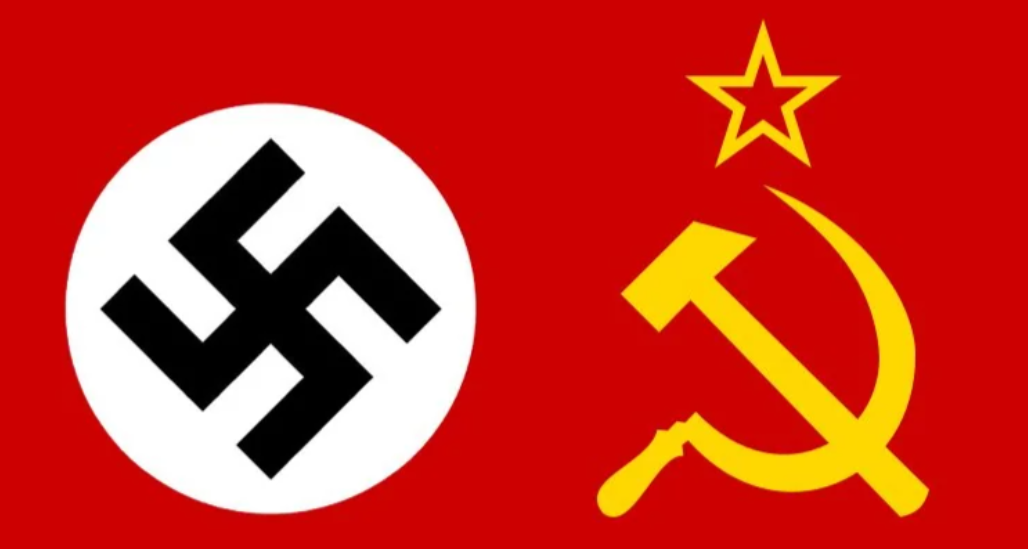
A while ago I watched a video where someone asked about why Communists and Nazis hate each other, pointing at many similarities between two ...