Friday, October 23, 2026

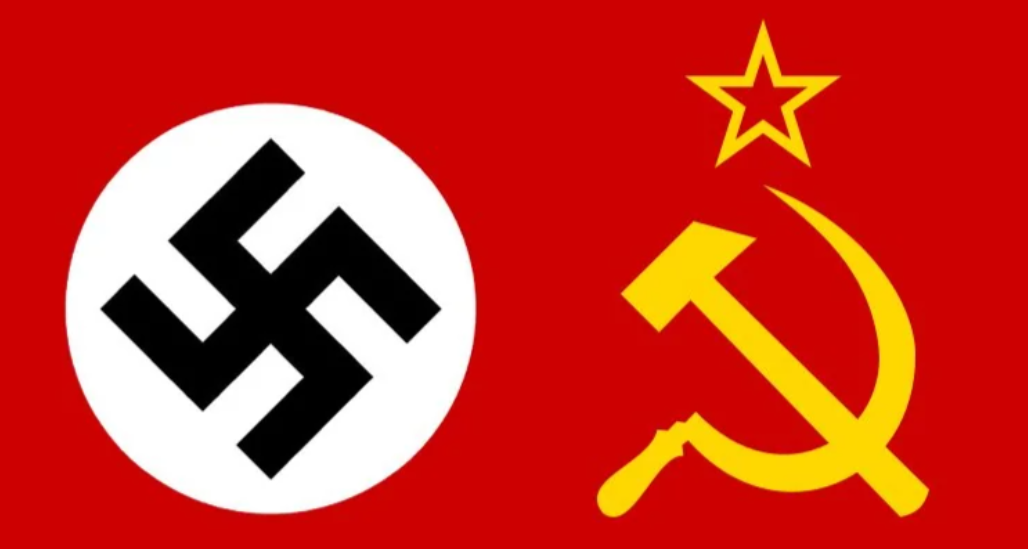
Differences Between Communism and Nazism

A while ago I watched a video where someone asked about why Communists and Nazis hate each other, pointing at many similarities between two ideologies. The hosts replied by insisting they are very different but otherwise failed to provide adequate explanation on how exactly different they are. So I decided to fill the void and answer this question for them.


Similarities

To begin with, similarities, which are many. From a perspective of a Western or a Liberal person or in fact any neutral and unbiased observer, Communism and Nazism are very similar. Fundamentally they both are dogmatic, totalitarian ideologies, insisting that their rules are both universal and objectively moral, thus they feel justified in using violence to enforce these rules. They are illiberal, and openly deny people a freedom to not only do as they see fit, but to also think differently. Finally they both believe that certain group of people is undesirable for the common good and should be exterminated.

To that end both groups run secretive secret police that oppressed the population. Both run concentration and extermination camps. Both murdered millions of people based on their ideological criteria. Installed puppet regimes in various countries that followed their dogma and more. The list is long.

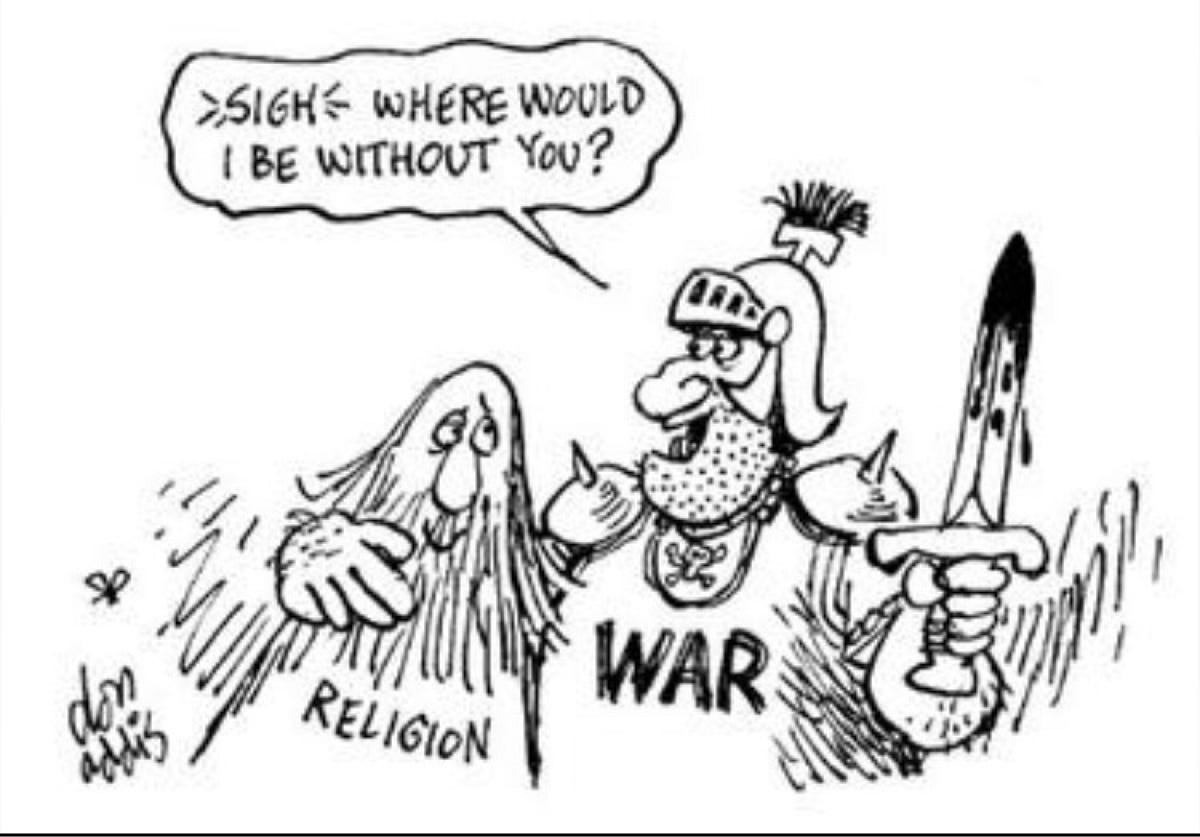
Fundamentally both were (or possibly are) akin to a religion. No matter how ridiculous their believes are to the outsiders, they follow them through with religious zeal, devotion and dedication.


However, much like with religion, all these similarities do not make these two ideologies like each other. All they see are not similarities but glaring differences.

Take religion for example. Jains forbid its followers from eating beef and Islam forbids them from eating pork instead. Would they see it as grounds for common understanding and sympathy. No. Far from it they will both praise their own restrictions as moral, just and objectively good, while decrying these of the other religion as silly, barbaric and unworthy of any decent human being. These differences might even become grounds for a religions war to put an end to practices of that other religion.

Things do not get any better even if restrictions are the same. Both Judaism and Islam forbid their followers pork. They  have many other similarities too. However that does not lead towards peace and understanding between Israelis and Arabs in Middle East. In theory Islam even acknowledges both Judaism and Christianity as older versions of their own religion and see both Moses and Jesus are prophets in Islam, predecessors of Prophet Muhammad. Finally Hebrew and Arabic have common roots as both are Semitic languages that split from one common language. None of that however makes relationship between Arabs and Jews any better.

In the same way, no matter how similar Communism and Nazism is, for their followers they are completely different and they hate their opponents with burning passion.


Differences

As for the differences they mostly come to three things: their stance on nationalism, criteria on who deserve to be exterminated and their treatment of women. Further down on fundamental level they come to different origins of both movements as part of their animosity to each other comes from that too. 

I will begin with latter, origin history of both ideologies. 


Communism originated from a socialist movement and was one of its splinter ideologies. You can read details of how that happen in my article about socialism. While all socialist splinter ideologies represent workers interests in conflict of interests between workers and their employers, they differ in actual approach to the problem. Social Democracy adopted conciliatory approach to this problem in form of negotiating with employers for better conditions for employees. Communism instead adopted confrontational approach by declaring all employers to be villains, deserving of physical extermination based on the fact that they own businesses and employ labor to work for them. To that end communists nationalised all businesses, all land and often murdered their former owners.

Nazism did not split up from socialist movement but was partially inspired by it. Nazism was created not by workers (hourly wage laborers who did not own property) who were behind all forms of socialism, but by disconnect WWI soldiers who felt betrayed by Versailles Treaty that ended WWI. Soldiers liked promises of care and support that socialism offered to working class as that reflected their own views of obligations that state owes to those who fought for it. However soldiers could not accept the notion that enemy they so bitterly fought on the battlefield is not their enemy but a comrade in their common struggle against capital. Thus they created a nationalist version of socialism, that combined promises of care for one's own with nationalism and animosity to foreigners as well as various traitors to the state and other enemies. National Socialism.

This difference in origin is part of the reason who Communists and Nazis do not like each other. Soldiers that created Nazism blamed socialist workers for betraying their country by toppling Kaiser and thus forcing Germany to accept humiliating Versailles Peace. Workers on the other hand never particularly trusted military, often seeing them as enforcers of capitalist order. 


Globalism vs Nationalism

That leads us towards question of nationalism. Socialism was mostly anti-nationalistic in nature. Often it emphasized international solidarity and collaboration. From socialist perspective workers face the same challenges no matter where in the world they are located and thus have lot more in common with each other than with those of other social classes. To advance worker's cause socialists created an international association, to unite all socialists across the globe into a single socialist organisation. Even when they split up into several different splinter groups, it was not based on nations but based on different views. Socialists were broadly globalist and mostly opposed to nationalism. Even nowdays when they oppose global liberal order, they do so not as nationalists but as alter-globalists instead, insisting on different global order rather than on national isolationism. It is truly ironic that this ideology produced some of the most isolationist states in the world like North Korea and Cuba.

During WWI more moderated socialists made peace with idea of nation state and supported their nations in war. Communists however went completely opposite way, decrying war as a capitalist ploy to pit workers against one another and called on workers to sabotage war effort to bring down capitalist world order. Communists adopted are more explicitly anti-nationalist stance. Declaring that different nations and countries are artificial creations, invented by capitalists to divide working class against one another. Communists called on working class to renounced any allegiance to these artificial constructs and instead embrace globalist solidarity with fellow workers all over the world. USSR deliberately avoided any Russian or any other national references on its flag, emblem and other state symbols. Sickle and hammer are tools of trade for the working class, globe on the emblem represent globalism and even its official motto: "Proletarians (workers) of all countries, unite." all emphasize this stance. Soviet globalism was particularly apparent during early days of its existence. However even during WWII and later Cold War, when USSR begun decrying 'cosmopolitanism' and lack of loyalty to the country, it never accepted nationalism, always substituting it for patriotism instead. According to communist values, there can be loyalty to the state (because state is socialist and benign compare to other states) but not to a nation (because nations are but petty tribalism, unbecoming of developed socialist man). Nationalism was always viewed negatively and equated with Nazism. There was always a state sanctioned solidarity with "oppressed working class" in capitalist countries.


Needless to say such views on nationalism did not sit well with Nazis at all. For Nazis nation was a cornerstone of everything they believed it. Loyalty to not only one's state but one's people was paramount. Nazis decried Jews precisely because they are not connected to Germany in any particular way but rather sort of global phenomenon that exists in all countries and maintains common traits and loyalty to each other rather than nations they reside in. Nazis viewed this lack of connection to Germany as reason why Jews betrayed Germany and subjected it to Versailles humiliation. That later became grounds for Holocaust as well as extermination of similarly unconnected Gypsies and communists, who due to their ideology did not see nation as important enough. 

The rest of Nazi ideology all comes from this worldview that puts nation (a collection of people connected by blood) as fundamental structure of society. Different nations and their cultures were assessed and evaluated on their cultural and biological worthiness. From this an ideology dividing nations of the world into different castes was created. Germans and people who were deemed German-like enough, like Iranians, from whom Nazis borrowed term Aryans, or Japanese, were deemed master race, destined to rule over others. Less German-like people, like French, were deemed second class citizens. Very un-German ones like Poles were deemed subhuman, destined for subjugation and exploitation by Master Race. Finally completely incompatible with Germanness Jews, Gypsies and Communists were destined for extermination. 


Extermination Criteria

Both Communists and Nazis believed in physically exterminating those they deemed undesirable. However there is a difference on ground for extermination, that are based on the core ideals of each ideology.

Communists believed in extermination based on social class rather than ethnicity. Communists believe is that because worker does not own means of production, they have no choice but to work for hire for those who own means of production in order to support themselves and their families. That fact gives owners of means of production unfair leverage over working class that allow them to exploit it, which they happily do. Because of the above, communists aim to liberate working class from this oppression and to that end seek to end private ownership of means of production by nationalising all property without compensation to former owners.

Communists aims do not end there however. Communists also villainize business owners, believing they should be held responsible for the oppression they cause. Communists further believe that owning property in itself is a crime and people who ever owned any business or property are thus deserving death for the mere fact of ever owning property.

In addition to that Communists, not entirely unwarrantedly, believed that former business and property owners will not be trilled to lose their property as a result of communist nationalization and would seek to undo nationalisation in order to return their property back into their possession. Due to that communists saw it prudent to pre-emptively exterminate former owners to avoid stab in the back.


All that is possibly harder to understand compared to Nazi much more straightforward system based on ethnic origins. However it was no less brutal to those deemed undesirable. Government kept records of everyone's origins in order to enforce its class policy. For those of non-working class background, whom it did not exterminated straightaway, there were punitive restrictions: it was impossible to vote, get decent job or university education; all because before communist revolution your grand parents owned some small shop. You life was not guaranteed either, sometimes decades later, after you seemed found your new place in communist system, government could suddenly remember that your were of non-working class background and put you before firing squad just for that. All party leaders and regular members always claimed working class origins. In essence it was like an inverted caste system, where members of former ruling castes were persecuted and often physically exterminated, while working class/caste is extolled as the only worthy one.

Working class was not safe either. Even peasants who were represented by sickle on Soviet emblem, faced their own purge from the system, all because of their resistance to collectivisation. Communists wanted collective agriculture straightway but peasants found SR party proposal of redistributing land much more appealing so communists adopted it to keep peasants on its side during Civil War. Before communism land was owned by privileged aristocrats and peasants, who actually worked land, had to pay these aristocrats a hefty rent for use of their land. Decade later communists returned to collectivisation but by that time, peasants already got used to individually owned land and did not want return to collective ownership. To be completely precise the more well off peasants who did better than their peers, did not want to share labour and harvest with those who did poorly due to laziness or alcoholism. Government went through with collectivisation anyway and ended up purging those who actually knew what they were doing, while leaving lazy dysfunctional alcoholics in charge of growing crops.

Aside from class based purges, there were also extensive purges of various dissidents, both real and alleged as well as just filling quotas for Gulag by completely innocent people, just because Gulag works required constant slave labour. Overall it would not be a stretch to call communism hypocritical, it promises all sorts of good things, but delivers near indiscriminate slaughter. 


Nazi extermination plans were heavily tied to their racial theory. Nazis planned total extermination down to every single man woman and child of Jews and Gypsies, something called genocide in international law. Nazis believed these two races so irredeemably detestable that humanity was better off without them at all. Holocaust is a direct result of this stance. It was an attempt by Nazis to achieve the objective of extermination of undesirables, that is ultimately failed. Nonetheless Nazi murdered significant number of people to warrant calling Holocaust a crime against humanity.

Further up racial hierarchy were those Nazis deemed subhuman. For subhumans Nazis planned significant reduction of numbers but not a complete extermination. Significantly culled subhumans would then be used as slaves by the master race to advance its agenda. While Nazis did not believed that subhumans had to be completely exterminated they still believed they did not deserve their own countries, independence or any agency of their own, believing their place it to be controlled and serve the master race. Example of Nazi treatment of subhumans was their treatment of Poles. Their country was stripped of its identity culture and name, significant parts of it were annexed into Germany from where Poles were either displaced eastward or sent to Germany proper to work as slave laborers on German plants. Their land and cities were given to German settlers. The remainder Poland was administered by Germans and called General Government. There were plans to annex it into Germany proper at later date and then Germanise it, like with lands further west. These plans did not come to pass because Germany lost WWII, so we can only imagine what a final outcome would have been.

Further up from subhuman were second class races. Nazis did not believed they were part of master race, but at the same time did not saw them as subhuman, worthy of only being slaves. Nazis believed they should be allowed to maintain their own countries with their own governments, cultures and languages. They however were not equal to the master race and their interests were secondary to the master race. Example of this tier was Nazi treatment of France. French government was replaced by by pro-Nazi one, disputed Alsace-Lorraine was annexed and half of its territory occupied by German forces. Despite that France continued as a state and nation, had its own government, military and more. German occupation was planned for duration of war only, Germans planned to settle and eventually annex into Germany some more of French land around close to Alsace-Lorraine and Belgium but were otherwise intent to keep it intact.

Finally, there is master race, that included Germans themselves as well as those whom Nazis deemed as German enough, like Scandinavians, Dutch, British and Iranians. Master race was the most privileged in Nazi racial hierarchy, but it came with certain obligations too, in order to be worthy of the high title of master race. Various purity rules were used to decided who really is a proper rightful member of the master race and who is not. Those who did not meet the purity criteria would not be deemed member of the master race and grim consequences will follow based on which race they will be assigned to. Aside from that there also an identity issue for people like Dutch and British. Neither Dutch nor British see themselves as German but Nazis nonetheless see them as one. Thus, Nazis would have insisted on cultural assimilation of these two people into greater German race, with negative consequences for those who resisted the effort in attempt to preserve separate identity. Best example of this category would be Nazi treatment of Dutch, where separate Dutch identity was routinely erased but otherwise, they were treated markedly better than Wallons and French further south, whom Nazis did not see as members of master race.

Aside from racial criteria there were also purges of dissidents, particularly communists and other leftists, globalists, as well as gays and other alternative lifestyle people. 

In addition to the above, Nazis generally linked communist ideology to Jews and thus hated both communists and Jews for things either of these two do or did. Actual Jews did not enjoy that much freedom in USSR and were often discriminated against by Soviet officials.


In practice Nazi application of its theories were often less brutal than theory would otherwise suggest. During WWII Germany managed to make many allies among people who would hardly qualify as master race under Nazi racial theory. That led towards Nazis stretching its theories to somehow accommodate these people. Finns and Hungarians were deemed an unusual stain of German race to make them part of master race and justify an alliance with them. Croats were deemed a subtype of Italian race rather than Slavic one, because Slavs were classified as subhuman in Nazi racial theory. Meanwhile Czechs were seen as Germans in denial who chose to speak a subhuman language and intermix with Slavs. Instead of subjugating Czechs, Nazis aimed at Germanify them and purge them from Slavic elements. Even some Jews were classified as Germans because of political expediency. Possibly only Poles were consistently suppressed with no leeway.

After the WWII USSR would consistently spread a myth that Germans planned to exterminate all Soviet people the same way as they planned to do with Jews. USSR used this myth to justify Soviet abused before and during the war, claiming that without these sacrifices all soviet people would have perished in Nazi camps. While it's hard to 100% predict what Nazis would have done if they won the war and ruled for prolonged period of time, one cannot consistently verify whether Nazis planned genocide of all Soviet people or not. The only thing one could say for sure is that Nazis planned to exterminate all communists, but that only applied to active party members and other influential figures within Soviet hierarchy (so called commissars). One could not tell for sure what Nazis planned to do with general population, chances are Vlasov would have formed a friendly Nazi regime similar to Vichy France or Slovakia's Tiso, but all is speculation.  

Overall while it's impossible to call Nazi rule humane or just, it was hardly worse than that of communists. Only preference for one value over the others may make anyone to justify one and decry the other. For a fair impartial observer, they both are equally cruel and inhumane.


Women

Last but not the least was question of women. While USSR was not a free society, it nonetheless was a feminist one. Communists implemented radical feminist reforms from the onset of their rule and went much further than even modern western societies. Soviet women could vote, work, divorce at will and do anything a man could. In many ways their life was actually better than that of Soviet men, who were subject to military draft and much harsher treatment from KGB and law enforcement. Divorce laws were very generous towards women, allowing them to kick out their husband without any loss of their quality of life, they were allowed to keep the same apartment entirely for themselves. The same could not be said about husbands, who would be given a room in a nasty sharehouse with annoying roommates instead.

Legacy of Soviet feminist could be felt in Russia and post-Soviet states even now. Russia has record number of single mothers, and a lot of children were raised without a father. Disparity in life expectancy between man and woman is the largest in the world, with women outliving men by more than a decade. In Russia its men who do not want to marry, as they understand marriage gives them nothing of value. Women meanwhile think that getting a ring on their finger will magically solve all their problems. This is a mess that Soviet feminism has created.


Here again Nazis are polarly opposed to communists. Nazis emphasized differences in gender roles between men and women and decried any attempts to erode these differences. Women were expected to stay at home and be good wives and mothers. This gender role was enforced through propaganda as well as special youth organisation for women, that would mould them towards fulfilling their role.

Modern life, where feminism went out of control and made women undesirable to men, this aspect of Nazi ideology looks all the more appealing and important to modern men. Some might even embrace neo-Nazism because of that. While this alone in itself is not enough to justify Nazi regime, one should study negative consequences of Soviet feminism and consider opposing it elsewhere.


Differences in treatment of women is often overlooked by historians, but this could be one of real reasons why Nazis and communists so bitterly hate each other, despite having a lot common when it comes to their methods. Other aspects of these ideologies could all stem from the differences in their attitude towards women. In a separate article I already linked Nazi racial theory to the differences in treatment of women in different cultures. Cultures that suppress women most all ranked high on Nazi racial theory while those that ranked low all give women a lot of power. Communist undue interest in liberating Africa or fate of African Americans in the US could also be linked with female preference for Africans over other races. Possibly the whole WWII was all about disagreement in treatment of women, just shows how bitterly men could hate those who treat women differently from how they do. Something to think of.


Conclusion

There are probably other differences between communists and Nazis as well, but these are key ones. I hope this article will enlighten you on this question.

Tuesday, October 13, 2026

Why Negotiations in Modern Wars are Pointless


Nowadays because of American midterms we hear more and more about negotiations to end War in Ukraine. In fact, we kept hearing negotiations ever since war begun and despite countless efforts, peace proposals, fresh negotiators and more, it all went nowhere. The war is now longer than WWI or Soviet war against Germany during WWII.

Both sides claim, they want peace. Both willing to negotiate, why cannot peace be reached then. The answer is simple: unreasonable peace terms. Both sides are equally guilty of this, though Russia is more so. Russian demands amount to effective end of Ukraine as sovereign state and turning into Kremlin puppet state. No matter how you look at it no sane national leader will ever agree to something like that. Ukraine meanwhile wants Russia to be punished for invasion and made suffer as much damage as possible. Also, not a deal a someone willingly takes. 

To put it frankly, these are not peace deals, negotiated between diplomats to the benefit of both parties. There are capitulation terms. The kind of terms that can only be imposed on a dying husk of a nation, when its entire military, economy and all government structures are already utterly destroyed by military means and its leaders either suicided or fled. Its Germany May of 1945 level capitulation, which German command still opposed even if not holding any land in Germany proper anymore, not a peace deal.

Terms of both sides are both punitive and crippling in nature, they aim to utterly destroy the opposing side. Surely from perspective of the side proposing them, they make sense, it's what they want to feel safe. However, if you try to walk in the other side shoes, look at that from their perspective and consider if you would accept such terms if someone else would try to impose them on you, the answer would be a resounding no.

That is why all peace efforts so far have come to naught. Both sides are utterly unwilling and incapable of considering the other side's interests and propose something that other side will consider reasonable. 


WWII is to blame for that. That war ended with unconditional surrender of both Germany and Japan, though much forgotten Italy negotiated a favorable exist on reasonable terms with no occupation or loss of land or sovereignty. German and Japanese surrendered are widely remembered and celebrated while Italian exit is largely forgotten. That widely inflated expectations for all future wars. Now many politicians and warlords expect complete surrender from their opponent and capitulation to all demands, failing to understand that such demands are not something anyone will ever agree to and the only reason Nazi Germany signed something like that is because allies physically conquered and occupied almost every inch of Germany.

Worse yet, because after war Nazi ideology was condemned as inhuman universally reprehensible, now every modern invader evokes the same uncompromising attitude towards the enemy. "They are wrong and we are right, so they must change their ways completely to match ours." I would like to remind the forgetful WWII enthusiasts that Nazis never accepted any wrongdoing on their part, not long after war ended, their last words on Nuremberg Trials were "we were right", not "we are sorry", so it's unreasonable to expect someone to change their ways on the negotiations table, no matter how much you think there are wrong.

That is why modern wars last forever, until both sides utterly exhaust all their capacity and ability to continue fighting. And even after war ends, the animosity and hatred continues for many generations afterwards. Peace efforts are lengthy and grueling slog that often become but a ceasefire before war resumes sometime later. People keep talking about peace and peace never comes and killing continues.


It was not always like that. During 18th century negotiations indeed ended wars to if not to mutual satisfaction, then at least mutual benefit of both sides. So, what the negotiators of the old had that modern ones lacking. A simple understanding of interests of both sides. They saw negotiations not a mere ceremony where one side surrenders to the other but a deal from which both sides would benefit from. 

They asked annexation of no more than half of what was conquered and offered return of the rest to the losing side as an insensitive to accept the loss of the ceded territories. Various financial compensations were offered for lands ceded and more. All to keep both sides happy. Winner gets some of what they managed to conquer, loser gets some of their lost assets returned in exchange for relinquishing rights to the rest. Compensations are paid; people are given time to move if their area is transferred. 

Both sides get something out of it, so both sides are actually willing to sign. Thus, negotiations worked and brought real results. Negotiations were to find out the outcome and other arrangements, most agreeable to both sides, not an attempt to pressure, blackmail, coerce or make propaganda statements.


Compare that to modern "negotiations" where both sides adopt holier than thou attitude, call their opponents something dehumanising and insist they agree with that, repent and make amends. It's not rational but emotional. "It's all these bastards' fault, so they must make amends to us, while we will throw eggs and tomatoes at them till the end of time." It's no wonder no one agrees to that nonsense. Then, when negations fail, they blame each other for refusing to agree to their completely one sided and unreasonable demands. Its infantile emotional name calling nonsense, not a negotiation.

Because of those most modern wars end with a protracted stalemate where de-facto military line of control gradually evolves into a permanent border that is more fortified and impassable than any legal border out there. Both sides then sit on either side of the border and call their enemies mean names long after its all over. See Korean DMZ, the result of protracted Korean War of 1950-1953 as an example. This solution does not require negotiations, it's just naturally evolving because no side is willing to agree to anything and calls their opponents an illegitimate regime, refusing to negotiate with them.


In Ukraine Russia calls Ukrainian people Nazi, Zelensky illegitimate president and Euromaidan revolution a CIA coup. No one reasonable can expect any negotiated outcome from this premise alone. Do you really think Zelensky will just relinquish power because Russia called him illegitimate or Ukrainians will accept punitive measures against their culture, history and language because Russia called them Nazis? Of course, no. If Russia really wants something out of these negotiations, then it has to stop its pointless insults and accept that Zelensky and system created by Euromaidan will stay. If it fails to do so, then it's not a negotiation but waste of time. 

Ukraine fights back by saying Russia should be punished because it's an aggressor. While Russia is indeed aggressor, it's unlikely they will accept that at the negotiation table. Yet it will be better if Putin, Lavrov, Rogozin and Dugin end up in Hauge Tribunal for human rights, but it will not happen, unless Ukraine captures them by hand and drags them down to Hague. 


Fundamentally there is nothing more to do in Ukraine but to accept that current de-facto border (military line of control) will remain as it is for good. War gave us the answer where the demarcation line is, now everyone just has to accept it and move on. 

Idea that something more can be negotiated here is but a pure fantasy. The sooner both sides awaken to this truth, the sooner we can finally put an end to war and move on.

It's the same in other wars like US - Iran war or Libyan Civil War. No rational arguments, just emotions and desire to wreck things out of spite.

Saturday, September 19, 2026

Revised Plan on How Better Redivide Russia Into Several Different States

Several years ago, I wrote my original plan on redividing Russia into several independent states. Looking back at it now, I feel it was rather imperfect. There are few things I would change. Thus, without further ado, here is the revised plan. 

I even made a map for it. Black lines are to denote new borders between new independent states; meanwhile other colours denote border corrections or land swaps. Finally, in some places, particularly around Russia, Ukraine, Belarus border, there are many lines close to each other. These denote several alternative options for the better border between these three states.


Western European Russia

In the western part of European Russia there will be three new states. Don Republic in the south, Palmyra Republic in the north, centered around St Petersburg and Great Novgorod and finally Muscovy in the middle. Don Republic's identity is based on that of Don Cossacks who consistently used name of this river as form of identify. Words like Dontsy, are popular in the area, are based on the river's name. Palmyra's name is based on euphemism that is popular in St Petersburg area, that calls the city Norther Palmyra. I think it will make for a good country name. Finally, while word Muscovy is rarely used in Russia itself, Moscow city itself has strong appeal to people. People want to live in Moscow, so a country name based on this city will surely work. 

Don Republic borders are the same as in my other proposals and based on Don River basin. Muscovy is different, however. In the event of Russia moving capital to Siberia and divesting Don and Muscovy as separate states I would argue for a smaller Muscovy without upper reaches of Volga or Nizhniy Novgorod. After all Volga is a valuable logistical artery and Russian government would be reluctant to give it up. However, in the event of complete split up of Russia, Muscovy should be made bigger and include whole of upper Volga in addition to all/most of the Oka River as well as their confluence at Nizhniy Novgorod. These rivers are rather close physically and connected to each other with Moscow-Volga Canal, it would be wise to keep them together. 

Finally, the northern part would be Palmyra Republic. It will include most areas north of Valdai hills and Volga River basin. It will have large arctic coast, together with Russian second largest city. In the east it will not go as far as Ural Mountains and will instead have border with Kama River basin country. I provisionally gave Palmyra all of the north outside of Pechora River basin, however that made Kama-Pechora area too little of an access to see, so border may be revised in favor moving it further west.


Eastern European Russia

Eastern European Russia will have two main states, plus a separate North Caucasus area, that will go under provisional UN administration to be re-divided in a way that will reflect local ethnicities and sentiments better. 

In the north there will be the above-mentioned Kama-Pechora area, based on two River basins. Pechora will give this state access to Arctic Ocean, while Kama River area is where most of its population lives. This state will also include Kazan at confluence of Kama and Volga as well as middle reaches of Volga River around this city. Its capital can be either Kazan or Perm; capital duties can be split between two cities. This state will be bi-lingual and bi-religious, with both Islam and Orthodox Christianity as official religions as well as both Russian and Tatar as official languages. I considered several different names like, Ural Republic, Greater Perm Republic and Kama Republic, but I think a survey of local residents should determine the final name. 

In the south there will be Volga Republic, centered on Volgograd. On the map it looks smaller than others, but it will control valuable lower Volga stretches below Kazan area, that contains many large cities as well as banks of Caspian Sea, allowing it to punch above its weights. This state should also receive some territories from modern Kazakhstan to make border between two states go along Ural River. It will make borders more sensible geographically.

Cities of Ulyanovsk, Togliatti and Samara are physically close to Kazan but possibly closer to Volgograd culturally so a referendum on choosing between these two states should be held in this area.


Siberia

Siberia should be divided into two major states. West Siberia and East Siberia. Siberia, including cardinal direction designations, is the name that is consistently used in Russia for these areas so hardly any alternative will work. The border between these states should be Yenisei River with cities standing directly on the river itself going to East Siberia. West Siberian capital can be Yekaterinburg and East Siberian one has to Yakutsk as Irkutsk is too far to southern border.

In addition to current Russian territory, West Siberia should annex various Russophone areas of modern Kazakhstan, it will make border much more sensible and prevent ethnic tensions in Kazakhstan that led to Russo-Ukraine war in Ukraine. Kazakhstan too should receive some extra areas from Russia, that however are much smaller than what it has to give up. These areas however will give it direct border with Mongolia and will open certain opportunities.


Far East

Far Eastern areas will have two new states as well. The south area around Vladivostok will be the southern state. It could be called Dalnevostochnaya Republic, which literary means far east in Russian. This name is popular designation of this area.

Finally, the northeastern most tip can be called Kamchatka Republic. It will include Kamchatka peninsula itself where most people live there, as well as far north, roughly west of Lena River.

These two republics will have no common border between themselves to give East Siberia access to sea other than Arctic.


Russia Ukraine Belarus Border Adjustment

I have long criticized current post-soviet borders as unfeasible and called for their alteration. Thus in article about splitting Russia, I have to address this issue to better delineate borders of the western most post-Russian states.

To begin with, Ukraine, in principle is a state along Dnipro River. This river is important part of Ukrainian history, folklore and identity. However surprisingly little of it lies within current Ukrainian borders. That was not always the case, Ukraine used to go much further north as recent as during German occupation during WWII. If anything, current border is southernmost it ever was. It's dangerously close to Ukrainian capital, Kyiv. I believe it has to be fixed by moving said border further north at least to Reichskommissariat Ukraine borders, but possibly even further north, even up to Minsk. See blue lines on the map for options. 

Belarus can be compensated with some areas from Russia, immediately east of its eastern borders.

On the other hand, Don was never part of Ukraine. Don Cossacks had their own identity, customs, traditions, attire and identity. Thus, Ukraine holding part of Don basin, that protrudes far east into current Russian territory is equally unfeasible. People in eastern salient all live close to border and do miss connection with those across it in Russia. These areas should be given to Don Republic. See purple lines on map for different options.

South most area of Ukraine, Crimea and areas around Azov Sea can too be created into separate country. It can be called Taurida Republic after historical name of the region.


The above division plan will allow for better and more stable governance of post-Russian areas. It will fix borders and allow for much better development within new states that will emerge from Russia's dissolution.

Friday, September 4, 2026

On Justifying Wars in Post-Religious Reality

Too many people erroneously associate atheism with pacifism. Certainly, many pacifists, leftists and 'all people are brothers' types happen to also be atheist. Communism is partially to blame for that, but in part it's just due to the fact that atheism does not have any defined authority or creed so everyone can build an ideology they like.

In in itself, atheism or science for that matter, is not intrinsically pacifist, tolerant or accepting. If anything, science and history is more of the opposite of tolerance and acceptance. Take Evolution Theory for example, you do not need to connect too many dots to turn survival of the fittest into Social Darwinism, people like Herbert Spenser did just that. Social Darwinism is too extreme and effectively useless, but it's an example. One can use science and atheism to justify extreme intolerance and cruelty too, just like with religion. If that is the case, then wars too can be justified with science.


Since times of Roman Emperor Constantine, military and church shared an uneasy alliance of sorts. Reason for that was the fact that military needed priests and their sway over hearts of men to persuade these men to fight, kill and risk their lives in wars. This alliance was not easy, church's sway over people's hearts allowed priests to effectively control many aspects of live, especially during Middle Ages. Many kings and emperors were frustrated by this overreach by pesky priests who grew so powerful, they begun dictate their rules even to kings. Yet kicking off churches' yoke was much harder than it seemed. Church fought back with excommunications and inquisitions and good many kings found their men turning against them if church denounced them.

Yet until recently there was nothing kings could do, superstitions commoners trusted conmen in robes and their fictitious reasons to support or oppose various things. Despite that, even when atheism became mainstream and more and more people are now irreligious, military somehow kept clinging to religion. Reason for that is the fact that no matter how difficult conmen in robes are sometimes, they still rally men to war whenever they and military are in agreement.

However, is power of conmen in robes this unescapable? Is it really not possible to justify a war and rally people for it, using purely rational and scientific arguments? Turns out not. To see an example of how it could be done, one should study Nazi ideology.


Nowadays it's common to demonise Nazis and reduce their ideology to a banal emotional and irrational racial hatred. Something like that is useful as war time propaganda but reality is Nazi ideology is the fact that is based on very rational and common-sense self-interest arguments. 

As much as historians like to point out that Nazi accusations against Jews are untrue, the arguments themselves were not based on hatred but on common sense bread and butter issues. A common German, rather impoverished due to economic problems in interwar times, responded well to Nazi arguments that Jews betrayed and robbed them. Jews were one socio-economic group that at least seemed well off during the times when everyone else was struggling. Regardless of whether it was true or not, first people grew to believe Jews were the problem, only then came Holocaust.

To mobilize Germans against external enemies, Nazis used all the same economic arguments. Poland and France robbed Germany of its wealth and it's only fair to march there with arms in hand to take back what is ours to begin with. Once again regardless of whether it was true or not, people believed in it and all rallied to the flag. The effect certainly exceeded all expectations, Germany did lose in the end, but it never had moral or loyalty issues. People fought to the end.

Economic arguments were not the only ones. Nazis also picked at their enemies' appearance and cultural traits. Nazis claimed that cultures or their enemies, both Jewish and Slavic were inferior to German one, thus is only fair to treat these people of inferior cultures as inferior human beings. Different examples of unlikable cultural traits were used to justify this point of view. Meanwhile eugenics dealt with outward appearance, judging people based on shape of their noses, forehead and the like.


I would argue that modern hatred of Nazis and demonisation of everything Nazi comes not from their crimes but from the simple fact that Nazis made church and its priests redundant. Anschluss of Austria and many further events showed just how swiftly power over people slipped through priests' hands as public ignored the conmen in robes and rallied to Hitler's banner. Thus, after the war, church did all in their power to reduce Nazism to mere racial hatred. They reasonably fear that if studied properly, Nazi ideas will allow government and militaries to wage wars without church approval and that will eliminate the remaining moral authority they still wield over society.


The Nazi example clearly shows that people are more than willing to listen to rational and scientific arguments for war and willing to support wars too, if they serve their self-interest. One should simply explain to them how they personally will benefit from that. 

Thus, governments and militaries no longer need God or priests to rally people for war, science, logic and reason can do this too. If fact by now religion is probably more of an obstacle than a boon. Religious arguments sound so silly that a good number of people will simply ignore the argument if the church or priest endorses it. Thus, government and military have no choice by to learn to operate in new reality and base their arguments for war on rational and scientific arguments. 

However, there is also a newfound freedom in doing things new way, sure not every war can be justified easily, and certain skill is needed to connect all the dots to sway public opinion. One has to be more specific and precise in pinpointing the problem or public will not buy it. However, there is clear advantage as priests no longer have any say and old system too had their own constraints, like justifying wars against fellow Christians. Many wars we will likely see will be against Sub-Saharan Africans who are mostly Christians.

Wednesday, September 2, 2026

How to Solve Transnistria Problem

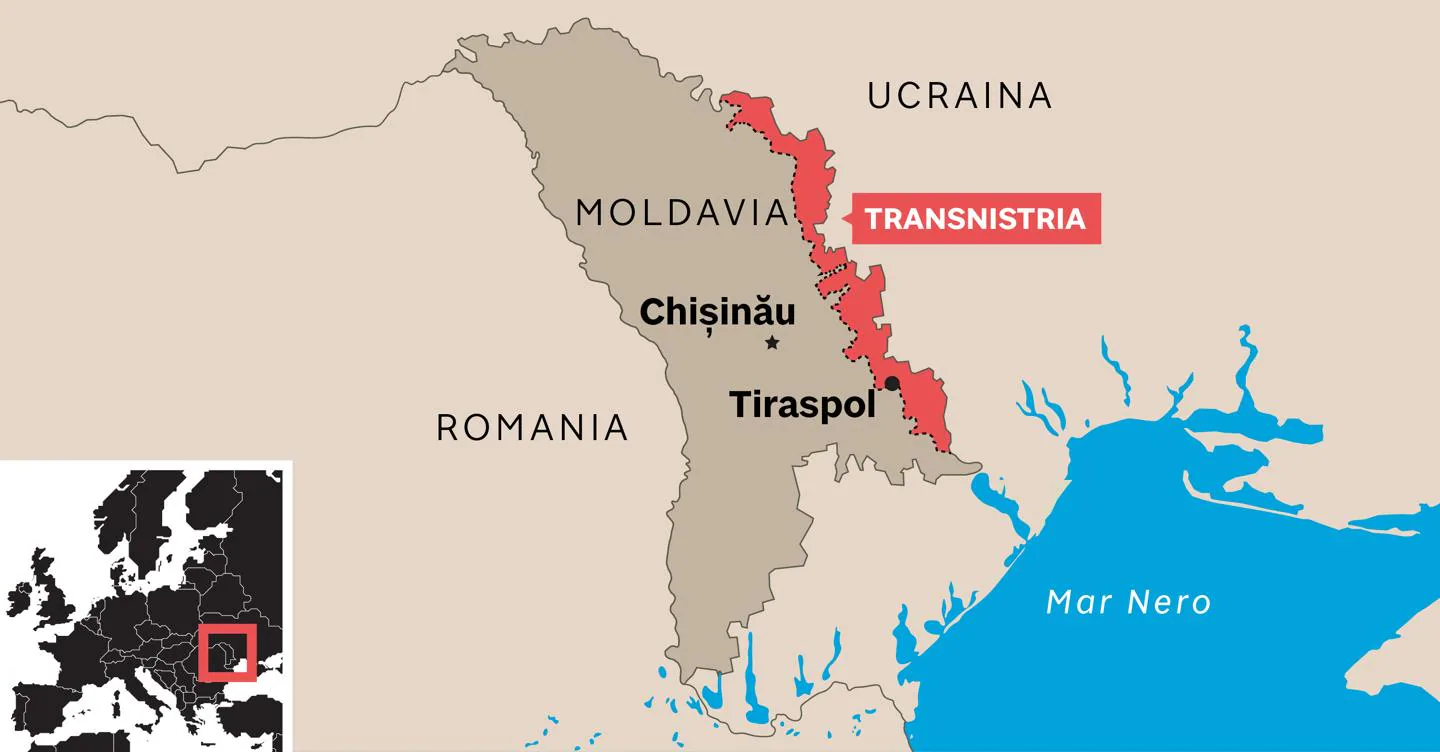
Transnistria is a self-proclaimed unrecognised county that exists within internationally recognised borders of Moldova on left bank of Nistra River. Transnistria have long been a thorn in not only Moldova's side but also that of Ukraine and broader Europe. For Europe it's a source of illegal weapons and human trafficking, for Ukraine it is a military threat at Transnistria de-facto authorities are pro-Russian and there are Russian 'peacekeepers' in the area. For Moldova it's a separatist regime that controls significant parts of the country's territory and resources. All three would like to see Transnistrian problem solved but Tiraspol regime has Moscow's support and until recently no one could do anything about it.

However Russian war in Ukraine exposed Russia's weakness. Russia is already at war so it could no longer threaten war in retaliation for any action Chisinau may take in Transnistria. Right now, Transnistria is cut off from any Russian aid by Ukrainian defences. So, if the above-mentioned powers were to act on Transnistria now, there is nothing Moscow would be able to do about it. If anything, Russian war in Ukraine presents a golden opportunity to finally solve Transnistria problem once and for all.

At the same time, this is also a good opportunity to fix hideous post-Soviet borders and make frontiers much more logical and defendable. Ukraine can claim back left back of Nistra (Dnistro) that used to belong to them before USSR annexed Moldova and Moldova can reclaim some of the lands that was ceded to Ukraine as compensation. Border along Nistra River instead of an arbitrary line drawn by Soviet officials will benefit both countries as it will be much easier to control and patrol during peacetime or defend in case of war.

While it is likely, that Transnistrian de-facto authorities in Tiraspol would not just surrender without a fight, they have some troops of their own and would likely fight, but there is a way to play it smart and gradually phase them out. One can use a salami tactic of sorts. Instead of abolishing it in one go, one can shrink Transnistria gradually, rayon by rayon. 

Transnistrian capital is in the south of the separatist region so one can start shrinking it from the north. That way Transnistrian de-facto authorities can still retain their country and government, just with a somewhat reduced territory. They are outnumbered so it's likely that they lose in an armed confrontation. If they fight and lose, Ukraine and Moldova can occupy their entire territory and just put an end to their existence, thus good chances they would agree to withdraw from the north without a fight to keep south.


To begin with Moldova and Ukraine can agree to swap 1 for 1 or 2 for 2 rayons (old pre-reform rayons for Ukraine). These rayons have roughly equivalent population and territory so it will be seen as fair for both sides. There is also the fact that people in northern rayons of Transnistria are predominantly Ukrainian, while those who live in some Ukrainian border towns like Reni are Moldovans, so it will be fair to adjust the border to re-unite these people with countries they identify with. Camenca and Rybnitsa Rayons of Transnistria can be swapped for Reni and Tarutyne or old Bolhrad Rayons of Ukraine. Exact borders can be adjusted to suit local geographic realities.

After governments in Chisinau and Kyiv negotiated, agreed and ratified the territorial swap, Ukrainian side can present Transnistrian de-facto authorities with final document and request they withdraw their troops and officials from agreed upon territories or Ukraine will take them by force. It's important to make it clear where new frontiers will be and why. There are good chances are Tiraspol will comply with this new reality.

While that will not remove Transnistria completely it will reduce its territory and will make it easier to control the border and keep Transnistria in check. It will put Ukraine and Moldova in much better negotiating position than before the swap.

If Tiraspol will remain undeterred in its opposition to Chisinau authority, The initial swap can later be followed by a second one, where Dubasary and Grioriopol Rayons can further be swapped for something like Bolhrad and Izmail or whatever works best. Once again exact borders do not have follow rayon borders exactly, some adjustments to better reflect situation on the ground can and should be made.

After Transnistria is reduced to just its capital and surrounding areas, Moldova and Ukraine will be in much better negotiating position to solve this problem for good. From there Tiraspol authorities could be offered ether temporary Gagauzia like autonomy in Ukraine or Moldova. Alternatively, they could be offered a safe exit and exile.


Final solution can then be followed by final agreement on border between Ukraine and Moldova. Sure, Moldova will likely get back a lot less than what it had before WWII, but land Ukraine got is simply more valuable and Ukraine would not just swap it all back, all for all like before the war. Moldova needs these swaps a lot more than Ukraine does. 

However, it's very realistic for Moldova to be able to get direct access to sea, which will be a huge boost to it in practical terms. 

Moldova and Ukraine can then further agree to swap some of Moldova proper areas north of Balty for more land in the south. In fact, Moldova can even trade Belty itself, people there vote for pro-Russian parties, and many identify as either Ukrainians or Russians, as non-Moldovans. 

Ideally, we would want a border to follow Nistra River at least in the south. However, this plan is flexible so even if most ambitious targets could not be met, it will still be a meaningful improvement even in partial form.


Just like that, with clever salami tactic a long-standing Transnistria problem can be solved and borders between Ukraine and Moldova improved.

How Superannuation (Super) Works

A few people online claimed that millions in super are just a myth people use to bash boomers. To refute these claims and prove that millions in super are real I will now explain how super works and why even if you personally do not have any, millions in super are not a myth.

Overall superannuation is a simple system. After a person is hired for a full-time job, a super account is created for them in one of super funds. Afterwards every time they are paid salary a certain sum called 'super sacrifice' on a payslip is deposited into their super account. 

If you worked in formal full-time employment for a single employer all your life, and absolute majority of boomers did just that, it is very easy to accumulate millions of dollars in superannuation. The money will become available to spend only after the retirement but in some exceptional cases one can claim some of it early.

Now that we covered the most typical and simple case, I will outline possible complications. If at any time you switched employer, unless you get out of the way to transfer your super to new super fund, chances are your new employer created you a new super account and because of that your super is split between two different accounts likely with two different super funds. Altogether there still should be millions between two of these accounts, just more hassle and paperwork to collect it all. That is you will not have double amount, both of your accounts together will hold as much money as a single account of someone who worked for the same employer.

Of course, the often you switched jobs and employers, the fractured your super is, split between multiple super accounts all across the industry. So, if you went between couple of dozen employers, collecting all your super could easily turn into a sort of pirate treasure hunt or a detective story. A some long defunct pre dot com bubble company where you worked 30 years ago, would have super accounts in long defunct super fund, so it would be a challenge worthy of Sherlock Holmes to track down where your super ended up after all these acquisitions and mergers. And after all that you will also have to get out of your way to prove you actually worked there as records could be missing and such. Multiply that by all the places you worked and tracking super will easily become a full-time job in itself. To make matters worse you are not tracking 20 separate treasures but only a single one, split into multiple parts. For some jobs it will not even be worth it as if you only worked there a few month, you would have but a token amount of super in their particular superfund. Iron rule of super is the longer you worked in the same place the more super you will have, while every employer you had only adds more hassle to tracking all down. A clear loyalty insensitive here.

If you wondered if it could get any worse, then it can. If your job was classified as part-time, casual, or you were employed under a contract instead of employment agreement, or had not formal agreement at all, then you will have no super at all. Yes, it's possible to miss on super altogether. It's an equivalent of pulling a single short straw. This is particularly a problem for young people as well as for those who switched employers after Financial Crisis of 2008 as after crisis companies started to 'save money' by reclassifying their formerly full-time jobs as part-time or casual. I once seen job ad calling their job 'super casual' which in lay term means as much work and commitment as full-time work but without all the benefits a formal full-time employee will be entitled to. Is it a bad deal for an employee, of course it is. It might actually be illegal too, one can even apply for a court hearing on the matter, but it would probably better to consult with ombudsman first. (This is not a legal advice as I have no formal legal qualification).

You also do not get any super if you run your own business. In fact, in this case, it will be up to you to pay super to your employees. This law is the reason why right-wing business owners while about regulations as they would very much prefer to underpay their employees, but laws do not allow for it and courts can order an employer to pay former employees years of underpaid salaries, if violation is exposed.

Finally, if you worked overseas then, for your overseas employment, overseas rules apply. Superannuation is Australian system that applies only withing Australian jurisdiction. Other countries may have similar systems, for example the US has 401k, but in order to claim anything from this system you have deal with their equivalent of super funds and follow their rules. Not all counties have equivalent systems so if does not exist where you worked, tough luck. To make matters worse, if that country suffered from hyperinflation like post-Soviet states in late 80s early 90s, it might turn their equivalent super into mere pennies.

Super is an accumulated amount rather than flat entitlement like say aged pension that is paid for everyone eligible. If you did not accumulate any super when you had the chance, there is nothing you can do now. That said boomers with millions in super still get aged pension on top of their super and that aged pension is higher than unemployed benefits or disability support pension. Very unfair if you ask me.


If you analyse the system, you can notice that under its rules mediocre and loyal clearly have advantage. Someone who stuck with the same employer all their live had an easy retirement with no hassles in claiming their super. Meanwhile someone who chased their dreams, took opportunities and switched careers will have much harder time. Yet worse is someone who took unconventional path of foreign or self-employment, as they got nothing at all.

Because of that this system is also a boon to all sorts of swindlers and con artists. As under such system the least smart and talented have most of the money. Kakistocracy if you like. Such people are easy targets for all sorts of con artists; thus conmen flourish in this era as much as lifetime employees.

Finally, if you wondered if you can still jump on this bandwagon and benefit from this system, the answer is no. Nowadays most companies use all sorts of tricks to avoid paying you super. Thus, no matter how hard you work, you will not have the same luxurious retirement the boomers currently enjoy. Unlike the boomers' time, this is era of smart people, if you are too dumb to make sure your employment agreement entitles you to all the good things, your company will gladly avoid giving any. 


Saturday, August 29, 2026

Details on Why Boomers are at Fault

I often criticize boomers for causing all the problems we currently face. However, I recently thought that I did not sufficiently explain just how exactly this happened. So, I figured I will make a separate article to connect all the dots.

To begin with, in CGPGrey's video about Rules for Rules, he mentions that in a democracy government sees people as voting blocks of sorts, sorted based on their common characteristics and interests. Furthermore, a group that sways elections gets all sorts of rewards from the government in exchange for keeping them in power. Boomers, or to be precise boomer retirees who own millions in super and live in luxury retirement homes, is precisely this kind of group that sways elections in our current society. Because they sway elections, government listens and caters to what they want. Because their interests' conflict with that of everyone else, this makes their lives better and better and those of everyone else worse and worse.

Before I continue further, I would like to address the often-heard claims, such as 'but I am boomer and I do not have millions in super and do not live in luxury retirement home'. Why you do exist, you are but an exception that only proves the rule. People like you are by far a minority compared to those retirees who have millions in super. Rules of superannuation work in such a way that leaves possibility that a number of people will miss out on super altogether, more details in separate article. It's likely that you led a rather unusual life that made your experiences unique. You hardly know even a couple of people in a situation just like yourself. Altogether you do not form any kind of voting block at all, much less one that sways election. You can watch that CGPGrey video a little bit further to find out just how much your opinions and concerns matter to government, but I will spoil it here and tell you that it's irrelevant.

With exceptions out of the way lets continue to talk about the majority that together forms that voting block that sways elections and (until short while) held government hostage with their block votes. Boomer retirees with million in super can be found in luxury retirement homes all across Australia in some places density of these retirement homes approaches that of hotels in resort destinations like Hurghada and Antaliya. This fact makes these boomers both an easily identifiable and sizable voting bloc that politicians can easily get in contact, sway to their side and win elections almost on their vote alone. For politicians they are much easier to deal with then more disparate voters with conflicting needs and desires. Such boomer retirees all tend to have similar needs and desires and politicians can easily cater to them by promising them these things and then keep power by keeping this group happy. The fact that boomers are disciplined voters who do not fail to show up at voting booth even if they have to be accompanied by three nurses to get there only further entrenches power this block has.

Now some of you skeptics here might try to say things like 'why can't government just ignore them' and 'there is no way such a group has that big of a sway over the government'. To people like this, I can say that when in 2026 when government finally found enough compassion or backbone to abolish negative gearing despite the fact that it goes against boomer's interests, these boomer retirees all switched to supporting Pauline's Hanson's One Nation that currently polls higher than Labor. Of course, government sudden change of heart comes not from suddenly finding either backbone or compassion (they either had it all along but could not act on it due to guaranteed electoral wipe or never had to begin with), but entirely from doing their numbers. By now retiree voting block shrank enough to only be able to wipe out tory opposition but not to actually propel Pauline Hanson to government. Thus, government feels free to actually govern sensibly without fearing PHON takeover as a result. Just like in above mentioned CGPGrey video (at different time then above link) that become kind of like a bible of this blog by this point, if you act too moral and refuse favours, you will have to compete with other who do not. Colours are reversed though as PHON is orange.

Now that we established why boomer retirees (until short while ago) held so much sway over government we come to the second part of the problem. Why it was the problem that ruined everyone's lives and plagued us for more than a decade. That why interests of boomer retirees go against interests of everyone else in a society. To answer that we need to break down these interests into consistent parts. 

To begin with many of these retirees hold investment properties that finance their retirement. With few exceptions, they are the landlord of those who rent. All these wild problems on rental market with low availability of rental properties, long rental queues of prospective tenants, abhorrent conditions of those properties that are available, ridiculously high rental prices and more are direct result of the fact that landlords hold government hostage, making government unable to reign in rental abuses. Government understands that landlords and agents play dirty but unable to change laws to prevent that and punish the wrongs as that would make boomer landlords vote against them in next elections. Thus, we have society that tells young people who rent to skip meals to afford the pay to make sure boomer retiree who owns the place can afford another luxury cruise.

Second is the fact that boomers are aging and their health is declining. To prop themselves up they need more and more medical care. That includes both nurses who will wait on them in their retirement homes in case of emergency as well as actual doctors and hospitals who will treat them in case of a problem. Doctors and hospitals are not cheap, complex surgeries can cost 6 figures to perform, not to mention salaries of doctors who have enough education to perform such surgeries. Its money that could be spent on other things that benefit someone other than retirees (and disabled people by co-incidence), but due to boomer government capture more and more money is being allocated to medical expenses at expense of every other industry. We could be creating new art, inventing new technology, building robots, flying into space, building enough state of art houses to house all Australians with dignity and more. Instead, we waste all this money to extend life of someone in 24/7 nursery care by another 2 years.  

Second part of second problem are nurses or personnel of retirement homes in general. Hardly anyone would say their dream job is cleaning shit after some dying entitled pricks who think you have it better than they are despite not paying you enough to ever retire at all, much less retire into the same kind luxury they have. Thus, government has to skewer the economy to force more and more people into age care sector. Current problems on job market where finding job are hard, pay is low and working conditions are shitty are all direct result of this skewer. They do not give you job because they hope you will apply for age care instead; they do not give you rise or treat you poorly because they hope you will quit and switch to aged care. That affects even the above-mentioned rental crisis, as government, unable to find enough locals to fill aged care jobs, bring in migrants who put further pressure on rental market. 

Boomers evil grip on power affected even academia of all places. Universities advertise studying nursing of all things. People who could have been scientists and engineers and enhanced our society instead encouraged to waste their lives, caring for someone who is about to die anyway.

As you can see, all spheres of society are suffering as a result of boomers' grip on power and misuse of government in their narrow self-interest. That is why we need break this chokehold or it will gradually choke the whole society to death. 

To that end either number of boomers or their voting power has to be reduced. Limiting voting age to retirement age or at least 75 is a very sensible idea but it will sure rile boomers against it. Something like COVID that can cull their numbers without war or violence is also very desirable and needed.

Here one can once again deflect blame if not towards government, then towards Murdoch media empire. Sure, News Corp has ties with Russian and Chinese powerful figures and possibly advance Chinese and Russian interests through their newspapers. I have long called for AISO to investigate News Corp and arrest key personnel if proven correct. 

However, it would be incorrect to blame Murdoch alone and absolve boomers who read his newspapers of any guilt. They are not naive children who cannot think for themselves and only do what Murdoch tells them. Aside from that they clearly have vested self-interest in all of the situations I have outlined above. Thus, Murdoch might as well only anticipate needs of his readers rather than shapes them. After all people are free to not read his newspapers and just do something else instead. Not only young people, but essentially anyone who is not a retiree have long given up of Murdoch press as unreasonable and extremist. Despite that boomers keep supporting him and his empire.

I said it before, but I will reiterate it again, luxury retirement home boomers are the problem that poisoned out society and to fix it we need to remove their power and influence first. After that we can finally pass long overdue laws that will make society fair and just again. UBI, housing availability, science, research, technology, art, entertainment, you name it will all be available once we remove ever greedy boomers' snout from the budget.

Wednesday, August 26, 2026

How Ancient Roman Empire Actually Worked

After finishing my previous article about Medieval Feudal Kingdoms with famous Voltaire's joke about Holy Roman Empire I figured I should write a similar article about actual Ancient Roman Empire, that too was neither Roman nor Empire.

People who admire Rome imagine it to be a giant super country that completely surrounded Mediterranean Sea with its vast territories. That however is misleading. While Rome indeed had presence all around the above-mentioned map, it was a lot more tenuous than people would like to think.

Back in Roman times the one and only form of polity in Italy was that of city-state. Sure, there was also Persia and Egypt in the east, but these are too culturally distant to influence Rome until much later and even their power of Persian King of Kings or Egyptian Pharaoh was far from what we would now consider a state. Rome and Ancient Italy either inherited or borrowed this system from Greek city-states, like that of Athens. Some of Italian city-states were founded and inhabitant by Greek colonists, others by native Italians who imitated Greek system. Because of the above, all we know about Roman life, law, government system and such only ever applied to the city of Rome itself. The rest of the 'Empire' functioned completely differently.

The rest of Roman Empire could be subdivided into two distinct parts, neatly divided from each other by famous Rubicon River in modern Emilia-Romagna Province of Italy. South of it were Greco-Italian city states who were in a league with Rome, Romans called them foederati, which meant allies. Foederati effectively paid Rome tribute and in exchange Rome protected them from barbarian raids, that were a common problem back then. In fact, Rome even developed its strong and effective military to protect itself from barbarian raids and was so effective they later started selling it to their neighbors. Aside from being clients of Rome, these southern city-states were effectively independent, they had their own laws, citizenship, government systems, even militaries. Relationship between them and Rome was more akin to diplomatic relationships between modern states or member states of NATO.

Meanwhile north of Rubicon lied Cisalpine Gaul. Later word Gaul got associated from France alone, but back then it effectively meant all northern barbarians. Rome was paid by foederati to protect them from these Gauls. Thus, areas outside of Italy and north of Rubicon were effectively an ungraded and lawless frontier and Rome had even less control there as Americans had over their Midwest during wars with Comanche. Gauls were just as unwilling to negotiate as Comanche, thus Romans only dealt with them with force, Romans never set foot north of Rubicon as civilians, but only as soldiers going for war. Thus, when Ceasar hesitated before crossing Rubicon it was not in a proverbial sense but in much more literal one. North of Rubicon was a lawless frontier where Romans only ever ventured in force as part of their Legions, south of it was area of law and agreements between Romans and foederati and stepping there in force without disarming as per regulations was equivalent of declaring war on whole Roman led alliance.

Thus, a large map of Roman provinces was not a map of the extend of Roman state, as we understand state nowadays, but more of a map of Roman military bases and their areas of responsibility, similar to American military Unified Combatant Commands with their areas of geographic responsibilities. In addition to that it was also a map of whole world as it was known to Romans at the time. At the time of Augustus Romans had only vague idea what was north-east of Rhine or Danube. They explored and mapped these areas much later.

In all these provinces there were native people with their native forms of social organisations that existed in parallel with Roman military bases. Roman relationships with these people varied, sometimes Roman forces played significant role in governing some of these natives, sometimes they would hire natives as axillaries to their own forces, and at yet other times they only defended Roman installations and operations in the area. Ultimately however it was Roman military commanders who dealt with natives in their commands, that Romans called provinces. People who 'governed' provinces were first and foremost military commanders in charge of legions in the area, and administrators only second. Roman Legions were core basis of their authority. It was different from rules-based order south of Rubicon.

In later waning stages of Roman Empire some Emperors would experiment with actually administering of all these provinces, trying to bring them closer to what we understand as provinces in a single country nowadays. They would use experience of Egypt in particular where polity was not limited to a single city-state as Pharaoh and his administration ruled over whole of Egypt with its many cities. Romans would eventually try to implement it across their empire, but the reform did not succeed. If anything, attempt at something like that might even led towards collapse of Roman Empire altogether. A modern equivalent of such a move would be like if the US suddenly announced to the world that independence of all nations are abolished and the US will rule the world by merging its institutions with these of the United Nations structures. Ultimately however Roman provinces never functioned as parts of one common state, as we understand it nowadays.

How Feudal Medieval Kingdom Really Worked

People do have a lot of misconceptions about past and Middle Ages are of course no exception. People often think of a medieval kingdom as being ruled by a single guy who sat on the throne and made all decisions singlehandedly. That could not be further from truth.

To begin with most kings, spend most and sometimes nearly all their time with their army in the field, fighting various wars. King lived not in a palace but in a tent and when not in a tent then in a castle. Castle was not a luxurious palace but first a foremost a defense structure with thick walls that were meant to withstand a siege, battlements to fight off invaders and other such things. Even coronations were held in a cathedral (big church), so a king sitting on a throne was clearly a one-off thing, like marriage celebration.

Kingdoms too were very far from our modern idea of a state. The closest modern equivalent to a kingdom is actually a NATO military alliance, and that is only in best case scenario under a good and charismatic king, who could actually command enough loyalty and rally the lords to fight wars. In worst case scenario a kingdom functioned closer modern UN, that is it had institutions, rules, deliberate assembly and purpose, but most just ignored it. Medieval French infamously joked, calling area around Paris Ile de France (French Island), because even if they ruled all of France in theory, in practice their power was limited to that of Ile de France area.

In my other article about medieval ranks, I explained that Kings simultaneously with their royal title also held lower tier titles of nobility. In this case a County of Paris was the only area King actually ruled over as Count, other areas were ruled by other counts, who, while were vassals under king, held enough substantial power inside their countries to effectively ignore the king most of the time. In fact Capetian dynasty became kings of France after being mere Counts of Paris for some time, but elevation to the rank of King did not increase their power substantially.

Generally, a county was a lot closer to our modern equivalent of a country. Every county was effectively self-sufficient and could easily do on its own. Barony could not do the same as it still needed cities to provide them with tools or crafted items. In fact, some Kingdoms even rose not so much through conquest, even though conquests did happen, but through shared desire of local chiefs, who each ruled over the rough equivalent of a county, to create peace and prevent wars between each other. Even if Kingdoms were often, but not always were created through conquest, chiefs turned counts (or Earls in UK) at the very least saw enough benefit in continuation of the Feudal Kingdom system to not trying to undo the Kingdom as they certainly could undo it. Because of that counts (Earls) held significant power in the Kingdom and were always represented in governing bodies like Estates Generals or Parliament. Not dissimilar to General Assembly of UN or in fact EU. In this regard EU simply recreates the process any average Medieval Kingdom went through during Middle Ages. To be more precise it recreated Old Swiss Confederacy model, but it's a lot closer to a Medieval Kingdom than people realise.

There were more autocratic polities too, but they were minority and were typically much smaller than feudal Kingdoms and often more unstable too. Italian city states often fluctuated between republican government of elected officials and a strongman rule by some mercenary Capitano like Sforza. A famous book by Machiavelli, Il Principe, is essentially about such a rule by a strongman, who was then called Prince, a modern equivalent of this term would be a dictator. A few other places had stable principalities, but these were few in number.

While count and his county were self-sufficient enough to ignore King if it suited them, they were too small to project power on their own. On a ducal level however power projection was certainly possible. Many dukes who could command loyalty of their vassals managed to get far and become famous. William the Conqueror used his ducal power to conquer himself a Kingdom and he was not the only one. Even during War of the Roses Lancasters and Yorks used their ducal power bases and local earls under them to successfully win the throne. Duke of Burgundy managed to get so powerful, he almost took over his original Kingdom, France.

This situation only changed when Middle Ages ended. After War of the Roses ended, Tudors government England in a completely different fashion compared to their predecessors, in fact its only since Tudors that England grew to resemble something we call a state or country nowadays. France was in similar situation after death of Charles the Bold, final de-facto independent Duke of Burgundy. 

Even then however, medieval level separate administration counited in whatever duchess and counties still retained their local rulers. In fact, French kings continued to create new duchies for their second sons, so called appanages. These dukes could no longer ignore authority of king at will, but they still retain their local authority, laws, tax systems and independent jurisdictions. King could impose his will on them if needed, but it was only done occasionally. This system came to a complete end only after French Revolution, that among other things completely abolished separate feudal jurisdictions and made law the same throughout France. 

Thus, Voltaire's joke about Holy Roman Empire is hardly accurate, but not because it does not reflected state of affairs in the Empire, but because it was not all that different in France either. See detailed map of all French counties and dukedoms here.

Tuesday, August 11, 2026

On Cuban Question

I have never been a supporter of Cuban socialism or Castros. I think the island should democratise and actually become free in reality, not just in communist slogans. However, reading online comments on the matter, made me think that things are not as simple. Regardless of if communism will fall in Havana this time or Castros yet again manage to dodge the bullet, both of these outcomes will lead towards misery and privation, the only difference is who will suffer.

To understand why, we have to look at Cuban past. Under Fulgencio Batista rich flourished and indulged themselves to the maximum. Next to all that poor lived in slums and Cuban police kept them away from all the good stuff, repeating the same capitalist mantra about 'respecting property'. As much as an ideological purist would like to insist they had no right to just take that away, when Castros offered these poor all that shiny property, Batista zealously guarded them from, they of course accepted. Thus, revolution won in Cuba and rich who were too stingy and principled to share, lost it all.

However enough of the past, communism won in many places during 60s and 70s, but most of these have long since switched back, why not Cuba. It's not almost 40 years ago, yet Cuba alone somehow stays communist. Why do Castros continue to endure in Cuba, when elsewhere their ideological brethren long gone.

The reason for that is that anti-communist Cubans have not learned from their mistakes. As much as life under Castros is tough and far from ideal, majority does not want a return to how it was under Fulgencio Batista. Despite that Cuban emigrees in the US insist on the most hardline approach to the problem. They are not trying to win Cuban people to their side, promising anything. Far from it, they are not only blaming Castros, but also ordinary Cuban people for stealing their property. They want a revenge on both, Castros and those who supported them, this common Cubans.

From this stance people could assume the worst. Not only return to Batista levels of inequality, but also repercussions against ordinary people. Descendants will come to reclaim their property and businesses, refuse to employ locals, believing they are lazy and spoiled by years of socialism. Thus, Cuba will flourish but only select few will benefit from this prosperity. Most ordinary Cubans will starve and die on the streets as emigree will neither employ them, nor share their wealth with them. 

What do opponents of Castro do to alleviate these fears? Absolutely nothing. Far from it, due to their self-righteous stance, they only reinforce these fears. It's no wonder, people in Cuba still cling to Castros and the revolution, no matter how shitty things have become. Because Cuban emigrees could still make things much, much worse than that. Now there is just no food and electricity, but under new regime they will lose homes too, because these homes used to belong to someone before revolution and new old regime will kick out current inhabitants to return property to their 'rightful owners', descendants of Cuban immigrants, who were born in Miami and never set foot on the island. After that new old police can beat them up and then jail them, so they will lose their freedom too. And there still be no food or electricity, there will be for Cuban emigrees returning from Miami, but not for locals as that is socialism, light pole is all the electricity that will be left for them.


So, does it mean there is no way forward and Castros yet again managed to survive against all odds? It depends. If the US is willing to be flexible and offer Cubans a better life they would actually want, a solution may be found. I do not mean negotiating with Castros, as they may have Moscow connections and will advance Moscow interests instead of that of Cuban people. The us has to reach out to Cuban people. Sure, you cannot sit with them at the same table, but you can still make public announcements that will reach them in time.

However, a concrete solution is needed to safeguard against the return to Batista times. A mere promise will not suffice; it has to be a solution that cannot be just taken away by new government with or without a coup. What kind of framework could possibly achieve that is something diplomats will have to think of.

At the minimum, Cubans will need something to support them under new system. To that end social security, possibly a UBI is needed to make sure people will not go without under new system. It has to be properly indexed to make sure inflation will not make it worthless.

Furthermore, a question of property has to be addressed too, descendants of those from whom Castros confiscated properties will want them back. However, these properties are currently occupied by local Cubans who would not want to be deprived of their homes based on some old deeds.

A police and justice too have to be addressed somehow. Old hatred and bad blood between Cuban emigrees and locals might lead towards justice system being used to settle old scores and generally to hurt these bastards. Some institutional solutions are needed here as well, a cross-community jury or panel judges possibly.

On the other hand, if the US continues to hold 'lazy socialists' in contempt and promise to rid Cuba of these, not just of Castros, Cuban public will only cling to Castros. From there the US could only take the island by massacring most of its population. Afterwards there will be insurgencies on the island itself as well as refugees to the mainland US from that, this time socialist Cubans instead of capitalist ones.

How Non-ideological People Decide Political System in Every Society


In between two extremes, who each make their decisions based on set of concrete and unchanging values there is a third group that actually swings elections between them.

To explain what I mean I need to talk about differences between ideological and non-ideological people. Ideologically driven people like to imagine their ideologies and political/social/economic system in vacuum and support them based on their principles and theoretically fairness rather than actual outcomes and practical implications. No matter how much their favorite system fails in real world, they will still defend it, blame problems on anything but on the system itself or downright refuse to acknowledge any issues at all. For them outcomes are distant second at best, if not completely irrelevant. All they care for is whether its right or wrong. 

In most extreme cases they would even defend literal unabated extermination, if it is done in accordance with their value system. Both communists and capitalists are equally guilty of this behavior, even though communists had a lot more such incidents to somehow justify due to their many mistakes. However, when capitalism clearly does not work, its supporters just as much will not admit any fault or accept the notion that something must be done about it if that something goes against their principles. Republican party behavior during Great Depression in the US shows us just this. The only reason capitalism ended up not starving millions to death was the fact the US was and is a democracy. Democrat FDR, who came to power and did what needed to be done to fix the problem, no matter how much Republicans and capitalist purists criticized it as immoral and wrong. Under communism however in a similar situation an oppositional party cannot come to power, and millions end up actually starving to death or get exterminated by ideologically faithful ones.

Compared to that, more practical, non-ideological people make their decisions based on outcomes rather than values, if it gives them more money, better quality of life and more freedom, then its better. Its these people who ultimately tip the scales towards one or another party in a democracy. The party that offers these guys more always wins elections. No matter how much supporters of Romney or Killary would blame the other side of politics for voting against their 'star candidate', in reality they lost not because the other side mobilised better, it's because non-ideological people did not felt their 'star candidate' offered them anything of substance and voted for the other guy. Even if they are 'star candidate' in your ideologically covered eyes, they might as well be a dud in someone else's more sober eyes. 

In a non-democratic influence of non-ideological people are weaker as one ideological group hogs all the power and prevents any outsiders from getting anywhere near the high offices. Non-ideological people often leave such societies in favor of democratic ones, because democracy offers non-ideological people better quality of life and more power. However, even in un-democratic society a non-ideological people could still play the same power changing rule, just through the revolution instead of ballot box. When systems fall and revolution succeeds, it's because these non-ideological people backed the revolutionaries.

Thus, no matter what your system is, the non-ideological people are still the kingmakers who decide if your system lives or falls.


How they decide who falls and who does not. Simple, based on outcomes. All places where communist revolution succeeded had capitalism at its worst, full of rent seeking property owners who did nothing but collect money for nothing more than having a piece of paper that said this or that belongs to them. In places where capitalism, despite playing by exactly the same rules, produced dynamic corporations that actually innovate and improve lives around them, communists never made any inroads. 

An ideological purist may say that property rights have to be respected and protected. No matter whether an owner is a dynamic leader like Elon Musk or Sergei Brin, who constantly innovate and build new things people want, or a jet set spoiled socialite who never worked a day. It's hard to make many examples of the latter, as people like that rarely make news) but Athina Onassis is one example. However, there are a good number of rents seeking rich, who spend all their time socialising with other rich people while joking about poor people, who actually had to work to pay them their ever-increasing rent. It's their property and you have no right to any of it, that what ideologically pure capitalist supporter will say.

However, if you remove ideological glasses, you can clearly see that they are not the same. Elon Musk and Sergei Brin are useful and beneficial, while rent seekers are nothing but parasites. Countries that where people like Elon Musk and Sergei Brin achieve success and build things, do not have socialist revolutions no matter how loudly local leftists call for it. Countries where these two were born do not count as these clearly did not gave them opportunities they deserved and thus deserve to languish in misery. Its countries that only have rent seekers, asking for more and more pay for use of resources that belong to them that get these revolutions.

Tuesday, August 4, 2026

On Western Sahara


After finishing my previous article on bi-ethnic states I decided that to illustrate my point better I need an example of a real-life situation. So, I will write about Western Sahara, most of which are currently occupied and gradually settled by Morocco, with Polisario Front controls but a small sliver on the edge but claims the whole area. The world is divided between recognising Moroccan claim or demanding that Morocco decolonise Western Sahara and cede it to Polisario Front. Morocco recently gained ground with international recognition of their claims and now offers Polisario an autonomy deal in exchange for abandonment of sovereignty.

The best course of action for Polisario is to neither accept Moroccan deal, nor demand return of the territories Morocco already settled. Polisario should instead focus on securing sovereignty in its current borders and possibly procuring more land from the other side of West Sahara's border, in Mauritania.

To being with a simple part. Do not accept deal with Morocco. This is what many will agree with. Most will bring arguments like decolonisation and the like. I will instead quote my ideas from my article about bi-national states. Under Moroccan rule Sahrawi will always be treated like second class citizens. Sure, they can write nice words about equality and promise fair treatment, especially in front of foreign observers, but in reality, Moroccan government will always care for their own first. So, when observers will leave, thinking problem solved, Moroccans will show their true colours. Any dispute between Moroccan settlers and Sahrawis will always be decided in favour of settlers. Sahrawis will be sidelined from any role of importance, and their existence will depend on their usefulness to Moroccan majority and government. Moroccans would even be able to completely exterminate Sahrawis, citing anti-terrorist measures and the like/. That would be infinitely worse compared to current situation where Sahrawis have at least full control in part of West Sahara where they can put their own people first.

Now the second part, settle on current de-facto border and renounce claims on parts of Western Sahara already settled by Moroccans. That sound counter intuitive. Why give up land? Or claim on it. Here is why. Imagine a scenario where Polisario indeed gets control of whole Western Sahara, courtesy of global community. They may be got their land back, but it's now settled by Moroccans who will be entitled to stay. By now Moroccan settlers clearly outnumber the Sahrawis in whole of Western Sahara so in a democratic system a Moroccan settler interests party would easily be able to win elections. It may not have Moroccan in its name, but its real loyalties will clearly be with settlers. Such a party will then govern Western Sahara for the benefit of settlers and to the detriment of the Sahrawis. It will be like in Belarus where dictator, who represents interests of Russophone settlers, suppresses native Belarussians as well as their language and culture. International community may support Polisario sovereignty over whole Western Sahara, but they will certainly not support any undemocratic measures like disenfranchising Moroccan settlers from voting or dictatorial rule of minority like that of Bashar Assad in Syria. In addition to that if Moroccan settlers feel they are mistreated they may ask for Moroccan state to interfere on their behalf, prompting Morocco to invade and occupy Western Sahara. In an event of an invasion Sahrawis will have no one to rely on to come their aid. Whatever rule will emerge from that occupation with certainly be to benefit of Moroccan settlers and to detriment of Sahrawis.

That leaves us with the last option, sovereignty within current de-facto borders. Yes, these borders are hideous, but they are the only ones that can give Sahrawis a state of their own, that they will actually be able to keep. It was too generous to give not so numerous Sahrawis whole of Western Sahara, equal in size to Morocco that has almost hundred times the population. This careless mistake led towards Moroccan occupation and current conflict.

There is however one card Sahrawis can play and that is to trade recognition of current de-facto borders with Morocco as de-jure ones in exchange for not necessarily equivalent land from neighboring Mauretania. Some Sahrawis actually live in Mauretania so taking land from it will help Sahrawis to reunite their people into a single state. Mauretania has a lot of land but not so many people, it will not be able to resist Morocco easily. Mauretania capital and most population is in the south, so they will not be too inconvenienced with losing land in the north, along Moroccan border. They probably will not give it up for free but a combination of threats and insensitive might do it. Morocco can certainly defeat Mauretania, but it can also offer them money or some other assistance in exchange for the deal.

That of course raises a question: why would Morocco bother with Mauretania over Sahrawis would. The answer is diplomatic advantage. Morocco does not have its claims on Western Sahara recognised and that potentially puts their settlers there at risk if global community suddenly turns against them on Western Sahara question. There are actors like Iran and China that might want to use it to their advantage one day and that would put Moroccan control over Western Sahara in jeopardy. Thus, cutting a deal with Polisario that will secure recognition of current de-facto border will secure this land for Morocco and prevent any further claims to it. Morocco will stop being accused of holding the last uncolonized land in the world, blamed for poor treatment of Sahrawis and such, its diplomatic standing in the world will improve. Finally giving land to Sahrawis might turn current enemies into allies. To prevent Mauretania from reclaiming lost land, Sahrawis will have to align themselves to Morocco or at least maintain friendly relationship with Rabat. Bitter enemies who currently claim about half of Moroccan territory, will become friendly buffer state and improve Moroccan political and diplomatic standing globally.

Just like that an out of the box thinking can fix the world and make it a better place for everyone.

Differences Between Communism and Nazism

A while ago I watched a video where someone asked about why Communists and Nazis hate each other, pointing at many similarities between two ...