Here I express my views on modern politics and current affairs, propose solutions to modern day problems as well as provide historical context that created these problems in the first place.
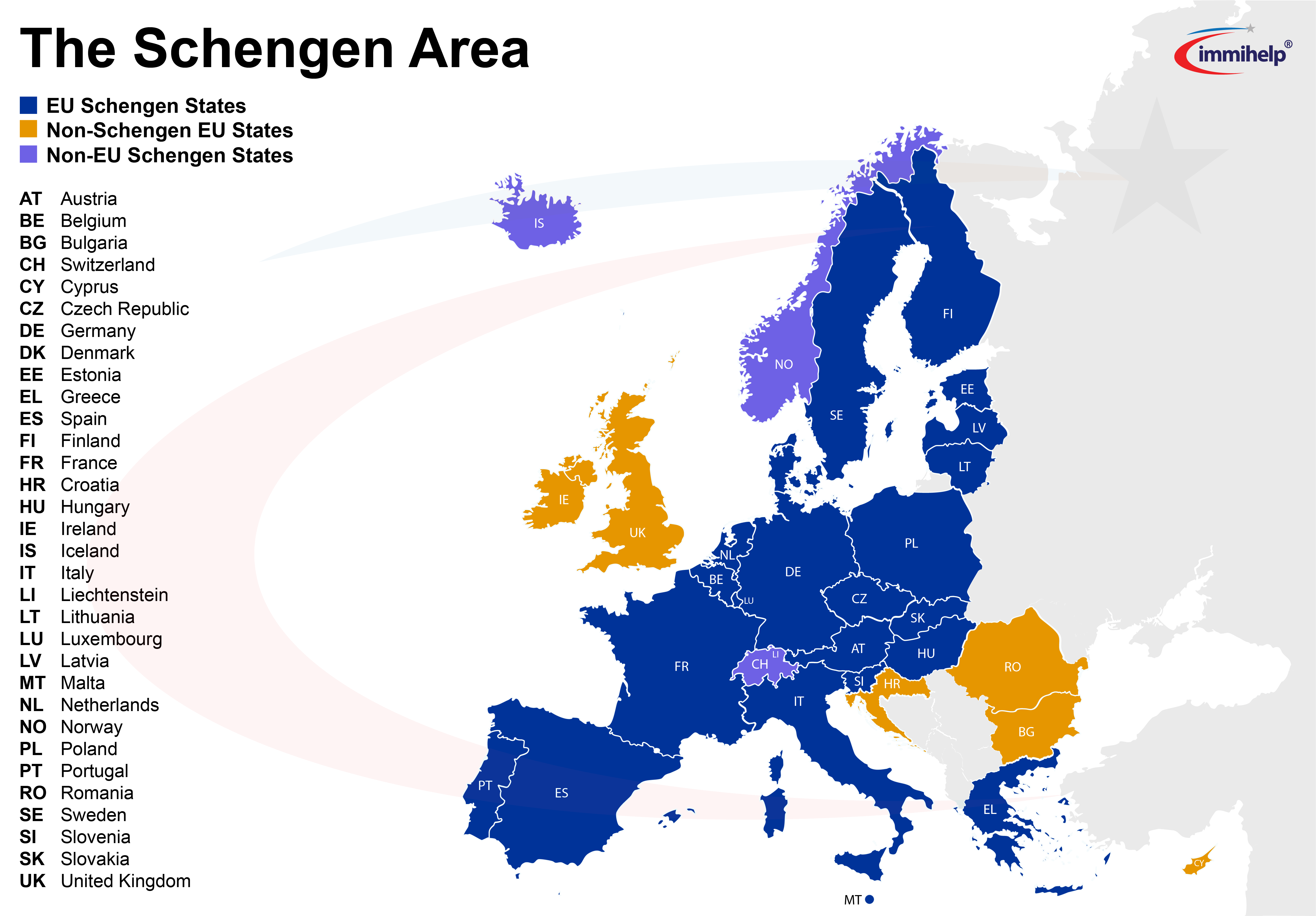
JD Vance in one of his unwarranted and uninformed criticisms of EU mentioned that free travel to EU will destroy it. These comments showed JD Vance's lack of understanding of what EU is and how it works.
Yes, EU has the 4 Freedoms as part of its principles, but that do not mean everyone can just travel to EU and get in without any issues. Far from it, for most people in the world EU is one of the hardest places to get into.
The above mentioned 4 Freedoms only apply to members of EU. They are the reason to join EU in the first place. EU is closed club with huge benefits to members; free travel is one of them. It's the same how you do not need passport to move between states of the US. You still need passport and visa to get into US and so is to get into EU. EU avoids country like terminology because certain people still hold out towards their national identity and not willing to embrace union completely. However, especially when it comes to economy, EU operates like a single federal country.
EU members also get other benefits too, for example they trade within EU without any border checks tariffs or paperwork. (To remove border checks you need to join Schengen Agreement after joining the EU.) In contrast nonmembers are burdened with hefty tariffs, loads of bureaucracy, complex requirements for Schengen visa to allow travel to EU and more. EU is an exclusive club with lots of members-only privileges.
All that gives clear insensitive to join as those who stay out miss out by a lot. That is why Brexit was such a stupid idea. From no paperwork and tariffs to all trade to EU they went towards these tariffs, border checks and paperwork. I destroyed the entire industries that used to export into EU but after Brexit could no longer do so due to paperwork and tariffs.
Courtiers that aspire to join the EU, like Ukraine or Moldova get a trial version of these benefits: removal or some tariffs as well as free travel for 3 month every half year. You can come and see for yourself how awesome it is but then have to go back to finish the accession process. OECD countries like the US, Canada or Japan get above mentioned 3-month travel as well. That is reciprocal as EU citizens also get visa free travel to these countries.
For most of the rest of the world however, entry to EU is only through complex Schengen Visa process where you have to bring a lot of documents to convince EU officials that you should be allowed to enter. If you have criminal record, did not bought return ticket or your bank account does not have sufficient money to spend in EU, you will not get the visa. It is business and they only want those who have enough money to spend on their Cote d'Azur vacay.
There are also refugees, but they are governed by UN rules and get processed by institutions to determine if they qualify for refugee status. Smugglers often misuse these UN rules as they are the more permissive and laxer compared to national polices. However, UN rules are only guidelines rather than laws and nations can choose to ignore them.
EU admission policy is rather strict. Probably only Australia has even tougher visa system. It is far from come anyone. Do not misunderstand.
Various news articles that write about War in Ukraine often mention that Putin keeps talking about "root causes" of war that, according to him, has to be addressed to end the war. Putin does not explain what these root causes are, so news pundits speculate themselves. Often, they conclude something that Putin does not think that Ukraine is a state as he wrote in his book in 2021 so he wants to completely annex it.
That is not the case. Over the course of my blogging, I wrote a lot of articles about real reasons (or "root causes" in Putin's terms) for this war. The articles I wrote often suffered from too much wordiness as I tried to connect all the dots in the complex logical chains that led to this outcome. Here I will try to word it out again.
Putin is democratiaphobe, he is afraid of democracy.
What is so scary in a democracy that make a man who hunts tigers shirtless to shit his pants and hide under the bad, hoping it will go away? A very simple and real possibility to lose power if people vote against you. Real accountability and criminal responsibility for one's actions. Inability to embezzle public money, store them in tax heavens and use them for personal pet projects. All things Putin likes to do, but things Russian public increasingly unwilling to allow him doing.
After all appeal of democracy is simple and very straightforward. People should be allowed to vote to decide why governs and how they allowed to govern. You do not need much effort to convince anyone it is a good system. Its common sense simple and appealing.
However, democracy means dictator and elites in charge could lose power so what they want is to convince people that democracy is bad. How to do that? Not so simple actually. No matter what various paid pundits and people like Dmitri Kiselev and Vladimir Solovyov say, public remains skeptical and unconvinced. After all various prospering Western countries are all democratic and those former eastern bloc nations that were better at transitioning towards democracy are more prosperous than those who did not. It really is a common sense that democracy is better than dictatorship.
However, what if your political career and even physical survival depend on defying this common sense and continuously denying people their democracy. What do you do in such situation? Any argument against democracy is also against common sense. How you defy common sense? You will need some really twisted 5D chess logic that puts everything upside down and somehow makes black white and white black.
To defy common sense, you need solutions that contradict common sense. Starting a war to increase your support at home sound just like what you need. Do not forget to blame the victim for starting or provoking war in the first place and then spice it up with complex reason for war, called root causes, justified by alleged historical wrongs, did to your country in the past. I even wrote an article about specifically this solution and why it works in a dictatorship.
Why this problem suddenly surfaced now?
During Soviet times USSR was insulated from democracy by the Iron Curtain and then a belt of Eastern European puppet states, that all practiced communism controlled by Moscow. There was no internet, and average Soviet Citizen was not allowed to travel to the West and see for themselves just what they are missing out on.
All that changed after the collapse of USSR and dissolution of Warsaw Pact and Comecon. Al first all including Russia experimented with democracy and what not. However, if Russia later consolidated into an autocracy, many of its immediate neighbors instead moved towards democracy. Gradually a diffused field of transitional regimes, divided into two neat blocks of new democracies and neo autocracies.
This division made it simple to compare who has it better new democracies or neo autocracies and the comparison was not in autocracies favor. Democracies enjoy economic growth, better quality of life, less corruption and even visa free access across the Europe. Meanwhile autocracies are on average poorer, have corrupt rent-seeking police and government officials, worse quality of life or life expectancy and citizens of these countries have to apply for complex Schengen Visas to visit almost anywhere in Europe.
No wonder that people who live in autocracies look across the border into neighboring democracies and ask themselves why we can't have all that as well. Why some dirt-poor gypsy Moldovan citizen can have EU grants and travel to Schengen area visa free, and a citizen of fancy Moscow has to get a visa first. To which EU happily answers it is because Moldova is democracy and Russia is not, get rid of Putin, establish democracy and you will be able to travel visa free to EU as well. If you go as far as join the EU, you will even be able to legally live and work anywhere in the EU like German or French citizen. A tempting offer for a citizen of Moscow. So, tempting they sometimes stage large antigovernment protests in hope of overthrowing Putin and establishing democracy. After all similar protests in Ukraine did lead towards fall of autocratic government and establishment of democratic governance, it can work in Russia as well.
All that certainly does not endear Putin or Russian elites to the democracy. If Euromaidan fills average citizen with hope, it fills elites with existential dread. If protesters win, then it will be the end of them all.
Putin and the elites tend to blame the West for the protests but what they blame in reality is existence of democracy itself. They think if only democracy did not exist, then they would not have to deal with these protests and there will be no
So, when Putin talks about root causes, he means existence of democracy as a system of government. System which very existence puts his existence in danger.
So, what Putin wants from war in Ukraine is not the 4 oblasts or even change of government in Kyiv or complete annexation. He wants to make democracy go away. He invaded Ukraine because it's from Ukraine democracy leaks into Russia. Putin wants to stop that leakage somehow.
However, that means they have to fight against democracy, against idea, system, abstract concept. It's like fighting against sunrise or gravity force or windmills like Don Quichotte de la Mancha. How do you even fight against something like that?
If it was possible to stop democracy by putting "No democracy beyond this point. Please discard your democracy into bins provided before crossing the border." signs on Russian borders, Putin would have done that. Alas, democracy is no deterred by such signage or prohibitions.
Plan number two involves shelling Ukrainian cities, then show this damage on Russian TV as evidence of "failures of democracy". Someone like Dmitri Kiselev can weave together a narrative where he will blame the damage on democratic nature of Ukrainian government, contrasting it with Russia where autocratic government prevented such damage. That will not convince everyone but at least it something.
Putin does however open to other suggestions that will somehow defeat democracy and, with it, danger to his continued rule in Russia. Alternatively, if not defeat it, then at least insulate him and his position of power from it.
If you have any ideas that will help this case, please comment to this article or reply to me on X.
As things stand, Putin will continue fight democracy until forever. That is all he ever done since he became Prime Minister in 1999.
Recently I watched this video from Warfronts Channel. It scratched on the truth but fail short to fully expose it. It ended with a wishful thinking conclusion that some sort of federal arrangement between different ethno-religious groups can be found to solve Syria's problems. That is not possible, Syria will have to split into several smaller states.
Syria, just like Iraq, Afghanistan or Bosnia have unworkable borders unsuitable for modern world. Syria does not work as a nation, because different ethnic and religious groups do not see themselves as part of one nation. Instead, they see their ethno-religious group as a sort of nation they belong to and see other ethno-religious groups as internal enemies of their group. Because of that every ethno-religious community only care for themselves and treat other communities with open or hidden hostility.
That is not a uniquely Syrian problem. To have a western example of similar behavior, look at Northern Ireland and see just how unworkable multi-community state is. It took UK many years of hard negotiations to end bloodshed there and government there still gets deadlocked over the same old internal conflict between communities. Both sides do not care for the Northern Ireland whole and screws the other group for the benefit of their own.
It is more or less the same dynamics in Bosnia, Kosovo, Iraq, Afghanistan and many more. I wrote detailed articles about some of them on this blog; there are more if you search. Foreign powers might force them to smile on camera, but behind the scenes they will still mind who is who and will make sure people outside of their own faith do not get anything and will only distribute benefits or offer good jobs to their own.
It is different from former colonial states like the US, Canada or Australia, where everyone is a migrant, disconnected from their original community and any claims they have on this or that land or privilege. The very process of migration severs community ties and make people more individualistic. Because of that post-colonial states can be meritocratic and treat everyone equally. In old states where everyone is somehow related to others and there is often a long history of animosity between ethno-religious groups, that does not work. Old hatred prevents it.
Europe could get over it by re-drawing borders along the ethno-religious lines. Once a state is monoethnic and mono-religious, the is only one group left and there are no more outsiders to discriminate against. Sometime after that point they can do what post-colonial states do and welcome migrants, expecting them to eventually integrate with the main society.
However, without division along ethno-religious lines, the animosity will never go away, and it will be eternal Northern Ireland problem. Both sides will think the land and the state is theirs by right of what not and will fight against all they perceive as outsiders.
For places like Syria, Iraq, Afghanistan, Bosnia, Kosovo North Macedonia or Montenegro to work, they have to be re-divided along the ethnic lines. Only then the sectarian violence and conflict can truly go away. Otherwise, there will always be these outsiders who do not belong here.
Recently I watched press conference after the latest US-Russia talks in Anchorage Alaska. World expected a breakthrough on the issue of Ukraine. Instead, the two leaders praised each other, talked about Bering Strait, Monuments of WWII and even time zones. They ended by promising to meet again. Trump only briefly mentioned that deal in Ukraine was not reached.
Watching that made me think if conference or even War in Ukraine itself was about Ukraine.
When it comes to Ukraine it's no surprise they make it about themselves and about global principles, bombs do fall on their heads and cities after all. However here they have full support of European Union (and UK), that has vested interests in making sure that Ukraine goes through reform process and then joins the EU and they do not want Putin to deny them that, making all their efforts wasted. US does not have particular stake in this war but helps out to keep NATO together. Because of that joint EU and Ukraine chorus dominates global perception of war. Occasionally paid by Russia symphonizes of dictatorship parrot official Russian arguments, but they are too nonsensical to be taken seriously.
Under such circumstances it is not hard to get into tunnel vision and overlooks other things that may be going around at the same time with war in Ukraine. Real reasons for war could be in these actions and Ukraine is merely a distraction.
Arguments that Putin finally decided to go full imperialism and will suffer huge sanctions over the issue of government in Kyiv or a few territories on Russia-Ukraine border always sat poorly with me. Patriots and Jingoists in Russia is like Putin's favorite dog. They wave their tail at the government, menacingly bark at the West, bite local pro-democracy liberals on the butt and do other dog tricks. For all that work they got pat on the head from the powerful, an extra-large bowl of bones and then sent to their doghouse to gnaw on them. See how it works with actual dog here. Dugin and other scare personalities do fulfill the same role as this dog. Such is their ignoble human-dog role in Putin's system.
Similar jingoistic personalities in EU often get kick in the butt instead, called "bad dog" and then sent to the dark corner without any food where they whimper out of hunger and cold.
However actual policy it not a matter for their canine brains. That is what Putin with his few close advisers decide on their own. Russian government structured in such a way that even people as senior as Minister of Foreign Affairs or even Prime Minister might not know the full picture of Putin's plans or reasons. That is why I always questioned the officially voiced reasons for war. Putin is just not the kind of person to do something like that over some jingoist reason.
Most logical reason for Putin's war in Ukraine seemed domestic issues. Navalny managed to galvanise opposition to Putin's rule and to diffuse it, Putin started the war. Russian people's mentality is such, that they will not question leader in the midst of pandemonium of war. Watch CGPGrey video about how to be a pirate, to get an example of how that works. With a system like that you do not need to have a galactic brain to figure out you can prolong you rule (captainship) indefinitely if battle will never end. If that the case it is not really about Ukraine, Ukraine was just unfortunate enough to get caught up in that mess.
However, what if it's even less about Ukraine and is about something altogether different. Putin likes to talk about unspecified "root causes" and refuses to talk to either Zelenski or Europeans. Pundits tend to interpret mysterious "root causes" as alleged Putin's believe that Ukraine is part of Russia, but there is no guarantee it is. As for his unwillingness to talk to Zelenski or Europeans. it could be due to his desire to project himself as equal only to the US and cast Ukraine and Europe as something irrelevant and beneath his attention, but it can also be due to the fact that real issue is about something only US is aware of.
However, it could also be that real dispute is about something only US and Putin know about, and Putin only uses Ukraine as a leverage to get something in completely unrelated field. Trump said something about diving up land, but what land does he mean. I might as well be land on Mars or Moon, that he intends to divide with Russia, kind of like Spain and Portugal once divided New World in the Treaty of Tordesillas. It could be about Arctics, Antarctica, continental shelf, anything really.
Regardless of what it is both sides intend to keep it secret from the rest of the world. Otherwise, EU. UK, China and many more will start claiming pieces of Mars for themselves and both US and Russia has vested interest to keep all of them out. That is why Trump and Putin were all so happy and shining about their negotiations, praising mutual cooperation and neighborship.
If its indeed about Mars I do wonder how long it will take, before the whole story will unfold completely. By the time global community will realise what is going on, the two might colonise the entire red planet. Sure, in modern are of internet information spreads quickly but is it really if both sides intend to keep it secret?
As we know ever since Donald Trump became a president, he was relentlessly pushing towards a peace deal with Russia to end War in Ukraine. These efforts do face a level of pushback from Ukraine and Europe who insist that talking to Russia is pointless. At the same time Russia keeps reiterating its maximalist demands and present itself as a winner. In the end talks are held, agreement not reached due to unreasonability of Russian demands and war continues. The whole charade repeats itself every so often. Recently we once again witness another installment of the same drama.
In Indy Nydell's series about Korea War I managed to find an interesting parallel with these recent efforts to end War in Ukraine. I linked one video here, but the whole negotiations have dragged out over several weeks and covered in several videos starting from the one I have listed.
75 years on, different nations with vastly different cultures, but much the same actions. Back then Truman administration was insisted on finding peace in Korea and instructed personnel on the ground to participate in peace talks. Matt Ridgeway, commander of the American and other UN troops on the ground insisting that talks are pointless as Chinese do not want peace and will simply use the talks to gain advantage over them and make it look like their victory. Meanwhile North Korea and China did all they could to present these peace talks as a capitulation for the West and victory for China and North Korea.
First Korean Talks in 1951 ended up in no agreement singed and fighting resumed. However eventually Ceasefire was signed two years later. It followed the control line on the ground and not the 38th parallel.
During the talks in 1951, most of the talks were over the issue of border, where once again North Korea, just like Russia now insisted on militarily indefensible 38 Parallel while UN negotiators insisted that this is impossible as they are much further north of this line and in more defensible positions they will not abandon. Just like China and North Korea Russia now insists its won and squeezed plenty of propaganda out of the event. On their part, American representatives to the talks were often commented on how reprehensible was behavior of their enemies negotiators and how utterly pointless it is to keep talking to them instead of fighting them.
Nonetheless Truman administration, just like Trump's administration now, had political reasons if not find peace then at least attempt to. Then, just like now, they needed to look like they tried to reach peace and offered their enemies deal as reasonable as practically possible.
It was expedient that Chinese has to be the one to reject the deal, not the UN negotiators. That way Truman could say they did anything they reasonably could to achieve peace, but the enemy will just not accept any offer they made. Someone tolerant to communist BS was needed at the negotiations table precisely to achieve that. They had to listen for hours for various wild claims or demands communists would make without getting angry or walking away. Then just reiterate the UN conditions for ceasefire and say that further negotiations can happen later.
We are not in much similar situation. Trump wants to look like he is doing anything possible withing reasonable to achieve peace. Zelenski has to fulfil the Turner Joy's unenviable task of listening at infinite to Russian wild claims about Ukraine and then just reiterate the same ceasefire conditions as before. They have to keep doing it until Russians just give up and walk away, that way Trump could claim he did all he could but Putin just would not accept it.
Russians, just like Chinese back then, used negotiations for their own propaganda reasons, acting like they have won and UN is surrendering. They push for unreasonable demands, expecting them to be given to them. When faced with polite but stubborn rejection they get puzzled and struggle to say anything else. In later stages of negotiations, Chinese and North Koreans just sit there for hours saying nothing at all. They were cornered and could not find any more arguments, but refused to just accept UN offer. The resulting silence was pressing and taxing. I wonder if we will see Putin or Lavrov in much the same position.
In the end UN position won in Korea. I would expect the Ukrainian proposals to prevail in the end.
This is the second part of my Additional information to Rules for Rulers Video by CGPGrey, in the first part I did an introduction and covered types of dictatorships and differences between them. In the second I will cover democracies instead. You can read this part alone, but I would recommend you read the first part first.
When I was planning this article I at one point thought of not subdividing democracies into types as certain traits and dynamics remain no matter how advanced or not a democracy is. However later I reconsidered.
Nascent (Transitional) Democracy/Hybrid Regime
When a country finally falls into the valley of revolution and its elites could not find a way to get back to being a dictatorship again, they have no choice but to start painful for them personally process of democratisation: transition from a dictatorial way of doing things to a democratic one.
At first glance a dictatorship, particularly a tight rope one, has all the same institutions as a democracy: elections, parliament, legal system, various codes of law, police, courts, public prosecution, even public ombudsman and so on. That is however only at first glance. In a dictatorships all these structures may be called the same names as in a democracy but they serve dramatically different roles. Electoral system does not counts citizens votes but instead rigs the results to help dictators re-election. Parliament does not make laws, but exists as a spoils system to reward loyalists of the regime. Legal system does not exist to regulate society but to cover up repression with a veneer of justice system. Public prosecution exists not to prosecute crime, but to forge evidence against enemies of the regime. Courts do not exist to determine if person is guilty or not but to churn out guilty verdicts to enemies of the regime while overlooking all the evidence to the contrary. Finally police exist not to keep public order but to harass and intimidate opponents of the regime and population generally.
To make matters worse, in a particularly advanced forms of tight rope dictatorship laws are deliberately written in such a way that makes following them all but impossible. That way dictators would have easier time jailing anyone they want citing one or the other unavoidable violation of their Byzantine legal system.
Finally as a spoiled cherry a top of the rotten dictatorship pie, there is a corruption. Police and bureaucrats are deliberately encouraged to break these Byzantine laws to enrich themselves. That way they will gain a stake in the system, by benefiting from its worst abuses. In exchange the regime gets an easy form of blackmail against the bureaucrats and police. For so long as individual bureaucrats and policemen remain loyal to the regime their crimes will be overlooked, but if they displease the regime, the regime will sent the blackmail to the prosecutor office to get them convicted and jailed. That kind of corruption gives police and bureaucracy vested interest in keeping the regime in place. If regime falls and a democracy is established they will lose their opportunities for illicit self-enrichment and may also be prosecuted for the crimes they committed during the dictatorship.
Needless to say that any of that is incompatible with a democratic system. For a country to become a fully functioning rule of law liberal democracy a transition to a democratic way of doing things is needed. That is not only a lengthy process, but is also rife with numerous complications. Any one of these structures could be so wed to doing things the old way, they will refuse to change no matter what. Electoral officials will rig the results for the candidate they themselves prefer, judges will decide cases based on bribes their receive, prosecutors will open criminal investigations against well-off businessmen and demand bribes to shelf the case, police will harass citizens to extort bribes and so on. How to get from that to what is normal in an established democracy and how long will it take is anyone's guess.
Transition between old and new way can take decades. Even in best case scenario it will take a lot of time and effort. Sometimes measures as radical as disbanding the entire old police force and then hiring new one with no prior police experience is needed, something Mihail Saakashvili did in Georgia, much to the dismay of not only old police force but also equally old and corrupt bureaucracy and judiciary as well as their colleagues in Russia. That later led to Russo-Georgian war of 2008.
Structures of the old regime will fight back, supporting anti-reform candidates like Victor Yanukovych in Ukraine to preserve their vested interests and at least stop further reforms if they cannot undo them altogether. At this stage it is still possible to get back if not towards outright dictatorship then at least towards lawless might makes right, privilege, nepotism and corruption rules the day ground zero of valley of revolution. Sure country will be dirt poor and everyone will try to emigrate, but vested interest will keep their lucrative positions of power and will defend these positions to death.
In best case scenario the transition will take a decade and a half. Eastern European nations that emerged from collapse of Eastern Block and joined the EU in 2004 are best examples of transition from a dictatorship to a democracy. However even there certain frictions and democratic backsliding have emerged some years after joining the EU. Best case scenario countries could be called naucent democracies.
In worst case scenario, the country will stuck in the transition indefinitely, unable to reform certain heavily entrenched corrupt old structures. Turkey as well as some Balkan nations like Serbia as well as some post-Soviet states fall into this category. Countries that stagnate and do not show any progress or even sliding back are called hybrid regimes instead.
In addition to that there are certain countries that cannot be clearly identified as either nascent democracy or hybrid regime. They are in a flux, as they try to be the former, but sometimes fail back to be the latter.
Nonetheless all three of this type of nations have one thing in common and that is a mixed rules system between rule of law and rule of authority.
Ethnically/Religiously Divided Country
There is also a special case of such transient democracy, that is a country divided by ethnicity, religion or both. Examples are Bosnia, Latvia, Montenegro or Northern Ireland. Even something as rich and developed as Singapore is prone to this problem. In a country like that people vote for the parties that represent not their political views or economic interests but rather their ethnicity.
While that looks democratic enough at first glance, as there are several strong parties, in reality it is far from it. Often party of the largest ethnic group hold power forever and uses that power to entrench dominant position their ethnicity while disenfranchising all the others. Parties from other ethnic groups are often not any better, clearly favoring their ethnic group over others and sometimes downright hostile to the state they run for political offices in.
It is not democratic as voters often have no real choice between parties. You either support a party of your ethnicity or risk of becoming a second class citizen under the party of the other ethnicity. Mutual animosity and distrust between ethnicities prevent them from working together or even trusting each other.
Countries like this often have the same party in power for decades or even centuries. Inability to lose power due to ethnic animosity makes them prone to corruption, mismanagement, laziness and abuse of power. How bad it can get depends entirely on political culture of the country in question, but it will fall as low as possible without downright alienating voters. Sometimes votes could create a rival ethnic party, like DUP that would eclipse the "official" UUP, sometimes they would just helplessly watch as their corrupt leaders keep abusing the system more and more.
Established Democracy
Say you managed to finally go through all of the democratization reforms and your country finally joined European Union and OECD. Or you got tired of waiting when it will happen and managed to migrate to one of the established traditional democracies. Does that mean that you are finally in the perfect land of justice and good governance and have nothing more to worry about. Short answer is no and long answer is the following:
Dynamics that characterise the nascent democracies or even dictatorships do not disappear even in a very old and very well established democracy. They simply evolve into a different kind of confrontation.
In an established democracy ruling elites of the other types of governments do finally exit corridors of power and leave day to day governance to the professional class of public servants. They however do not disappear into nowhere. They simply transform into a different kind of privileged class, the one that owns properties, companies shares and so on. This owner class becomes a new elite.
Some of these new elite members emerge from the old elite, some arise through the meritocratic advancement in a democratic market system. However both of these types eventually arrive to the realisation that their interests are not necessary aligned with the system or the government. Even those who climb up through the system eventually realise that a system that allowed them to climb to this heights is no longer needed when they are at the top. In realising that they become part of the conservative establishment.
Most established democracies typically have two party systems. Even those who have multiparty systems do often have parties clearly gravitate towards broad left and right grouping, sometimes these groupings are almost official, like Pan-Green and Pan-Blue coalitions in Taiwan or recently Orange block in Ukraine.
That is not a coincidence. Surely it is partially conditioned by the electoral system, but there is 1 important deep underlying reason for that. One of the parties always represent democracy and its productive highly educated workers and their interests. The other always represents the vested interests of the owner-elites that often go contrary to the rules of the system.
Compare to nascent democracy, elites could no longer entertain the idea of going back to the old ways of dictatorship. By now such move will destroy the prosperity the country creates and endanger the elites new status and wealth. There are however still ways for the elites to push for their interests that often revolve around weakening the state, law and reducing taxes. After all liberal democratic law protects their employees from their employers and so on. That does make democracy attractive for employees to migrate and in work and be productive. However business owners would be very happy to erode these protections to squeeze their employees even further. After all what will they do if that happens, flee to a democracy? They are already in one. Social programs again benefit the employees more than employers, sure employers need people to be educated to do their jobs, but they do not need them to be supported if they cannot work. These and a few other issues often become right wing talking points in an established democracy.
Thus an established democracy is a tug of war between the working class, that now also includes public servants and an elite owner class. That is why elections attract a lot of attention, campaigning and emotion. Sure democracy create prosperity, but the prosperity pie can be divided in many different ways, winning election means that more will be diverted your way at the expense of losers.
It is often said that conservatives drag country backward. That is not per se inaccurate. Conservatives are also a lot more cozy with dictators compare to liberals. When Orban in Hungary or Kachinski in Poland began their rule with eroding democracy, left wing parties cried alarm over that but right wing ones were rather coy and chill about it. Right wing does fancy some backsliding on democracy and rule of law as it often does serve their interests.
In contrast left wing often tries to shore up democratic institutions and make backsliding harder if not impossible. Its a constant battle.
There are more underlying reasons why even very old established democracies still have to deal with this constant tug of war over power and rules of the system. That is economic one. Sure most of wealth in a democracy is produced by educated productive workers but not all of it. The US has plenty of oil and other natural resources. However natural resources, valuable by themselves with no added value, are what makes dictatorships what they are. Presence of such forms of wealth in a democracy produces a dictatorial stain of sorts, a powerful key to power from an important industry who cannot be ignored. A private (pty ltd type) company with a charismatic founder owner also adds dictatorial stains. That partially skewers democracy towards more dictatorial tendencies without necessary changing anything in the core of the system.
In general the larger the country is, the more complex its economic and social fabric gets. There are sometimes complex small countries but hardly any simple large ones. This complexity leads towards mixed and complicated political system. In a democracy bloated parties that represent so many different interests it seems they do not represent anything at all. In a dictatorships there are sometimes special economic zones with different rules from the rest of the country: China governs Shanhai and Shaanxi in a vastly different way. Different types of economy need different form of governance for them to work effectively or sometimes at all.
That said democracies are still better places to live, both for workers but also for the elites as well. A security democracy offers wins elites over in principle. Even members of the ruling classes in a dictatorship often seek to hedge their bets against unfavorable political change at home and want to have safe heaven in a democracy. If you ever wondered why Chinese massively buy out properties in Australia, now you do.
Finally, as much as some dictatorships sympathizers do not want to believe it, democratization is one way process. Sure there could be democratic backsliding but truly reverse course and return back towards dictatorial ways is impossible. Democratic added value economy could only functions under rule of law and democracy.
No one will commit to long term investment in a country where dictator can just seize the company by force or fraud and there are no independent courts and police to stop them. If you want foreign investments, you have to have independent judiciary, police and so on. Without long term investments a country could never fully modernise and will always lag behind.
That is why democratic leaders are optimistic about the future and draw large plans where Russia and China will finally become parts of the Western liberal order while dictators resort to ever more crazy means to prolong their existence for another several years or so.
Perfect Democracy
Just like incredibly stable two road dictatorships, perfect added value economy democracies do exist. They too are rare and often very small. Switzerland, Finland, possibly Sweden, may be a few more and that is about it. You hear about these countries more often than about Brunei but they are hardly news anchors.
All of these have very diversified economies that import resources and produce added value products. There are no any large companies owned by ultra rich billionaires that dominate industry or have disproportional influence on politics. Ikea may be have Swedish identity and branding, but actually incorporated in Netherlands and pays tax in tax heavens. That prevents Ikea's ultra rich founder and owner from having much say in Swedish governance as his non-tax paying interests are irrelevant for the government in Stockholm. For them Ikea is no different from any foreign company.
Perfect democracies often move from a two party tug of war towards more consensus based decision making. However only Switzerland uses that as part of formal system of government. In general the less there are animosity between different parties and sections of society the close the country is towards perfect democracy. You never hear Finns or Swiss divide into two groups and call each other insulting names over token issues that could be solved in a reasonable mutually acceptable way like Americans do. Dictatorships like to imitate that and pretend they have total inner harmony and stability, but if you dig a little bit you uncover a lot of hidden tensions. In perfect democracies there are no hidden tensions, issues just get resolved to everyone's satisfaction and live goes smooth. Talk to a Swiss about their governance and notice how much you miss out on without governance like that.
Conclusion
Fundamentally each government reflect the economy and society in question. Every country is governed in a manner most appropriate to it. However if there are tensions within the country, it do means that the country or part of it outgrown its form of government and a change is needed. Most of the time it will be more democratisation but not always.
For example even in Europe sometimes levels of autocracy increasing. For example Liechtenstein recently voted to increase powers of their Prince and reduce power of elected democratic institutions. They did it not because they somehow embraced autocracy as better form of government but due to a simple fact that the only source of income in Principality is a property management company owned by the prince. If he leaves and take his money with him, the rest of the county will have no income to speak of.
However Liechtenstein is an unusual country or 30 000 people and more of an exception to the overall trend. Globally democracies are on the rise and dictatorships are in decline. However not all dictatorships will fall and disappear, a certain balance, based on the economic realities will continue.
In the past I wrote a few articles about realities of life in USSR. They were not inaccurate per se, but they were somewhat lacking in capturing the bigger picture. A lot of information about communism often focus on negative sides, sometimes exaggerated. That will make you wonder why some like it in the first place, sure not for oppression or scarcity? Communism has both, die hard supporters who say it is the best thing in the world and many haters who abhor it with equal passion. Here I will explain why.
The key aspect of the system that made and break the USSR was the fact that workers could not be fired from their jobs. I mentioned it before but did not elaborated too much over the implications this had on society. Reality is that implications from this aspect alone both made USSR for its die-hard supporters and broke it for its haters.
I will being with the positive sides. Impossibility to fire people made jobs very secure. Not only average but pretty much every citizen of USSR could be certain that they will never lose their job or search for a new one. That by extension meant that question of paying bills or affording food or clothes were never an issue (the only issue that got worse as things progressed was shortage of goods. Inability to pay for them was never an issue). Everyone was certain they will have stable guaranteed income throughout their lives, first from salary and then from age pension.
USSR definitely made a propaganda point out of this fact. See picture in thir article. Under capitalism you can be fired at any time on a whim of your boss. Then you will not be able to afford food and shelter. That does not happen under socialism at all. Every citizens is guaranteed work and livehood.
If anyone is found of the old Soviet System it is most likely due to this fact. Being an employee was a much less stressful experience. People were a lot more relaxed knowing their jobs are never at risk.
Now to the negatives. First the macroeconomic part. Jobs for life meant that restructuring economy was hard to impossible. Certain methods of production become outdated, certain factories need to be closed. However that means people will be left without a job and that is no go in USSR. That said inability to fire workers was not the only reason for stagnation. People in charge of economy were generally conservative and averted of change as they had no insensitive to innovate. Change is a lot of work so why bother when you can do nothing instead. However inability to fire workers only further contributed towards their unwillingness to change.
However macroeconomic problem was not the only issue. Individual people sometimes had to deal with negative side of this rule as well. Since inability to fire people was absolute, certain workers took it to the extreme and abused the system. It was not uncommon for some employees to show up to work several hours late and so drunk they could not stand straight. In a capitalist economy they will be fired then and there but under socialism it was possible to someone like that to have long successful career all the way until retirement. The only thing their manager could do about them is to call police to detain them. That would solve the problem for a day, but tomorrow they will be back, most often drunk again.
Certain professions were particularly affected by that kind of behavior, particularly communal services, such as plumbers and electricians. It would be incorrect to call them tradies as in USSR they were not self-employed but rather employed by a government run communal services organisation, called (ZhEC). ZhEC will pay them monthly salary that will be the same no matter how many days they show up drunk.
Being a manager in ZhEC was a peculiar experience of spending first half of the day calling police to detain all your drunk and unruly employees, then spend the rest of the day, answering phone calls from clients who wanted to know when their pipes will be fixed. That by extension led towards another issue with soviet system: often rude customer service. The only redeeming quality was the fact that managers own salary was also unchanged no matter if pipes were fixed on not. Government paid for everything, I think repairs themselves were free of charge as well, that is if sober enough plumber would suddenly became available.
Here one might ask, why show up to work at all. Sure they will not fire you if you just stay home. Just show up on a salary day to pick up your not so hard earned pay. As I mentioned in my previous articles, not having any employment at all was a criminal offence, punishable by lengthy prison sentence. This combined with no unemployed benefits in any form, easiness to get a job and impossibility to lose it lead towards this behavior. Also you needed a compelling reason not to work, just flat out refusing doing your work could get prosecutors involved and could lead towards complicated outcomes, like corrective sentence in a penal colony. On the other hand being too drunk to stand or hold your tools, but technically "willing" to work, was good enough reason for manager to let you do nothing. If police get involved, they will only detain you for a day, until you get sober and no further action will be taken. The only problem is if the morning instead of releasing you into town, they will decide to give you a lift to your workplace, "so that you do not get lost along the way and end up in a pub again." That will force you to work on that day, but afterwards you will be free to go back home and then show up next day drunk again.
Now on how it affected an average citizen. Since certain professions were particularly prone to this routine alcoholic behavior, certain services were unavailable de-facto. Even if you get lucky enough that one day plumber is sober and could attend to look at your pipes, can you actually trust them to not fuck up? Since they are normally drunk at this time a day, they will have terrible headaches from all the drunk lifestyle they usually have. If they could not complete the job in one day or make a mistake, who knows when they will be sober again to do a follow up.
All that led towards people having to learn how to do plumbing, electrical and certain other work themselves. If they could not do it for some reason, they had to find a neighbor or a friend who could, willing and have time. Sometimes such person have to be paid. They would not take money as there was a certain stigma attached to money in USSR and shortage of goods meant that money is not as valuable as actual goods. Because of that a some sort of gift, like box of chocolate was needed to show them gratitude. All that made a simple enough tradie work into a complex multistage quest, like a summoning of Xorathian Steed.
A little more on rude customer service I mentioned before. Sure you can understand manager of the drunk squad, but that was prevalent in many other industries as well, particularly retail. Retail suffered from shortages of goods and long ques, that contributed towards retail employees being rude, as they often had to repeat the same thing, that all meat sold out, to many customers at any given day. However broad inability to fire people had an effect as well. Employees were not trained or pressured by their managers to treat all customers with respect. Instead they just treated people how they felt and could just insult you if they did not liked something about you, like your haircut for example.
Needless to say that these grotesquely absurd issues with socialism produced enough critics and opponents of the system. Most were not against socialism in principle but just wanted their pipes fixed without all that drama as well as be able to enter a store full of goods and without ques, instead of the other way around. Ever exacerbating problem of shortages of goods eventually led towards majority thinking that change is needed. To all the critics of Yeltsin dismay, he did fixed all of that.